
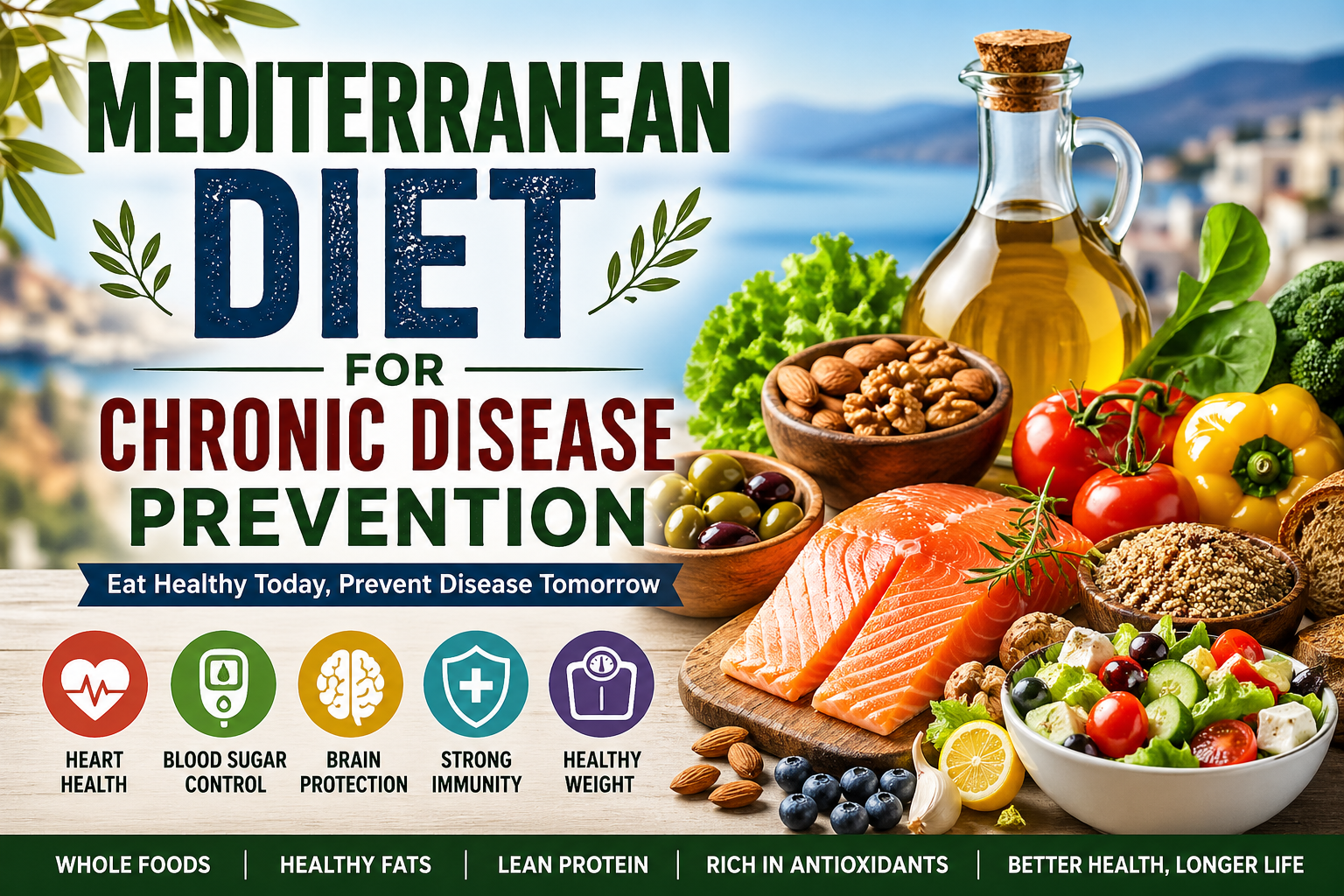
Mediterranean Diet for Chronic Disease Prevention is widely recognized as one of the healthiest eating patterns in the world. Unlike short-term fad diets that focus only on rapid weight loss, this diet is designed for lifelong health and disease prevention. It is based on the traditional eating habits of people living in Mediterranean countries like Greece, Italy, and Spain, where lower rates of heart disease and longer life expectancy have been observed for decades.
In 2026, Chronic Disease such as heart disease, diabetes, obesity, fatty liver, high blood pressure, and cancer continue to rise due to unhealthy eating habits, stress, and sedentary lifestyles. Many doctors and nutrition experts recommend the Mediterranean diet because it supports overall wellness while helping prevent these serious health conditions.
This complete guide explains how the Mediterranean diet helps prevent chronic disease, what foods to eat, what to avoid, and how to start this healthy lifestyle for long-term benefits.
What Is the Mediterranean Diet For Chronic Disease Prevention?
The Mediterranean diet is not a strict “diet plan” but a healthy way of eating that focuses on natural, whole foods. It encourages balanced meals filled with vegetables, fruits, healthy fats, lean proteins, and whole grains.
The main foods included are:
- Fresh vegetables and fruits
- Whole grains
- Beans and legumes
- Nuts and seeds
- Extra virgin olive oil
- Fish and seafood
- Moderate dairy products like yogurt and cheese
- Herbs and spices
- Limited red meat
- Very little processed food and sugar
It also promotes healthy habits such as:
- Regular physical activity
- Eating meals with family
- Cooking fresh meals at home
- Choosing seasonal foods
- Mindful and slow eating
>>> 7-Day Mediterranean Diet Meal Plan (2026): What to Eat, Limit & Avoid for Weight Loss!
This lifestyle approach makes the Mediterranean diet easier to follow compared to restrictive eating plans.
Why Mediterranean Diet for Chronic Disease Prevention Is Important?
Chronic diseases are long-term health problems that develop slowly and often stay for life. Many of these diseases are preventable through better food choices and healthy daily habits.
Common chronic diseases include:
- Heart disease
- Stroke
- Type 2 diabetes
- Obesity
- High blood pressure
- Fatty liver disease
- Cancer
- Alzheimer’s disease
- Arthritis
- Kidney disease
- Autoimmune disorders
These conditions are often linked to:
- Poor diet
- Inflammation
- High sugar intake
- Lack of exercise
- Obesity
- Insulin resistance
- Stress
- Processed food consumption
The Mediterranean diet helps by targeting these root causes before disease becomes serious.
How the Mediterranean Diet Helps Prevent Chronic Disease?
1. Reduces Inflammation Naturally
Chronic inflammation is one of the biggest hidden causes of modern diseases. It increases the risk of diabetes, heart disease, arthritis, and even cancer.
Foods like olive oil, berries, leafy greens, tomatoes, fish, and nuts contain antioxidants and anti-inflammatory nutrients that help reduce inflammation in the body.
This helps protect cells from damage and improves overall health.
2. Improves Blood Sugar Control
Insulin resistance is the early stage of many health problems including:
- Type 2 diabetes
- PCOS
- Belly fat
- Fatty liver
- Metabolic syndrome
The Mediterranean diet improves insulin sensitivity by replacing refined carbs with fiber-rich foods like vegetables, beans, oats, and whole grains.
Stable blood sugar levels also reduce cravings and support healthy weight management.
3. Protects Heart Health
Heart disease remains one of the leading causes of death worldwide. The Mediterranean diet is strongly recommended for protecting the heart because it helps improve:
- Bad cholesterol (LDL)
- Good cholesterol (HDL)
- Blood pressure
- Triglyceride levels
- Blood vessel function
- Circulation
Healthy fats from olive oil, nuts, and fish help reduce harmful cholesterol while supporting the heart and arteries.
4. Supports Healthy Weight Loss
Unlike crash diets, the Mediterranean diet helps with sustainable fat loss.
It works because it increases:
- Fullness after meals
- Fiber intake
- Healthy protein
- Better digestion
- Stable energy levels
It reduces:
- Sugar cravings
- Emotional eating
- Overeating
- Dependence on junk food
This makes it easier to lose weight and maintain results long-term.
Mediterranean Diet for Heart Disease Prevention
Heart health is one of the strongest reasons people choose the Mediterranean diet.
Studies show this eating pattern helps lower the risk of:
- Heart attacks
- Stroke
- High blood pressure
- Coronary artery disease
- Cardiovascular death
The diet improves blood circulation and reduces plaque buildup in arteries.
Best Foods for Heart Protection
❤️ Extra virgin olive oil
❤️ Salmon and sardines
❤️ Walnuts and almonds
❤️ Oats and barley
❤️ Lentils and chickpeas
❤️ Tomatoes and spinach
❤️ Avocados
These foods provide healthy fats, fiber, potassium, and antioxidants that support cardiovascular health.
Mediterranean Diet for Type 2 Diabetes Prevention
Type 2 diabetes is increasing rapidly due to poor food choices and obesity.
The Mediterranean diet helps prevent diabetes by:
- Lowering fasting blood sugar
- Improving insulin function
- Reducing abdominal fat
- Supporting healthy metabolism
- Improving HbA1c levels
People with prediabetes often benefit greatly from switching to Mediterranean-style eating before diabetes develops.
Best Foods for Blood Sugar Balance
🥗 Leafy greens
🫒 Olive oil
🐟 Fish
🥜 Nuts
🫘 Beans
🌾 Whole grains
🥚 Eggs
🍓 Berries
These foods slow digestion and prevent blood sugar spikes.
Mediterranean Diet for Fatty Liver Disease
Fatty liver disease has become one of the fastest-growing health problems in recent years. It is closely linked to obesity, high sugar intake, and insulin resistance.
The Mediterranean diet helps reduce:
- Liver fat accumulation
- High triglycerides
- Belly fat
- Elevated liver enzymes
- Insulin resistance
It is considered one of the best diets for improving non-alcoholic fatty liver disease (NAFLD).
Foods to Avoid for Fatty Liver
❌ Sugary drinks
❌ White bread
❌ Fried foods
❌ Processed meat
❌ Packaged snacks
❌ High-fructose syrup
❌ Excess alcohol
Replacing these foods with fresh vegetables, fish, and healthy fats supports liver recovery.
Mediterranean Diet and Cancer Prevention
Although no diet can fully prevent cancer, healthy eating plays a major role in lowering risk.
The Mediterranean diet may help reduce the risk of:
- Breast cancer
- Colorectal cancer
- Prostate cancer
- Liver cancer
- Digestive system cancers
This happens because it reduces:
- Chronic inflammation
- Obesity
- Oxidative stress
- Hormonal imbalance
- Insulin resistance
High-fiber foods and colorful fruits and vegetables are especially protective.
Mediterranean Diet for Brain Health
Brain health is becoming a major topic in 2026, especially with rising concerns about dementia and memory decline.
The Mediterranean diet supports:
- Better memory
- Improved focus
- Reduced brain fog
- Lower Alzheimer’s risk
- Reduced cognitive decline
- Better mood and mental wellness
Healthy fats like omega-3 from fish and olive oil help reduce brain inflammation and protect nerve cells.
This makes the diet beneficial for both young adults and older adults.
Mediterranean Diet and Autoimmune Disease Support
Many people are now exploring how food affects autoimmune diseases such as:
- Rheumatoid arthritis
- Psoriasis
- Lupus
- Multiple sclerosis
- Inflammatory bowel disease
The Mediterranean diet may help by reducing inflammation and supporting immune balance.
While it is not a cure, it can improve quality of life and reduce symptom flare-ups in many people.
Mediterranean Diet Food List
Foods to Eat More Often
Vegetables
- Spinach
- Broccoli
- Kale
- Tomatoes
- Cucumbers
- Bell peppers
- Carrots
- Onion
- Garlic
- Zucchini
Fruits
- Apples
- Oranges
- Berries
- Grapes
- Pomegranate
- Pears
- Figs
- Avocados
Healthy Fats
- Extra virgin olive oil
- Almonds
- Walnuts
- Pistachios
- Chia seeds
- Flaxseeds
- Pumpkin seeds
Protein Sources
- Fish
- Eggs
- Greek yogurt
- Lentils
- Chickpeas
- Kidney beans
- Tofu
- Chicken (moderately)
Whole Grains
- Oats
- Brown rice
- Quinoa
- Barley
- Millet
- Whole wheat bread
- Whole grain pasta
Foods to Limit or Avoid
⚠️ Red meat
⚠️ Butter
⚠️ White bread
⚠️ Refined flour
⚠️ White sugar
⚠️ Bakery sweets
⚠️ Fast food
⚠️ Sugary drinks
⚠️ Fried foods
⚠️ Processed snacks
The goal is not perfection but consistent healthy choices.
One-Day Mediterranean Diet Meal Plan
Breakfast
Greek yogurt with oats, berries, and walnuts
Mid-Morning Snack
Apple with a handful of almonds
Lunch
Grilled salmon with quinoa and olive oil vegetable salad
Evening Snack
Green tea with hummus and cucumber slices
Dinner
Lentil soup with roasted vegetables and whole grain bread
Healthy Dessert Option
Fresh fruit bowl
This meal plan is simple, balanced, and easy to follow.
Common Mistakes People Make
1. Eating Too Much Olive Oil and Nuts
Healthy fats are good, but they are still high in calories. Portion control matters for weight management.
2. Not Eating Enough Protein
Some people focus only on salads and grains. Protein is important for muscle health, blood sugar balance, and fullness.
3. Buying Packaged “Mediterranean” Foods
Many products labeled as “Mediterranean” are highly processed and unhealthy. Real whole foods are always better.
4. Too Much Cheese
Moderate dairy is fine, but too much cheese can increase sodium and calories.
Balance is the key.
Mediterranean Diet vs Keto Diet
Many people compare the Mediterranean diet with the keto diet.
Keto Diet
- Fast short-term weight loss
- Very low carb
- Highly restrictive
- Difficult to maintain long-term
Mediterranean Diet
- Sustainable for life
- Easier to follow socially
- Better for long-term disease prevention
- Stronger scientific support for heart health
For preventing chronic diseases, most experts consider the Mediterranean diet the better long-term choice.
Who Should Follow the Mediterranean Diet?
This eating pattern is ideal for people with:
- Obesity
- Type 2 diabetes
- Fatty liver
- High blood pressure
- High cholesterol
- PCOS
- Family history of heart disease
- Chronic inflammation
- Digestive problems
- Aging-related health concerns
It is suitable for both prevention and long-term wellness.
Final Thoughts
The Mediterranean diet is more than just a food trend—it is one of the most effective and scientifically supported ways to prevent chronic disease naturally.
It helps protect your:
❤️ Heart
🧠 Brain
🩸 Blood sugar
🫀 Blood vessels
⚖️ Weight
🧪 Liver
🛡️ Immune system
🧬 Overall longevity
The best part is that it does not require extreme restrictions or complicated rules.
No starvation.
No crash dieting.
No unhealthy shortcuts.
Just real food, better habits, and a healthier future.
In 2026 and beyond, following the Mediterranean diet remains one of the smartest investments you can make for lifelong health and chronic disease prevention.

Nilesh Vijay is the founder and lead health writer at Health Tips USA. He is passionate about helping people understand health, nutrition, weight management, fitness, and healthy living through easy-to-read, research-based articles.
With over four years of experience in health content writing, Nilesh has written extensively about healthy eating, weight management, nutrition, vitamins, fitness, and overall wellness. His goal is to turn complex health information into simple, practical advice that readers can easily understand and apply in their daily lives.
Nilesh has also authored several health and nutrition eBooks published on Amazon and other leading digital platforms. His work covers a wide range of topics, including healthy recipes, balanced diets, meal planning, and lifestyle habits that support long-term well-being.
Areas of Expertise
Weight management and healthy living
Nutrition and balanced diet planning
Vitamins, minerals, and healthy eating
Fitness and active lifestyle tips
Wellness, healthy aging, and preventive health
Research-based health education
What Nilesh Believes
Nilesh believes that health information should be accurate, easy to understand, and based on reliable research. His mission is to provide practical, trustworthy content that helps readers make informed decisions about their health and lifestyle.
📧 You can reach Nilesh through the Contact Us page on Health Tips USA.