
Gluten has become one of the most debated topics in modern nutrition. Walk into any supermarket in the United States and you’ll see shelves full of foods labeled “gluten-free.” Many people now believe that avoiding gluten automatically leads to better health and faster weight loss. But is that really true? Let’s know Gluten For Weight Loss Is Good or Not?
Gluten itself is neither good nor bad for weight loss. Its impact depends entirely on the individual, their medical condition, and the overall quality of their diet.
This article explains:
What gluten is
How gluten affects the body
Whether gluten helps or harms weight loss
When avoiding gluten is medically necessary
What U.S. FDA data says about gluten consumption and labeling
Common myths vs scientific reality
Let’s explore this topic step-by-step.
1️⃣ What Is Gluten?
Gluten is a natural protein found mainly in:
Wheat
Barley
Rye
Its main role is structural — it gives dough elasticity and helps foods maintain shape and texture. This is why bread feels chewy and pizza dough stretches easily.
Other gluten-containing grains include:
Spelt
Durum
Farro
Semolina
Einkorn
Khorasan wheat
Triticale (wheat + rye hybrid)
Even oats may contain gluten because of cross-contamination during farming or processing.
Gluten also appears in less obvious foods such as:
Soy sauce
Processed sauces
Modified food starch
Seitan (wheat gluten used as vegan protein)
2️⃣ Why Gluten Gets So Much Attention?
In recent years, gluten has gained negative media attention, leading many people to assume it causes:
Weight gain
Inflammation
Brain fog
Digestive issues
However, scientific evidence does not support these claims for the general population.
Research shows that for most people, gluten is simply a protein consumed safely for centuries.
3️⃣ Gluten and Overall Health: What Research Says
Large population studies suggest that gluten itself is not harmful to people without medical intolerance.
A major study following over 100,000 participants found no link between long-term gluten intake and heart disease risk. In fact, avoiding gluten unnecessarily may reduce whole-grain intake — which is linked to better cardiovascular health.
Whole grains containing gluten are associated with:
Lower heart disease risk
Reduced stroke risk
Better blood sugar control
Lower type 2 diabetes risk
Reduced overall mortality
Gluten-containing grains also provide:
Fiber
B vitamins
Iron
Magnesium
These nutrients are important for metabolism and weight management.
4️⃣ Gluten and Gut Health:
Interestingly, certain components in wheat may act as prebiotics, feeding beneficial gut bacteria.
For example:
Arabinoxylan oligosaccharides from wheat bran help increase healthy bifidobacteria in the colon.
A healthier gut microbiome can influence:
Digestion
Appetite regulation
Weight control
Metabolic health
So for many people, gluten-containing whole grains can support—not harm—digestive health.
5️⃣ When Gluten Becomes a Problem:
While gluten is safe for most individuals, some people experience serious reactions.
✔ Celiac Disease
Celiac disease is an autoimmune condition where gluten triggers an immune attack on the small intestine.
According to the U.S. National Institute of Diabetes and Digestive and Kidney Diseases (NIDDK):
About 1% of the global population is affected.
Around 2 million people in the U.S. may have celiac disease, and many remain undiagnosed.
Symptoms include:
Chronic diarrhea or constipation
Fatigue
Weight loss
Malabsorption
Nutrient deficiencies
The only treatment is a strict gluten-free diet.
✔ Non-Celiac Gluten Sensitivity (NCGS)
Some individuals experience symptoms similar to celiac disease but without intestinal damage or positive antibody tests.
Symptoms may include:
Bloating
Gas
Brain fog
Fatigue
Diagnosis is usually made by exclusion.
✔ Wheat Allergy
This is a classic food allergy involving immune reactions to proteins in wheat. Symptoms can range from mild itching to severe reactions such as anaphylaxis.
✔ Dermatitis Herpetiformis
A skin manifestation of gluten sensitivity that causes itchy blisters and rashes. It is associated with celiac disease in some individuals.
6️⃣ Gluten and Brain Fog: Does It Affect Mental Clarity?
People with untreated celiac disease sometimes report “brain fog.”
However, a large cohort study involving nearly 13,500 women without celiac disease found:
No significant relationship between gluten intake and cognitive performance.
Conclusion: Avoiding gluten does not improve brain function for healthy individuals.
7️⃣ The Big Question: Is Gluten Good or Bad for Weight Loss?
The Truth: Gluten itself does NOT cause weight gain.
Weight loss is primarily determined by:
Total calorie intake
Food quality
Protein and fiber consumption
Physical activity
Sleep and stress
Gluten is simply a protein — it has no unique fat-storage effect.
⭐ How Gluten Can INDIRECTLY HELP Weight Loss?
When gluten comes from whole grains, it may support weight control because:
High fiber increases fullness
Slower digestion reduces overeating
Stable blood sugar lowers cravings
Examples:
Whole wheat bread
Barley
Bulgur
Farro
These foods help people stay satisfied longer.
⚠️ How Gluten Can INDIRECTLY Hurt Weight Loss?
The problem is not gluten — it’s the food source.
Many gluten-containing foods are:
White bread
Cakes
Pastries
Pizza
Processed snacks
These are high in refined carbs and calories, which can promote weight gain.
So the real issue is refined grains, not gluten itself.
8️⃣ Does Going Gluten-Free Help You Lose Weight?
Some people lose weight when they go gluten-free — but usually for the wrong reason.
Common reasons:
Cutting processed foods
Eating fewer restaurant meals
Paying more attention to diet
However, research shows that gluten-free diets are not automatically healthier.
The NIDDK states that gluten-free foods are not healthier for people without gluten sensitivity, and unnecessary avoidance may reduce intake of fiber and nutrients.
9️⃣ Hidden Problem: Gluten-Free Junk Food
Many processed gluten-free products contain:
More sugar
More saturated fat
Less fiber
Higher glycemic index
Examples:
Gluten-free cookies
Chips
Cakes
Refined rice flour snacks
Studies on people with celiac disease switching to gluten-free diets show increased risk of:
Weight gain
Obesity
Metabolic syndrome
This highlights that “gluten-free” does not mean “weight-loss friendly.”
🔟 U.S. FDA Data About Gluten Consumption & Labeling
The U.S. Food and Drug Administration (FDA) regulates gluten labeling to protect consumers, especially those with celiac disease.
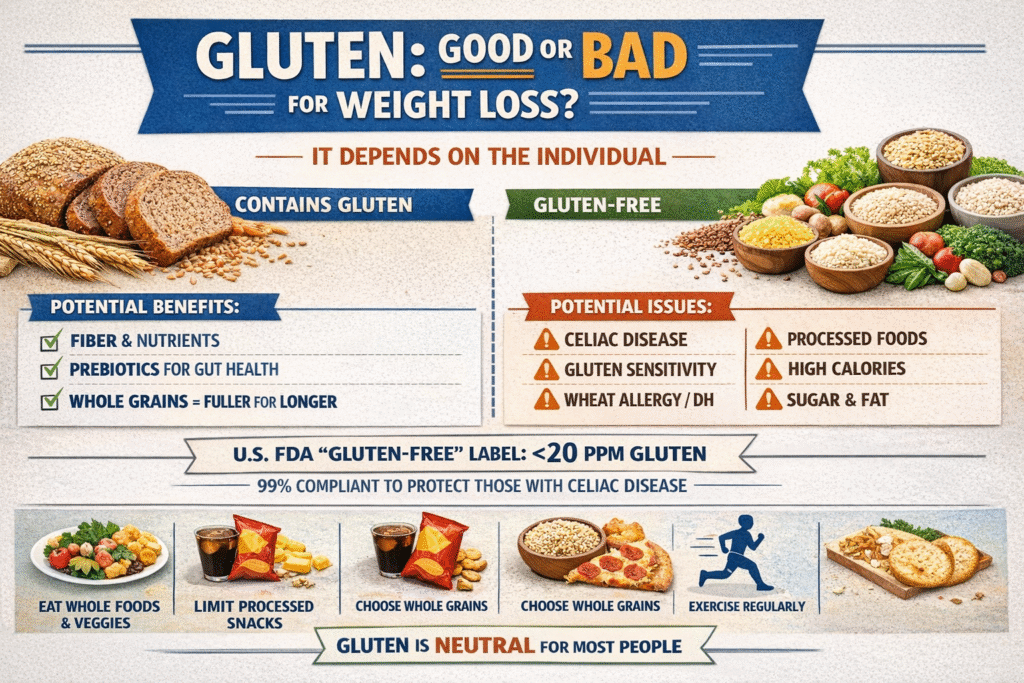
📌 Key FDA Facts
1. Gluten-Free Standard
The FDA defines “gluten-free” as:
Less than 20 parts per million (ppm) of gluten in food.
This threshold was chosen because:
It is the lowest level reliably detectable using scientific testing methods.
2. Labeling Rules
Foods labeled gluten-free must NOT contain:
Wheat, rye, barley, or crossbreeds
Ingredients derived from these grains unless processed to remove gluten below 20 ppm.
3. Compliance Data
FDA sampling shows:
Over 99.5% of foods labeled gluten-free met compliance standards.
This indicates strong industry adherence.
4. Regulatory Goal
The FDA’s goal is to ensure that individuals with celiac disease receive accurate labeling and are not misled.
1️⃣ Why Gluten-Free Products Are So Popular
Even though only a small percentage of people medically need a gluten-free diet, many consumers choose these products because they believe they are healthier.
Common reasons include:
Perceived health benefits
Digestive health concerns
Weight loss trends
However, research shows many people avoiding gluten do not have celiac disease.
2️⃣ Who Should Avoid Gluten?
A gluten-free diet is medically recommended for:
People diagnosed with celiac disease
Individuals with wheat allergy
Those with confirmed non-celiac gluten sensitivity
Everyone else can usually consume gluten safely.
3️⃣ Best Foods for Weight Loss (With or Without Gluten)
If You Eat Gluten
Choose:
Whole wheat bread
Oats (certified gluten-free if needed)
Barley
Farro
Bulgur
Naturally Gluten-Free Whole Foods
Fruits
Vegetables
Legumes
Eggs
Fish
Poultry
Nuts
Seeds
Quinoa
Brown rice
Millet
Buckwheat
The key is whole foods, not labels.
4️⃣ Common Myths About Gluten and Weight Loss
Myth 1: Gluten causes belly fat
❌ False — excess calories cause fat gain.
Myth 2: Gluten-free equals healthy
❌ Not always — many products are highly processed.
Myth 3: Everyone should avoid gluten
❌ Only people with medical conditions need to.
Myth 4: Gluten causes inflammation in everyone
❌ Evidence supports this only in sensitive individuals.
5️⃣ Practical Weight Loss Advice
Instead of focusing on gluten alone:
✔ Eat more fiber-rich whole foods
✔ Reduce ultra-processed snacks
✔ Choose whole grains over refined grains
✔ Watch portion sizes
✔ Prioritize protein and vegetables
✔ Stay physically active
6️⃣ Final Verdict: Is Gluten Good or Bad for Weight Loss?
⭐ For most people:
Gluten is neutral — neither good nor bad.
⭐ For people with celiac disease or sensitivity:
Gluten is harmful and must be avoided.
⭐ For weight loss success:
Food quality matters more than gluten content.
If your diet includes whole grains, fruits, vegetables, and lean protein, gluten will not prevent weight loss.
Final Takeaway
The gluten debate often creates unnecessary fear. Science shows:
Gluten is safe for most individuals
Whole grains can support healthy weight management
Gluten-free diets are essential for some — but not everyone
FDA labeling rules help protect consumers by setting strict standards (less than 20 ppm gluten)
The real secret to weight loss isn’t avoiding gluten — it’s building a balanced, sustainable eating pattern.