
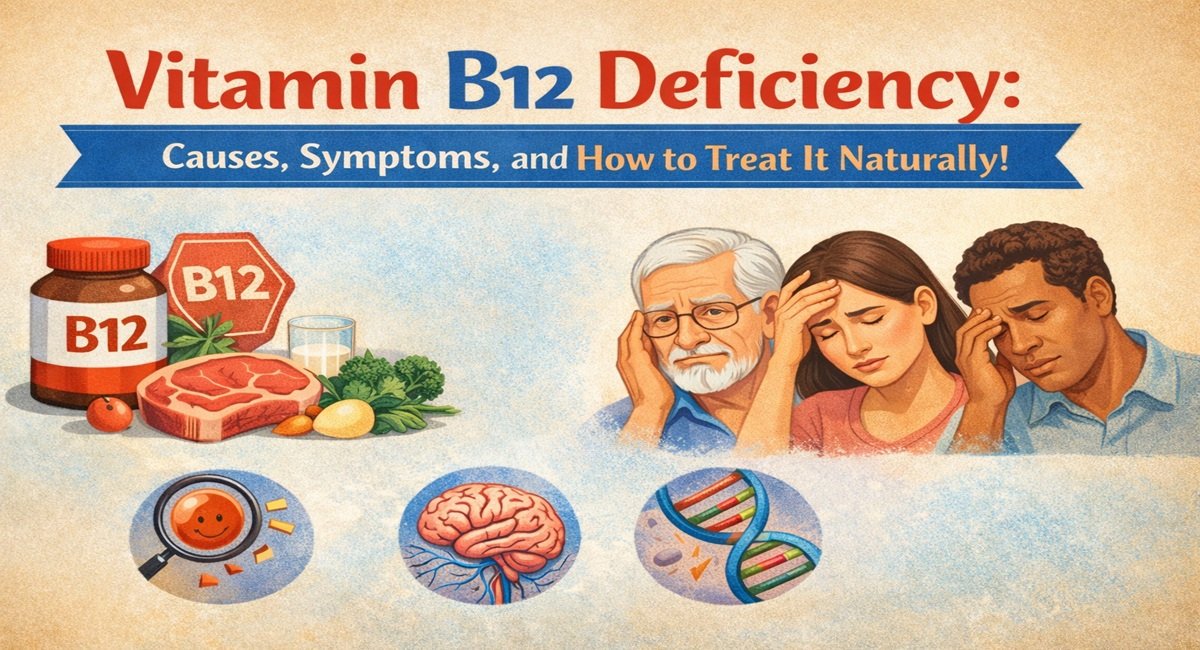
What is Vitamin B12?
Vitamin B12, also known as cobalamin, is a water-soluble vitamin that plays a critical role in many of the body’s vital functions. Unlike most vitamins, B12 contains cobalt, hence the name “cobalamin.” It is essential for brain function, nerve tissue health, and the production of red blood cells.
Functions of Vitamin B12
Vitamin B12 is vital for several important biological functions:
Red Blood Cell Formation:
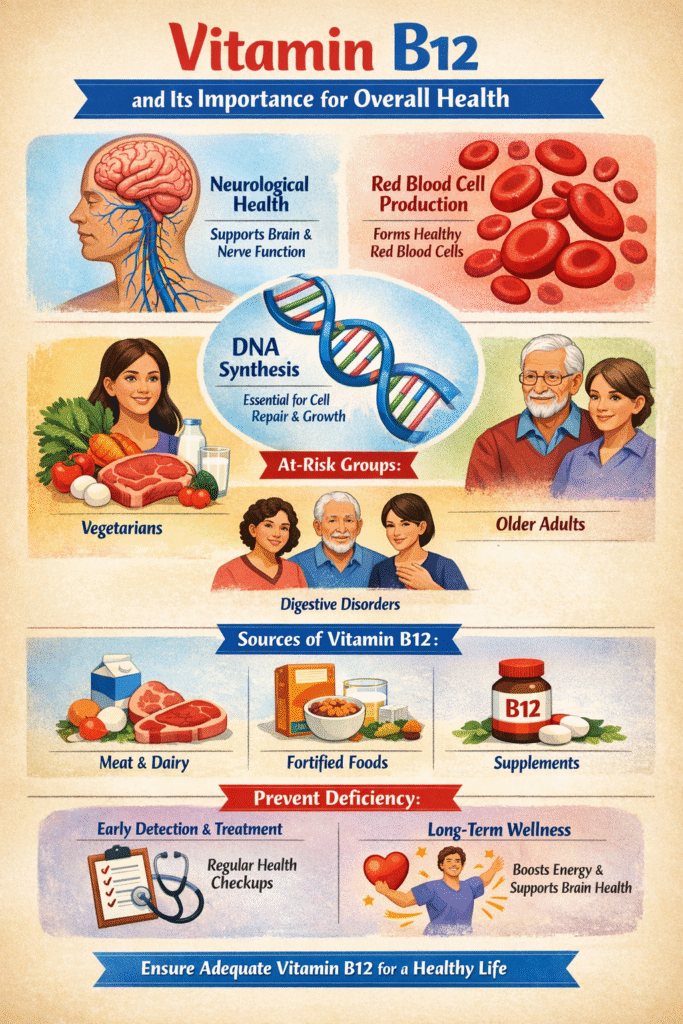
B12 aids in the production of red blood cells. A deficiency can lead to megaloblastic anemia, where red blood cells are large and underdeveloped.
Nerve Cell Health and Function:
It is crucial for maintaining the health of the myelin sheath, the protective layer that covers nerves. Damage to this sheath can impair nerve signaling and cause neurological issues. (Watch Video)
DNA Synthesis:
B12 is required for proper DNA production, which is essential during cell division and growth.
Brain Function:
Adequate levels support memory, concentration, and mood regulation. Long-term deficiency may contribute to cognitive decline and dementia.
Homocysteine Regulation:
B12 works alongside folate and vitamin B6 to reduce levels of homocysteine, an amino acid that, at elevated levels, is associated with cardiovascular disease.
Sources of Vitamin B12
Vitamin B12 is naturally found only in animal-derived foods, making it especially critical for vegetarians and vegans to monitor their intake.
Rich Sources Include:
Meat (beef, lamb, pork)
Fish and shellfish (salmon, tuna, sardines, clams)
Dairy products (milk, cheese, yogurt)
Eggs
Liver and organ meats
Fortified foods: plant milks, breakfast cereals, nutritional yeast
Supplements:
Available in forms like cyanocobalamin and methylcobalamin, taken orally, sublingually, or via injections.
Daily Recommended Intake:
The Recommended Dietary Allowance (RDA) for adults is:
2.4 micrograms per day
Higher needs for:
Pregnant and breastfeeding women
Elderly individuals (due to poor absorption)
Signs of Vitamin B12 Deficiency:
Deficiency can develop slowly and become severe. Common symptoms include:
Fatigue and weakness
Pale or jaundiced skin
Numbness or tingling in hands and feet (peripheral neuropathy)
Memory loss and confusion
Difficulty walking or maintaining balance
Mood changes or depression
Glossitis and mouth ulcers
In extreme cases, untreated deficiency can cause permanent nerve damage and dementia.
Who is at Risk of Deficiency?
Vegetarians/Vegans
B12 is not naturally present in plant-based foods. Without supplements or fortified foods, deficiency is likely over time.
Older Adults
With age, the body produces less stomach acid, which is necessary to absorb B12 from food.
People with Digestive Disorders
Conditions like pernicious anemia, Crohn’s disease, or celiac disease impair absorption.
Those Taking Certain Medications
Long-term use of proton pump inhibitors, metformin, or H2 blockers can reduce absorption.
Diagnosis and Treatment
Diagnosis involves:
Blood tests measuring B12 levels, methylmalonic acid, and homocysteine.
Treatment options include:
Oral B12 supplements (if mild or due to dietary lack)
Intramuscular injections (for severe deficiency or absorption issues)
Sublingual drops or nasal sprays for those who can’t take pills.