
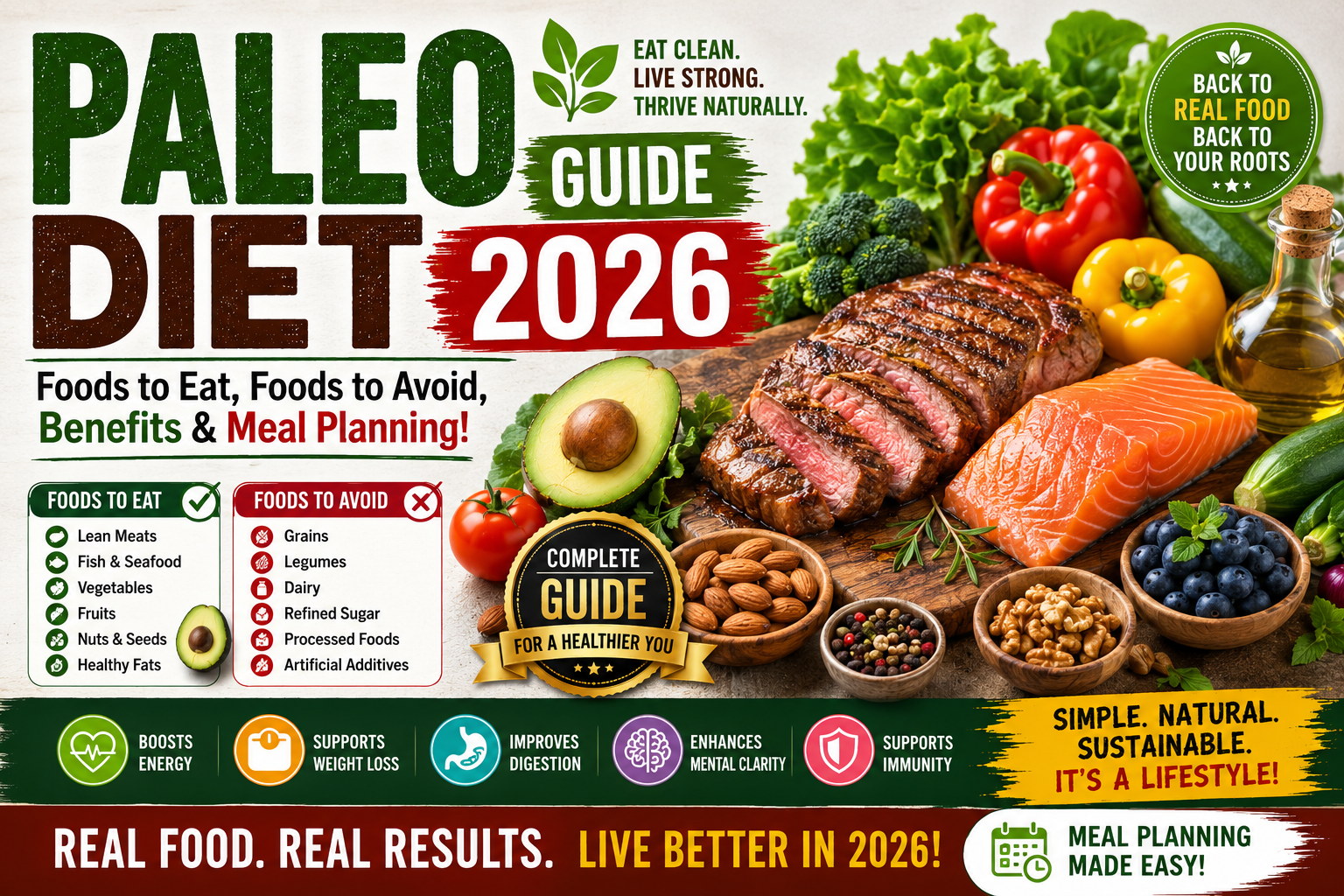
The Paleo Diet has become one of the most popular nutrition approaches for people seeking a healthier lifestyle, sustainable weight management, and improved overall wellness. Often referred to as the “Caveman Diet” or “Stone Age Diet,” the Paleo Diet focuses on consuming foods that were available to our ancestors before the rise of modern agriculture and processed foods.
The philosophy behind the Paleo Diet is simple: our bodies are genetically adapted to thrive on whole, natural foods such as lean meats, fish, fruits, vegetables, nuts, and seeds. By eliminating processed foods, refined sugars, and artificial ingredients, many followers report increased energy levels, better digestion, and improved body composition.
In this comprehensive guide, you’ll learn everything you need to know about the Paleo Diet, including its principles, approved foods, exercise recommendations, family-friendly applications, and practical tips to get started.
What Exactly Is The Paleo Diet?
The Paleo Diet is based on the idea that humans should eat foods similar to those consumed during the Paleolithic Era, which lasted approximately 2.5 million years and ended around 10,000 years ago.
During this period, humans survived as hunter-gatherers. Their diets consisted primarily of:
- Wild game and lean meats
- Fish and seafood
- Fruits
- Vegetables
- Nuts and seeds
- Natural fats
>>> Access Paleo Diet Cookbook Now!
The Paleo Diet excludes foods that became common after the development of agriculture, such as grains, legumes, dairy products, and highly processed foods.
Core Principles of the Paleo Diet:
1. Eat Whole Foods
Whole foods are foods that remain close to their natural state and contain minimal processing. Examples include:
- Fresh vegetables
- Fruits
- Grass-fed meats
- Wild-caught fish
- Eggs
- Nuts
2. Eliminate Processed Foods
Processed foods often contain:
- Artificial preservatives
- Added sugars
- Trans fats
- Chemical additives
Removing these foods may help reduce inflammation and improve overall health.
3. Focus on Nutrient Density
The Paleo Diet emphasizes foods rich in:
- Vitamins
- Minerals
- Antioxidants
- Healthy fats
- High-quality protein
4. Balance Blood Sugar Levels
Since the Paleo Diet removes refined carbohydrates and added sugars, many people experience more stable blood sugar levels and fewer energy crashes throughout the day.
Potential Benefits of the Paleo Diet:
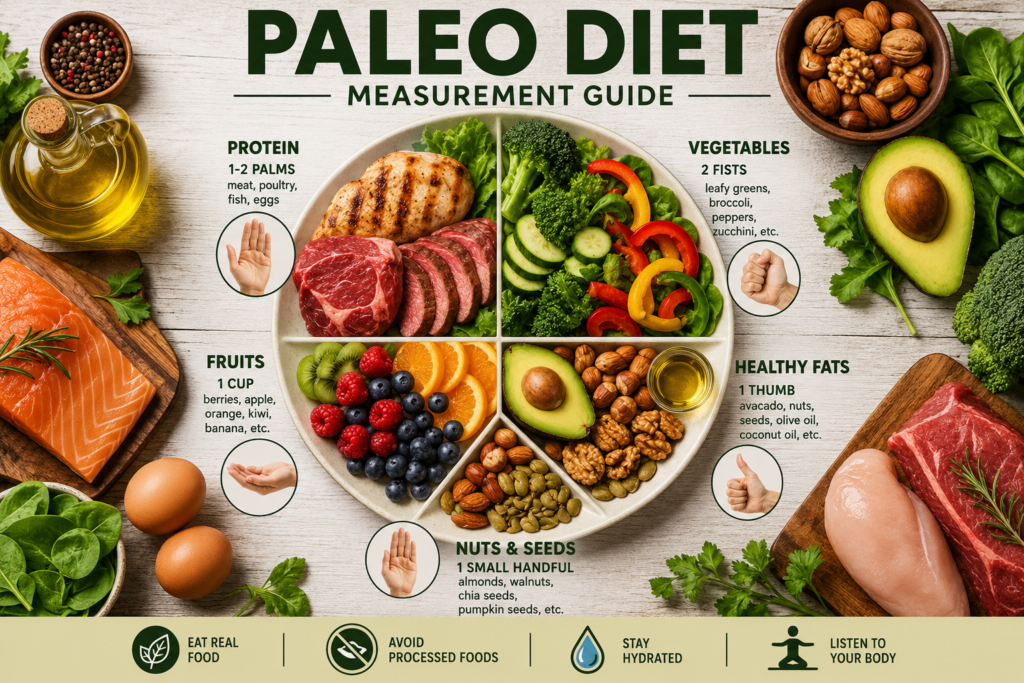
Many people adopt the Paleo Diet for its potential health benefits, including:
Weight Loss
The high-protein nature of the Paleo Diet can increase feelings of fullness and reduce calorie intake naturally.
Improved Energy
By avoiding processed foods and sugar spikes, many followers report more consistent energy levels.
Better Digestion
The emphasis on fruits and vegetables provides valuable fiber that supports digestive health.
Reduced Inflammation
Whole foods contain fewer inflammatory compounds than highly processed foods.
Enhanced Mental Clarity
Stable blood sugar and nutrient-rich foods may contribute to improved focus and cognitive performance.
Common Misconceptions
Myth 1: Paleo Means Eating Only Meat
While protein is important, vegetables and fruits play a major role in a balanced Paleo Diet.
Myth 2: Paleo Is a High-Fat Diet
The Paleo Diet includes healthy fats but focuses primarily on balanced nutrition rather than excessive fat consumption.
Myth 3: Paleo Is Difficult
With proper planning, Paleo meals can be simple, delicious, and easy to prepare.
>>> Access Paleo Diet Cookbook Now!
Is Organic The Way To Go In This Modern World?
One of the most common questions among Paleo enthusiasts is whether organic food is necessary.
While the Paleo Diet does not require organic foods, many followers prefer organic options whenever possible.
Understanding Organic Foods:
Organic foods are produced without:
- Synthetic pesticides
- Artificial fertilizers
- Genetically modified organisms (GMOs)
- Growth hormones
Organic farming practices generally prioritize soil health and environmental sustainability.
Benefits of Choosing Organic:
Reduced Exposure to Chemicals
Organic produce typically contains fewer pesticide residues compared to conventionally grown foods.
Better Environmental Practices
Organic farming often supports:
- Biodiversity
- Soil conservation
- Water quality
Improved Animal Welfare
Organic livestock generally receive:
- Better living conditions
- Access to outdoor environments
- Natural feed sources
Is Organic Meat Better for Paleo Followers?
Many Paleo advocates recommend:
- Grass-fed beef
- Pasture-raised poultry
- Wild-caught fish
These options often contain:
- Higher omega-3 fatty acids
- Better nutrient profiles
- Fewer artificial additives
When Organic Isn’t Available
Organic foods can be expensive and difficult to access in some areas. Fortunately, the Paleo Diet can still be effective using conventional foods.
Focus on:
- Eating more vegetables
- Choosing fresh foods
- Avoiding processed products
These steps often provide greater health benefits than worrying exclusively about organic certification.
Budget-Friendly Paleo Shopping Tips:
Buy Seasonal Produce
Seasonal fruits and vegetables are often:
- More affordable
- Fresher
- More nutritious
Purchase Frozen Vegetables
Frozen produce can be:
- Cost-effective
- Convenient
- Nutritionally comparable to fresh produce
Buy in Bulk
Nuts, seeds, and frozen proteins can often be purchased in larger quantities to reduce costs.
Prioritize Quality Where Possible
If your budget allows, focus on upgrading:
- Meat
- Eggs
- Dairy alternatives
- Produce
Remember that eating whole foods consistently matters more than achieving perfect organic standards.
Paleo Approved Foods
Understanding what you can eat is essential for success on the Paleo Diet.
Foods to Eat on the Paleo Diet
Lean Meats
Protein serves as the foundation of the Paleo Diet.
Excellent options include:
- Beef
- Chicken
- Turkey
- Lamb
- Bison
- Venison
Whenever possible, choose:
- Grass-fed beef
- Pasture-raised poultry
Fish and Seafood
Seafood provides valuable nutrients and healthy fats.
Examples include:
- Salmon
- Tuna
- Sardines
- Mackerel
- Shrimp
- Cod
Eggs
Eggs are a versatile and nutrient-dense Paleo food.
They contain:
- Protein
- Healthy fats
- Vitamins A, D, E, and B12
Vegetables
Vegetables should make up a significant portion of your Paleo meals.
Popular choices include:
- Spinach
- Kale
- Broccoli
- Cauliflower
- Bell peppers
- Zucchini
- Carrots
Fruits
Fruits provide natural sweetness and antioxidants.
Healthy options include:
- Apples
- Berries
- Oranges
- Bananas
- Grapes
- Mangoes
Nuts and Seeds
Great snack options include:
- Almonds
- Walnuts
- Pecans
- Cashews
- Pumpkin seeds
- Sunflower seeds
Healthy Fats
Healthy fat sources include:
- Avocados
- Coconut oil
- Olive oil
- Avocado oil
Foods to Avoid on the Paleo Diet
Grains
Avoid:
- Wheat
- Rice
- Oats
- Barley
- Corn
Legumes
Avoid:
- Beans
- Lentils
- Peanuts
- Soybeans
Dairy Products
Traditional Paleo guidelines eliminate:
- Milk
- Cheese
- Yogurt
- Ice cream
Refined Sugar
Avoid products containing:
- High-fructose corn syrup
- White sugar
- Artificial sweeteners
Processed Foods
Limit or eliminate:
- Chips
- Fast food
- Packaged snacks
- Sugary beverages
Sample Paleo Meal Plan
Breakfast
Vegetable omelet with spinach and mushrooms.
Snack
Handful of almonds and blueberries.
Lunch
Grilled chicken salad with olive oil dressing.
Snack
Apple slices with almond butter.
Dinner
Baked salmon with roasted vegetables.
Dessert
Fresh berries.
This meal plan demonstrates how simple and satisfying the Paleo Diet can be.
Exercising On The Paleo Diet:
Physical activity is an important component of the Paleo lifestyle.
Our ancestors did not spend hours on treadmills. Instead, they engaged in varied movement patterns throughout the day.
The Paleo approach encourages natural movement and functional fitness.
Why Exercise Matters:
Exercise supports:
- Weight management
- Cardiovascular health
- Muscle maintenance
- Mental well-being
- Longevity
When combined with the Paleo Diet, exercise can significantly enhance results.
Best Types of Exercise for Paleo Followers:
Walking
Walking remains one of the most effective forms of exercise.
Benefits include:
- Low injury risk
- Improved cardiovascular health
- Stress reduction
Aim for 30–60 minutes daily.
Strength Training
Building muscle improves:
- Metabolism
- Functional strength
- Bone health
Exercises include:
- Squats
- Deadlifts
- Push-ups
- Pull-ups
- Lunges
High-Intensity Interval Training (HIIT)
HIIT workouts involve short bursts of intense activity followed by recovery periods.
Benefits include:
- Efficient calorie burning
- Improved endurance
- Enhanced cardiovascular fitness
Outdoor Activities
Paleo enthusiasts often enjoy:
- Hiking
- Swimming
- Cycling
- Climbing
These activities mimic the varied movement patterns of ancestral lifestyles.
Fueling Workouts on the Paleo Diet
Pre-Workout Foods
Good options include:
- Banana
- Apple
- Sweet potato
- Hard-boiled eggs
Post-Workout Recovery
Focus on:
- Protein
- Healthy carbohydrates
- Hydration
Examples:
- Grilled chicken with vegetables
- Salmon with sweet potatoes
- Eggs with fruit
Recovery Is Essential
Recovery includes:
- Adequate sleep
- Proper hydration
- Stress management
- Rest days
Many people underestimate recovery, yet it plays a crucial role in long-term fitness success.
Is The Paleo Diet Right For The Whole Family?
Many families wonder whether everyone can follow the Paleo Diet together.
The answer depends on individual needs, preferences, and health goals.
Benefits for Families:
A family-focused Paleo approach can encourage:
Healthier Eating Habits
Children learn to enjoy:
- Fruits
- Vegetables
- Whole foods
Reduced Processed Food Consumption
Families often consume fewer:
- Sugary snacks
- Soft drinks
- Fast foods
Better Meal Quality
Meals become centered around:
- Fresh ingredients
- Home cooking
- Balanced nutrition
Children and the Paleo Diet
Children require adequate nutrition to support growth and development.
Parents should focus on:
- Variety
- Nutrient density
- Sufficient calorie intake
A flexible Paleo approach may work best for many children.
Teenagers and Paleo
Active teenagers often need additional energy.
Include:
- Sweet potatoes
- Fruits
- Healthy fats
- Quality proteins
These foods support growth and athletic performance.
Pregnant and Breastfeeding Women
Women who are pregnant or breastfeeding should consult healthcare professionals before making major dietary changes.
Nutritional requirements increase significantly during these stages.
Making Paleo Family-Friendly
Create Simple Meals
Examples include:
- Grilled chicken with vegetables
- Beef stir-fry
- Salmon with roasted sweet potatoes
Encourage Participation
Allow children to:
- Help shop
- Wash vegetables
- Assist with meal preparation
This can increase interest in healthy eating.
Be Flexible
Perfection is not necessary.
Many families succeed by following Paleo principles most of the time rather than striving for strict adherence.
Conclusion – Tips To Start Today!
The Paleo Diet offers a practical framework for improving nutrition by emphasizing whole, minimally processed foods. Whether your goal is weight loss, increased energy, better digestion, or improved overall health, the Paleo Diet provides a simple and sustainable approach that focuses on foods humans have consumed for thousands of years.
10 Tips to Start the Paleo Diet Today
1. Clean Out Your Pantry
Remove highly processed foods and sugary snacks.
2. Focus on Whole Foods
Build meals around:
- Protein
- Vegetables
- Fruits
- Healthy fats
3. Plan Your Meals
Meal planning helps prevent unhealthy food choices.
4. Shop the Perimeter
Most grocery stores place fresh foods around the outer aisles.
5. Stay Hydrated
Drink plenty of water throughout the day.
6. Prepare Healthy Snacks
Keep nuts, fruit, and boiled eggs available.
7. Cook More at Home
Home cooking provides greater control over ingredients.
8. Don’t Aim for Perfection
Consistency matters more than perfection.
9. Combine Diet with Exercise
Walking, strength training, and outdoor activities complement the Paleo lifestyle.
10. Be Patient
Lasting health improvements take time. Focus on creating sustainable habits rather than seeking quick fixes.
Final Thoughts
The Paleo Diet is more than a temporary eating plan—it’s a lifestyle centered around real food, natural movement, and healthier daily habits. By prioritizing nutrient-dense foods and reducing processed ingredients, many people experience meaningful improvements in energy, body composition, and overall well-being. Start with small changes, stay consistent, and allow the Paleo Diet to become a foundation for long-term health and vitality.

Nilesh Vijay is the founder and lead health writer at Health Tips USA. He is passionate about helping people understand health, nutrition, weight management, fitness, and healthy living through easy-to-read, research-based articles.
With over four years of experience in health content writing, Nilesh has written extensively about healthy eating, weight management, nutrition, vitamins, fitness, and overall wellness. His goal is to turn complex health information into simple, practical advice that readers can easily understand and apply in their daily lives.
Nilesh has also authored several health and nutrition eBooks published on Amazon and other leading digital platforms. His work covers a wide range of topics, including healthy recipes, balanced diets, meal planning, and lifestyle habits that support long-term well-being.
Areas of Expertise
Weight management and healthy living
Nutrition and balanced diet planning
Vitamins, minerals, and healthy eating
Fitness and active lifestyle tips
Wellness, healthy aging, and preventive health
Research-based health education
What Nilesh Believes
Nilesh believes that health information should be accurate, easy to understand, and based on reliable research. His mission is to provide practical, trustworthy content that helps readers make informed decisions about their health and lifestyle.
📧 You can reach Nilesh through the Contact Us page on Health Tips USA.