
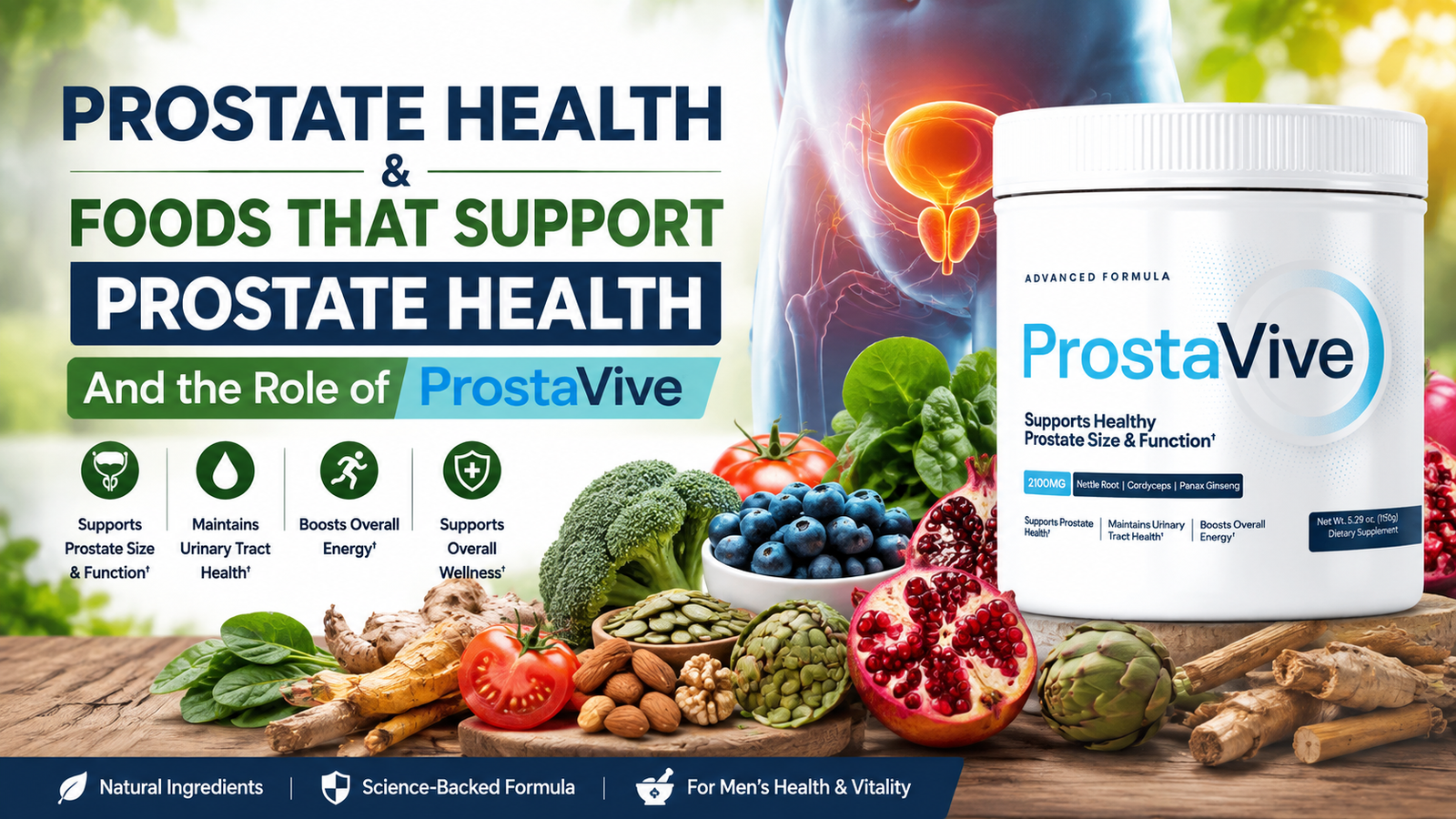
Prostate health is an important part of men’s overall health, particularly as they get older. The prostate is a small gland located below the bladder and surrounding part of the urethra. It plays an important role in the male reproductive system. However, changes in the prostate can affect urination, sleep, daily comfort, and quality of life.
One of the most common prostate conditions in older men is benign prostatic hyperplasia (BPH), a noncancerous enlargement of the prostate. As the prostate becomes enlarged, it can press against the urethra and contribute to symptoms such as a weak or interrupted urine stream, difficulty starting urination, frequent urination, urgency, nighttime urination, and incomplete bladder emptying.
Although diet cannot guarantee prevention of prostate problems, a balanced eating pattern, regular physical activity, healthy body weight, adequate hydration, and appropriate medical care can all form part of a prostate-conscious lifestyle. The National Institute of Diabetes and Digestive and Kidney Diseases notes that researchers have not established a specific diet that prevents BPH, although dietary and lifestyle changes may help some urinary symptoms.
This article explores prostate health, foods that may support overall prostate wellness, lifestyle habits, and the potential role of ProstaVive as a dietary supplement.
Why Prostate Health Matters?
The prostate naturally changes with age. BPH becomes increasingly common among men over 50, although prostate enlargement and urinary symptoms do not always occur together. Some men with an enlarged prostate have relatively few symptoms, while others with a less enlarged prostate may experience significant urinary problems.

>>> Watch Why Prostate Health Important!
Common urinary symptoms associated with BPH include:
- Difficulty starting urination
- Weak urine flow
- Interrupted urine stream
- Dribbling after urination
- Frequent urination
- A sudden or urgent need to urinate
- Getting up repeatedly during the night
- Feeling that the bladder has not completely emptied
These symptoms should not automatically be assumed to be caused by an enlarged prostate. Similar symptoms can occur with urinary tract infections, prostatitis, bladder problems, or other conditions.
For that reason, maintaining prostate health isn’t simply about taking supplements or changing your diet. Regular conversations with a qualified healthcare professional are also important, particularly when urinary symptoms develop or become worse.
Foods That Support Prostate Health:
There is no single “miracle food” that can maintain a healthy prostate. Instead, the goal should be to build an overall nutritious eating pattern rich in vegetables, fruits, whole grains, healthy fats, and quality protein.
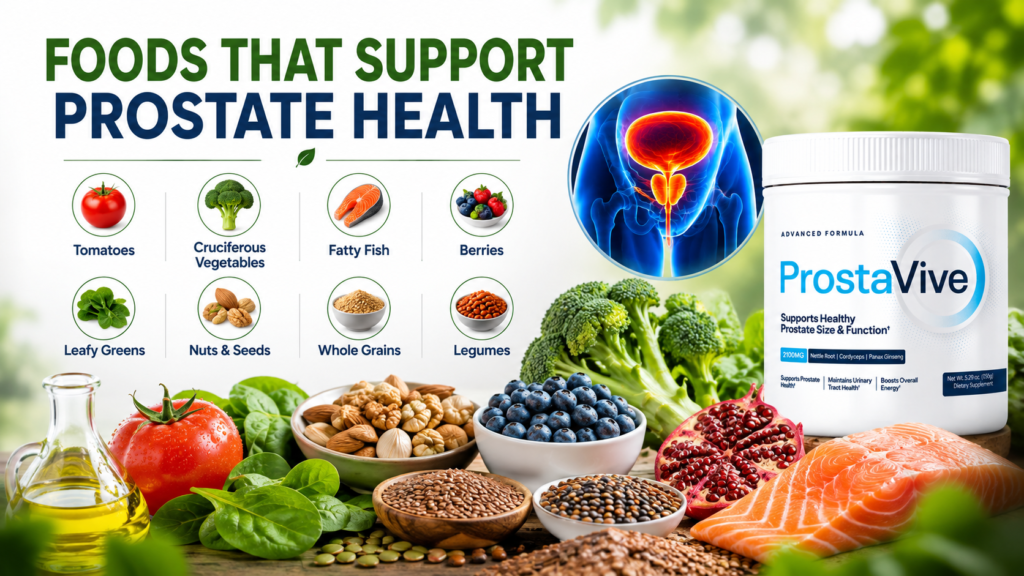
Here are several food groups commonly included in a prostate-friendly, heart-healthy diet.
1. Tomatoes and Tomato-Based Foods
Tomatoes are particularly well known for containing lycopene, a carotenoid antioxidant that gives many red fruits and vegetables their color.
Tomatoes can be enjoyed fresh, cooked, or incorporated into foods such as:
- Tomato soup
- Homemade tomato sauce
- Salsa
- Fresh salads
- Tomato-based vegetable dishes
While lycopene is widely studied in relation to prostate health, it is important not to overstate the evidence. Current evidence does not establish lycopene supplements as a treatment or prevention strategy for BPH.
Nevertheless, tomatoes can still be a nutritious addition to an overall balanced diet.
2. Cruciferous Vegetables
Broccoli, cauliflower, cabbage, Brussels sprouts, kale, and other cruciferous vegetables are nutrient-dense foods that provide fiber, vitamins, minerals, and naturally occurring plant compounds.
Adding a variety of vegetables to your meals is a simple way to improve overall nutritional quality.
Try:
- Steamed broccoli with grilled fish
- Roasted Brussels sprouts
- Cauliflower with herbs and olive oil
- Cabbage in soups or salads
- Kale in smoothies or vegetable bowls
Rather than focusing on one particular vegetable, aim for variety throughout the week.
3. Fatty Fish
Salmon, sardines, trout, and other fatty fish provide protein and omega-3 fatty acids.
Including fish regularly can fit into a heart-healthy eating pattern, which is also relevant because cardiovascular health and circulation are important components of overall wellness.
Try replacing some higher-fat processed meats with fish.
A simple meal could include grilled salmon, steamed broccoli, and a serving of whole grains.
4. Berries and Other Colorful Fruits
Blueberries, strawberries, raspberries, blackberries, oranges, and other fruits provide vitamins, minerals, fiber, and antioxidant compounds.
Instead of relying on fruit juices, choose whole fruits more often. Whole fruit provides fiber and can be incorporated into breakfast, snacks, salads, or smoothies.
A simple prostate-conscious smoothie might include:
- Berries
- Plain Greek yogurt
- Spinach
- Unsweetened milk or a suitable alternative
- A small amount of nuts or seeds
5. Leafy Green Vegetables
Spinach, kale, Swiss chard, and other leafy greens can provide folate, vitamin K, carotenoids, and other nutrients.
Adding greens to meals is easy:
- Mix spinach into eggs
- Add kale to soups
- Make a large green salad
- Blend spinach into a smoothie
- Serve sautéed greens with fish or poultry
A varied vegetable intake is generally more valuable than concentrating on a single “superfood.”
6. Nuts and Seeds
Nuts and seeds provide healthy fats, protein, minerals, and other nutrients.
Examples include:
- Almonds
- Walnuts
- Pumpkin seeds
- Sunflower seeds
- Chia seeds
- Flaxseeds
A small serving can make an easy snack or topping for yogurt, oatmeal, or salads.
Because nuts and seeds are calorie-dense, portion size still matters, especially for men trying to maintain a healthy body weight.
7. Whole Grains
Oats, brown rice, quinoa, barley, and whole-grain breads can provide fiber and other nutrients.
Replacing some refined grains with whole grains can help create a more balanced diet.
For example, choose oatmeal instead of a highly refined breakfast pastry, or brown rice instead of white rice for some meals.
8. Legumes and Plant-Based Protein
Beans, lentils, chickpeas, and peas provide plant protein, fiber, vitamins, and minerals.
They can be used in:
- Soups
- Salads
- Curries
- Chili
- Grain bowls
- Vegetable wraps
A diet containing a variety of plant foods can provide a broad range of nutrients without depending heavily on processed foods.
Foods and Drinks to Moderate
Just as important as adding nutritious foods is considering what may worsen urinary symptoms for some men.
The NIDDK recommends that men experiencing BPH symptoms consider reducing alcohol and caffeine and limiting liquids before bedtime or before situations where frequent bathroom visits are inconvenient.
Depending on individual tolerance, it may be helpful to moderate:
- Excessive alcohol
- Large amounts of caffeine
- Highly processed foods
- Excessive added sugar
- Very large meals late at night
This doesn’t mean every man needs to eliminate these foods completely. Individual responses vary, and a sustainable diet is generally easier to maintain than an unnecessarily restrictive one.
Lifestyle Habits That Complement a Prostate-Friendly Diet
Nutrition is only one piece of prostate wellness.
Physical activity is another important factor. According to the NIDDK, being physically active may help reduce the risk of BPH, although researchers have not identified a guaranteed way to prevent the condition.
A healthy lifestyle can include:
Stay Physically Active
Walking, cycling, swimming, resistance training, and other forms of exercise can help support overall cardiovascular and metabolic health.
Maintain a Healthy Weight
Excess body weight can be associated with several chronic health concerns. Maintaining a healthy weight through balanced nutrition and physical activity can therefore be part of a broader men’s wellness strategy.
Stay Hydrated—But Time Fluids Wisely
Drinking enough fluid is important, but men experiencing nighttime urination may find that reducing fluids close to bedtime helps reduce nighttime bathroom trips.
Don’t Ignore Persistent Symptoms
Persistent urinary symptoms deserve attention. A healthcare professional can determine whether symptoms are related to BPH or another condition.
What Is ProstaVive?
ProstaVive is marketed as a dietary supplement designed to support prostate wellness, urinary health, circulation, and men’s overall vitality.
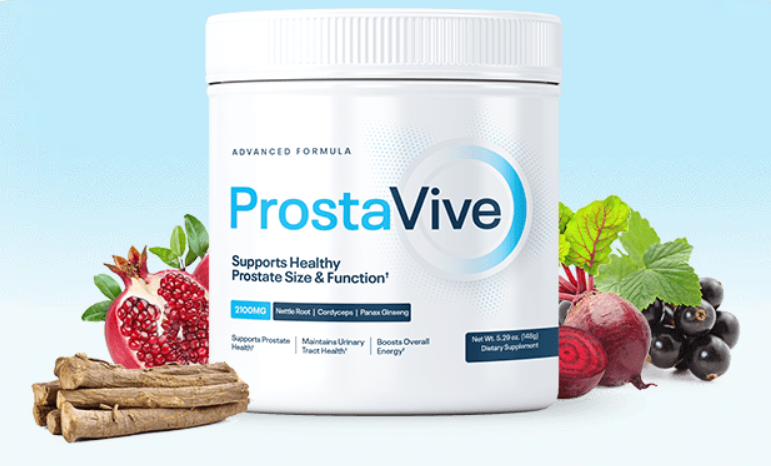
According to the product information provided, its formula combines several botanical ingredients and nutrients, including:
- Boron
- Tongkat Ali
- Ashwagandha
- Fenugreek
- Panax ginseng
- Maca root
- Artichoke extract
- Nettle root
- Zinc
- Magnesium
- Vitamin D
The concept behind ProstaVive is to combine multiple ingredients into a single daily formula rather than relying on one individual nutrient.
However, it is important to distinguish supplement marketing claims from established clinical evidence. A dietary supplement should not be presented as a proven treatment for an enlarged prostate, prostate cancer, urinary obstruction, or other medical condition.
Understanding the Ingredients in ProstaVive
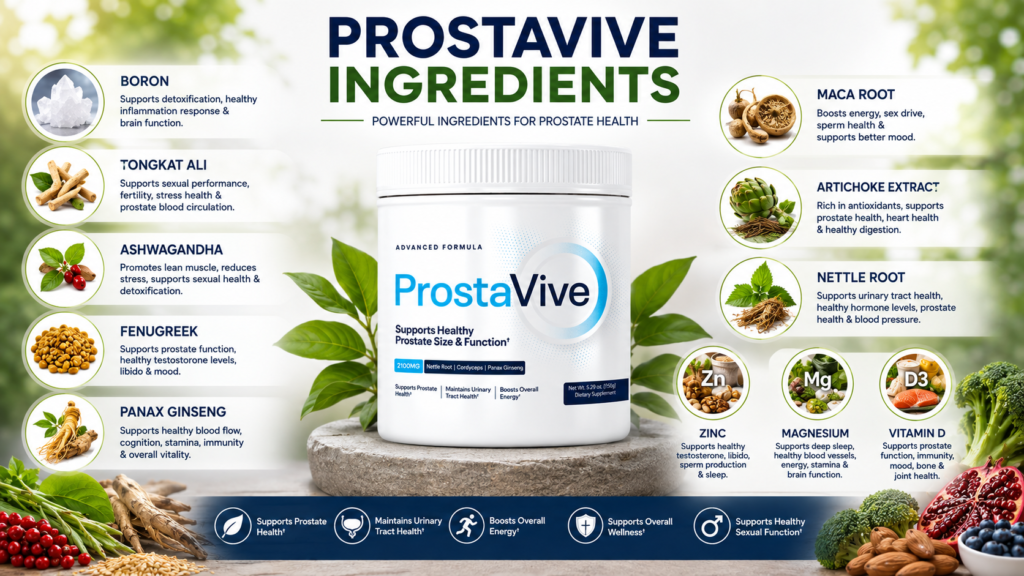
Boron
Boron is a trace element found naturally in certain foods. The ProstaVive formulation includes boron as part of its broader nutritional approach.
However, claims that boron alone can dramatically improve prostate health should be treated cautiously because evidence for specific prostate outcomes remains limited.
Tongkat Ali
Tongkat Ali, also known as Eurycoma longifolia, is traditionally used in Southeast Asian herbal medicine and is commonly marketed for men’s vitality and sexual wellness.
Research has investigated its potential effects on areas such as testosterone and stress, but evidence varies depending on the specific health outcome and preparation.
Ashwagandha
Ashwagandha is an adaptogenic herb that has been studied for stress, sleep, exercise performance, and other areas of health.
Although it appears in many men’s wellness formulas, it should not automatically be considered a proven prostate treatment.
Fenugreek
Fenugreek is a traditional herb used in food and herbal medicine. It has been studied for several aspects of metabolic and men’s health.
Its inclusion in a prostate supplement reflects the broader approach of combining botanical ingredients rather than relying on one compound.
Panax Ginseng
Panax ginseng has a long history of traditional use and has been investigated for energy, sexual health, cognition, and other areas.
As with other botanical ingredients, the evidence depends on the specific preparation, dosage, and health outcome being studied.
Maca Root
Maca is a Peruvian plant commonly used in supplements marketed for energy, libido, and reproductive wellness.
While research has explored maca for sexual health and other outcomes, it should not be described as a clinically established treatment for BPH.
Artichoke Extract
Artichoke contains naturally occurring plant compounds and antioxidants. Artichoke extracts have been researched for metabolic and digestive health, among other areas.
In ProstaVive, artichoke extract is presented as one component of a broader botanical formula.
Nettle Root
Nettle root (Urtica dioica) is particularly interesting in the context of prostate supplements because it has been studied for urinary symptoms associated with BPH.
The evidence remains limited, but the National Center for Complementary and Integrative Health notes that some studies suggest nettle may improve certain lower urinary tract symptoms.
Zinc, Magnesium, and Vitamin D
ProstaVive also contains several essential nutrients.
Zinc plays important roles in normal immune function, cellular processes, and reproductive health.
Magnesium contributes to normal muscle and nerve function and many other physiological processes.
Vitamin D is important for bone health, immune function, and numerous biological processes.
These nutrients are important for overall health, but taking more than the body needs does not necessarily provide additional prostate benefits.
Prostate Health Is About the Bigger Picture
The most practical approach to prostate wellness is not to search for one magical ingredient.
Instead, think about the bigger picture:
Eat a varied diet.
Stay physically active.
Maintain a healthy weight.
Limit excessive alcohol and caffeine.
Manage fluid timing if nighttime urination is a problem.
Get appropriate medical checkups.
Pay attention to persistent urinary symptoms.
Foods such as tomatoes, broccoli, leafy greens, berries, fatty fish, nuts, seeds, beans, and whole grains can all fit comfortably into a nutrient-rich eating pattern.
A supplement such as ProstaVive may be considered by some men as an additional nutritional option, but its claims should be evaluated realistically and alongside professional medical advice.
When Should You Talk to a Doctor?
Never assume that urinary changes are simply a normal part of aging.
Speak with a healthcare professional if you experience persistent:
- Weak urine flow
- Difficulty starting urination
- Frequent nighttime urination
- Urinary urgency
- Incomplete bladder emptying
- Pain during urination
- Blood in the urine
The NIDDK specifically advises medical attention for symptoms such as inability to urinate, blood in the urine, or painful and urgent urination accompanied by fever and chills.
These symptoms may have causes other than BPH and should be properly evaluated.
Final Thoughts
Prostate health is an important part of men’s long-term wellness. While there is no single food or supplement that guarantees a healthy prostate, a balanced diet rich in vegetables, fruits, whole grains, fish, nuts, seeds, and legumes can support overall nutritional health.
At the same time, lifestyle habits such as regular physical activity, healthy weight management, sensible fluid timing, and moderation of alcohol and caffeine can be useful for men experiencing urinary symptoms.
ProstaVive takes a different approach by combining botanical ingredients and nutrients such as boron, Tongkat Ali, ashwagandha, fenugreek, Panax ginseng, maca, artichoke extract, nettle root, zinc, magnesium, and vitamin D into one supplement .

Its role should be understood as supplemental support rather than a substitute for diagnosis or medical treatment. The scientific evidence for individual ingredients varies considerably, and some prostate-related supplement claims remain insufficiently established.
The best prostate-health strategy is therefore a comprehensive one: eat well, move regularly, maintain healthy habits, monitor urinary changes, and seek professional medical advice when symptoms persist.
Read Also – How Citrus Peel Support Healthy Weight loss!
Disclaimer: This article is for educational and informational purposes only. ProstaVive and its ingredients should not be considered a treatment or cure for BPH, prostate cancer, prostatitis, urinary obstruction, or any other medical condition. Always consult a qualified healthcare professional before starting a dietary supplement, particularly if you take medications or have an existing health condition.

Nilesh Vijay is the founder and lead health writer at Health Tips USA. He is passionate about helping people understand health, nutrition, weight management, fitness, and healthy living through easy-to-read, research-based articles.
With over four years of experience in health content writing, Nilesh has written extensively about healthy eating, weight management, nutrition, vitamins, fitness, and overall wellness. His goal is to turn complex health information into simple, practical advice that readers can easily understand and apply in their daily lives.
Nilesh has also authored several health and nutrition eBooks published on Amazon and other leading digital platforms. His work covers a wide range of topics, including healthy recipes, balanced diets, meal planning, and lifestyle habits that support long-term well-being.
Areas of Expertise
Weight management and healthy living
Nutrition and balanced diet planning
Vitamins, minerals, and healthy eating
Fitness and active lifestyle tips
Wellness, healthy aging, and preventive health
Research-based health education
What Nilesh Believes
Nilesh believes that health information should be accurate, easy to understand, and based on reliable research. His mission is to provide practical, trustworthy content that helps readers make informed decisions about their health and lifestyle.
📧 You can reach Nilesh through the Contact Us page on Health Tips USA.