

Ozempic, Wegovy & Zepbound Weight loss Drugs Side Effects
GLP-1 medications have revolutionized weight loss and diabetes treatment across the United States. Drugs such as Ozempic, Wegovy, Zepbound, Mounjaro, and Rybelsus are helping millions of Americans lose weight, improve blood sugar control, and reduce obesity-related health risks. However, while these medications can be highly effective, understanding potential GLP-1 side effects is essential before starting treatment.
In 2026, GLP-1 medications remain among the most prescribed weight-loss therapies in America. As usage continues to rise, patients and healthcare providers are paying closer attention to both common and rare side effects.
This guide covers everything you need to know about GLP-1 side effects, including the latest U.S. data, common symptoms, serious risks, prevention strategies, and when to seek medical attention.
What Are GLP-1 Medications?
GLP-1 stands for Glucagon-Like Peptide-1, a natural hormone produced in the intestine after eating.
GLP-1 medications work by:
- Slowing stomach emptying
- Increasing feelings of fullness
- Reducing appetite
- Improving insulin production
- Lowering blood sugar levels
Popular GLP-1 medications in 2026 include:
While these medications offer impressive weight loss benefits, they can also cause side effects ranging from mild digestive discomfort to rare medical complications.
Why Do GLP-1 Side Effects Occur?
The same mechanisms that make GLP-1 drugs effective can also cause side effects.
When stomach emptying slows down:
- Food stays in the stomach longer.
- Digestion changes.
- Appetite decreases.
- Gastrointestinal symptoms may develop.
Many side effects occur because the body is adjusting to these changes.
The good news is that most side effects improve as treatment continues.
How Common Are GLP-1 Side Effects?
According to clinical trial data and real-world patient reports, gastrointestinal symptoms are the most frequently reported side effects.
In many studies:
- More than 50% of users experience some digestive symptoms.
- Most symptoms are mild to moderate.
- Serious side effects remain relatively uncommon.
As of 2026, millions of Americans have used GLP-1 medications, giving healthcare providers a much clearer understanding of their safety profile.
Most Common GLP-1 Side Effects
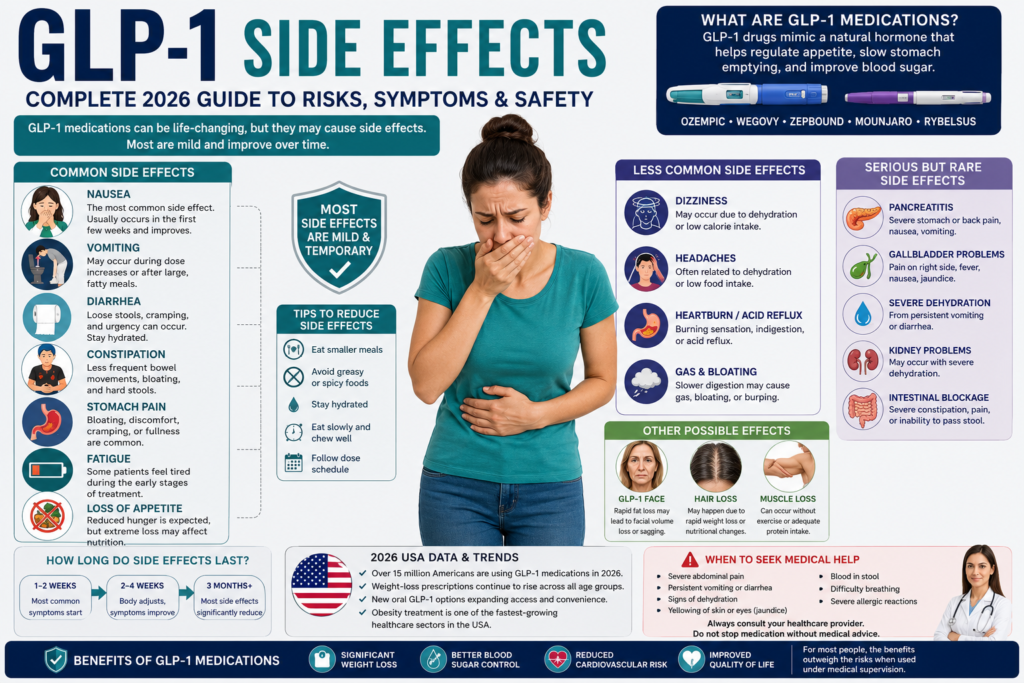
1. Nausea
Nausea is the most commonly reported GLP-1 side effect.
Symptoms include:
- Upset stomach
- Feeling sick after eating
- Reduced appetite
- Sensitivity to large meals
Nausea often occurs:
- When starting treatment
- After dosage increases
- During the first few weeks
How to Reduce Nausea
- Eat smaller meals
- Avoid greasy foods
- Eat slowly
- Stay hydrated
- Avoid overeating
Most patients notice improvement within several weeks.
2. Vomiting
Some individuals experience vomiting, particularly during dose escalation.
Risk factors include:
- Eating large meals
- Fatty foods
- Rapid dose increases
Occasional vomiting is usually manageable, but persistent vomiting should be discussed with a healthcare provider.
3. Diarrhea
Diarrhea affects many GLP-1 users.
Common symptoms include:
- Loose stools
- Increased bowel movements
- Abdominal cramping
Most cases improve over time as the digestive system adjusts.
Managing Diarrhea
- Increase water intake
- Avoid spicy foods
- Limit alcohol
- Eat bland foods temporarily
4. Constipation
Interestingly, some users experience the opposite problem.
Because stomach emptying slows, bowel movements may become less frequent.
Symptoms include:
- Hard stools
- Bloating
- Straining
Relief Tips
- Drink more water
- Increase fiber gradually
- Walk daily
- Consider doctor-approved fiber supplements
5. Stomach Pain
Many users report:
- Mild abdominal discomfort
- Fullness
- Cramping
- Bloating
These symptoms often improve after the first few weeks.
6. Fatigue
Some patients report feeling tired during the early stages of treatment.
Possible reasons include:
- Reduced calorie intake
- Dehydration
- Blood sugar changes
- Rapid weight loss
Fatigue usually improves once the body adapts.
7. Loss of Appetite
Technically, appetite suppression is one of the desired effects.
However, some individuals experience:
- Extremely low hunger
- Difficulty meeting nutritional needs
- Reduced protein intake
This can become problematic if nutrition is neglected.
Less Common GLP-1 Side Effects
Dizziness
Some users experience:
- Lightheadedness
- Mild dizziness
- Weakness
This may occur due to:
- Dehydration
- Low calorie intake
- Changes in blood sugar
Headaches
Headaches may result from:
- Reduced food intake
- Dehydration
- Electrolyte imbalances
Staying hydrated often helps reduce symptoms.
Heartburn and Acid Reflux
Some users report:
- Burning sensation in the chest
- Acid reflux
- Indigestion
Eating smaller meals can help reduce discomfort.
Burping and Gas
Because digestion slows down, excess gas may develop.
Common complaints include:
- Frequent burping
- Bloating
- Increased flatulence
These symptoms usually decrease over time.
Serious GLP-1 Side Effects
Although uncommon, serious side effects can occur.
Understanding warning signs is important.
Pancreatitis
Pancreatitis refers to inflammation of the pancreas.
Symptoms may include:
- Severe upper abdominal pain
- Back pain
- Nausea
- Vomiting
Seek immediate medical care if these symptoms occur.
Gallbladder Problems
Rapid weight loss itself can increase gallstone risk.
Symptoms include:
- Right-sided abdominal pain
- Fever
- Nausea
- Jaundice
Healthcare providers often monitor patients experiencing significant weight loss.
Severe Dehydration
Persistent vomiting or diarrhea can lead to dehydration.
Warning signs include:
- Dry mouth
- Dizziness
- Dark urine
- Rapid heartbeat
Hydration is especially important during dose increases.
Kidney Problems
Severe dehydration may affect kidney function.
Those with pre-existing kidney disease should discuss risks with their healthcare provider before starting treatment.
Intestinal Blockage Concerns
In recent years, researchers have investigated whether delayed stomach emptying may increase risks of certain gastrointestinal complications.
Although rare, patients should report:
- Severe constipation
- Persistent abdominal pain
- Inability to pass stool
Prompt medical evaluation is recommended.
GLP-1 Face: A New 2026 Concern
One of the most talked-about side effects in 2026 is “GLP-1 Face.”
This is not caused directly by the medication itself.
Instead, rapid fat loss may lead to:
- Facial volume loss
- Hollow cheeks
- Loose skin
- More visible wrinkles
The phenomenon occurs because weight loss affects fat stores throughout the body, including the face.
GLP-1 Hair Loss
Another topic receiving attention is hair thinning.
Hair loss may occur because of:
- Rapid weight loss
- Reduced calorie intake
- Protein deficiencies
- Nutritional imbalances
Hair loss is usually temporary.
Increasing:
- Protein
- Iron
- Vitamins
- Overall nutrition
may help support healthy hair growth.
Muscle Loss During GLP-1 Treatment
Weight loss does not always come exclusively from body fat.
Without proper exercise and nutrition, users may lose muscle mass.
Experts recommend:
- Strength training 2–4 times weekly
- High-protein diets
- Resistance exercise
- Adequate calorie intake
Preserving muscle improves long-term results and metabolic health.
Mental Health and GLP-1 Side Effects
Researchers continue studying potential mental health effects.
Some users report improvements in:
- Emotional eating
- Food cravings
- Confidence
- Mood
Others may experience:
- Anxiety
- Emotional adjustments
- Body image changes
The majority of patients tolerate treatment well, but mental health should remain part of ongoing care.
Who Is Most Likely to Experience Side Effects?
Certain groups may be more susceptible.
Risk factors include:
- Higher medication doses
- Rapid dose escalation
- Existing digestive disorders
- Dehydration
- Previous gastrointestinal issues
Starting with lower doses typically improves tolerability.
How Long Do GLP-1 Side Effects Last?
For most people:
First Week
Symptoms may include:
- Nausea
- Bloating
- Reduced appetite
First Month
The body begins adjusting.
Many symptoms become less severe.
Three Months
Most patients experience significant improvement.
Six Months and Beyond
Many users report minimal side effects while continuing to experience weight loss benefits.
USA GLP-1 Usage Data in 2026
The popularity of GLP-1 medications continues growing rapidly across America.
Key 2026 trends include:
- More than 15 million Americans are estimated to have used a GLP-1 medication.
- Weight-loss prescriptions continue rising among adults ages 30–65.
- Employers and insurance companies are expanding obesity treatment programs.
- New oral GLP-1 medications are increasing patient access.
- Obesity treatment remains one of the fastest-growing healthcare sectors in the United States. (Source: An Official Website Of United States Government)
With widespread adoption, healthcare systems now have extensive real-world safety data supporting appropriate GLP-1 use.
How to Minimize GLP-1 Side Effects
Eat Smaller Meals
Large meals can worsen nausea.
Aim for:
- Smaller portions
- Slow eating
- Balanced nutrition
Focus on Protein
Protein helps:
- Preserve muscle
- Support metabolism
- Reduce hair loss risk
Good options include:
- Eggs
- Chicken
- Fish
- Greek yogurt
- Lean beef
Stay Hydrated
Hydration reduces risks of:
- Headaches
- Dizziness
- Constipation
- Kidney issues
Many experts recommend at least 2–3 liters of water daily.
Avoid Greasy Foods
High-fat foods frequently worsen nausea and digestive discomfort.
Follow the Prescribed Dose Schedule
Dose escalation schedules are designed to reduce side effects.
Never increase doses faster than recommended.
When Should You Contact a Doctor?
Seek medical attention immediately if you experience:
- Severe abdominal pain
- Persistent vomiting
- Signs of dehydration
- Blood in stool
- Jaundice
- Difficulty breathing
- Severe allergic reactions
Prompt treatment can prevent complications.
Are GLP-1 Medications Safe?
For most adults, GLP-1 medications have demonstrated a favorable safety profile.
Benefits often include:
- Significant weight loss
- Better blood sugar control
- Reduced cardiovascular risk
- Improved quality of life
Like any medication, risks and benefits should be discussed with a healthcare professional.
The vast majority of users experience manageable side effects that improve over time.
Final Thoughts
GLP-1 side effects are an important consideration for anyone starting medications such as Ozempic, Wegovy, Zepbound, Mounjaro, or Rybelsus. The most common side effects involve the digestive system, including nausea, vomiting, diarrhea, constipation, and stomach discomfort. Fortunately, these symptoms are usually temporary and often improve as the body adapts.
In 2026, millions of Americans are successfully using GLP-1 medications to manage obesity and diabetes. Understanding potential side effects, staying hydrated, eating a balanced diet, and following your healthcare provider’s instructions can significantly improve your experience. While serious complications are rare, recognizing warning signs early ensures safe and effective treatment.
For many patients, the benefits of improved health, substantial weight loss, and better metabolic control outweigh the temporary discomforts associated with GLP-1 therapy, making these medications one of the most significant advances in modern obesity treatment.
>>> Also Read: GLP 1 Weight Loss Guide 2026: Ozempic vs Wegovy vs Zepbound

Nilesh Vijay is the founder and lead health writer at Health Tips USA. He is passionate about helping people understand health, nutrition, weight management, fitness, and healthy living through easy-to-read, research-based articles.
With over four years of experience in health content writing, Nilesh has written extensively about healthy eating, weight management, nutrition, vitamins, fitness, and overall wellness. His goal is to turn complex health information into simple, practical advice that readers can easily understand and apply in their daily lives.
Nilesh has also authored several health and nutrition eBooks published on Amazon and other leading digital platforms. His work covers a wide range of topics, including healthy recipes, balanced diets, meal planning, and lifestyle habits that support long-term well-being.
Areas of Expertise
Weight management and healthy living
Nutrition and balanced diet planning
Vitamins, minerals, and healthy eating
Fitness and active lifestyle tips
Wellness, healthy aging, and preventive health
Research-based health education
What Nilesh Believes
Nilesh believes that health information should be accurate, easy to understand, and based on reliable research. His mission is to provide practical, trustworthy content that helps readers make informed decisions about their health and lifestyle.
📧 You can reach Nilesh through the Contact Us page on Health Tips USA.