
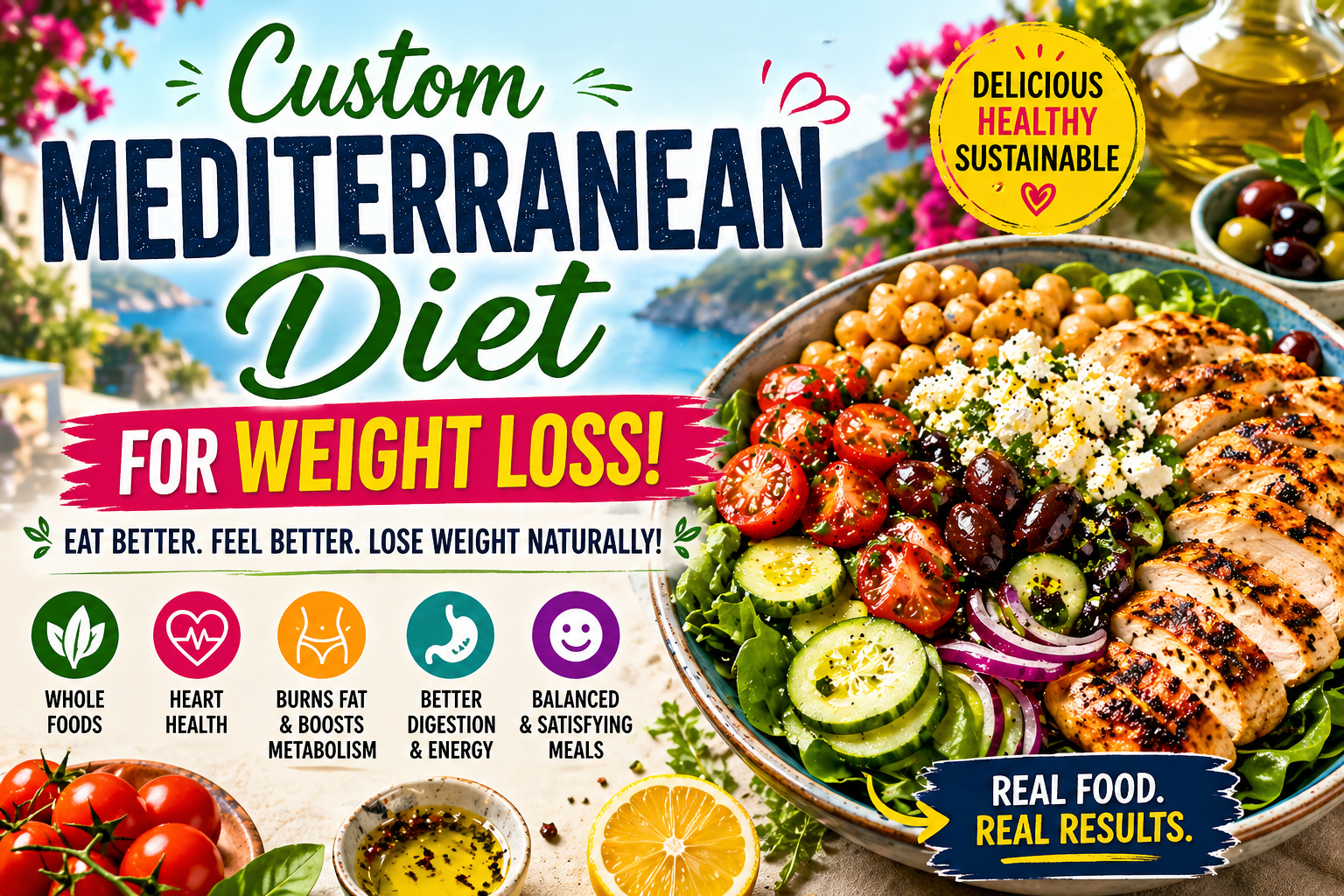
The Mediterranean diet has gained global popularity for one simple reason—it works. Not just for weight loss, but for long-term health, heart protection, and sustainable eating habits. However, the real power of this diet lies in customization. A custom Mediterranean diet for weight loss adapts traditional principles to your lifestyle, calorie needs, and goals.
This guide will walk you through everything you need to know—from how it works, to building your own plan, to practical tips that actually help you lose weight and keep it off.
What Is the Mediterranean Diet?
The Mediterranean diet is inspired by traditional eating habits of countries like Greece, Italy, and Spain. It emphasizes:
Whole, unprocessed foods
Healthy fats (especially olive oil)
Plenty of vegetables and fruits
Moderate protein from fish, legumes, and dairy
Minimal processed foods and sugar
Unlike strict diets, it’s not about restriction—it’s about balance and quality.
Why the Mediterranean Diet Works for Weight Loss?
Many diets fail because they’re too rigid. The Mediterranean diet works because it aligns with how people naturally eat and feel satisfied.
1. Keeps You Full Longer
Healthy fats and fiber-rich foods reduce hunger and prevent overeating.
2. Stabilizes Blood Sugar
Balanced meals prevent spikes and crashes that lead to cravings.
3. Supports Metabolism
Whole foods and lean proteins help maintain muscle and metabolic rate.
4. Sustainable Lifestyle
You don’t feel deprived, so you’re more likely to stick with it long-term.
What Makes It “Custom”?
A standard Mediterranean diet is healthy, but not automatically optimized for weight loss. Customization means adjusting:
Calorie intake
Portion sizes
Macronutrient balance
Meal timing
Activity level
Your plan should fit your body—not the other way around.
Step 1: Calculate Your Calorie Needs
Weight loss depends on a calorie deficit.
Sedentary: Body weight (kg) × 25
Moderate activity: × 30
Active: × 35
Then subtract 300–500 calories daily for steady fat loss.
Example:
70 kg × 30 = 2100 calories → Weight loss target = ~1600–1800 calories
Step 2: Structure Your Mediterranean Plate
A simple formula for every meal:
🥗 50% Vegetables
🍗 25% Protein
🍞 25% Whole grains or carbs
🫒 Healthy fats (olive oil, nuts)
Step 3: Choose the Right Foods
Foods to Eat Freely
Leafy greens (spinach, kale)
Tomatoes, cucumbers, zucchini
Herbs and spices
Lemon, garlic
Foods to Eat in Moderation
Whole grains (brown rice, oats, quinoa)
Fruits (2–3 servings daily)
Dairy (yogurt, cheese)
Foods to Limit
Sugar and sweets
Processed snacks
Refined flour
Sugary drinks
Step 4: Build Your Custom Meal Plan
Morning (Breakfast)
Greek yogurt + nuts + berries
OR whole grain toast + avocado + boiled eggs
Mid-Morning Snack
Fruit + handful of almonds
Lunch
Grilled chicken/fish
Mixed salad with olive oil dressing
Small portion of brown rice or quinoa
Evening Snack
Hummus with veggies
OR buttermilk
Dinner
Vegetable-rich meal + protein
Avoid heavy carbs at night
Step 5: Optimize Macronutrients for Weight Loss
A general ratio works well:
Protein: 25–30%
Carbs: 35–40%
Fats: 30–35%
Higher protein helps preserve muscle and reduces hunger.
Step 6: Smart Customization Tips
1. Adjust for Vegetarian Diet
Replace meat with lentils, chickpeas, tofu, paneer (in moderation)
2. For Faster Weight Loss
Reduce grains slightly
Increase protein and vegetables
3. For Busy Lifestyle
Meal prep twice a week
Keep healthy snacks ready
4. For Indian Adaptation
Use olive oil or mustard oil
Replace pasta with roti (multigrain)
Include dal, sabzi, and salads
Step 7: Hydration Matters
Water plays a huge role in fat loss.
Drink 2.5–3 liters daily
Start your day with warm lemon water
Avoid sugary drinks
Step 8: Combine with Lifestyle Changes
Diet alone isn’t enough.
Exercise
30–45 minutes daily
Mix cardio + strength training
Sleep
7–8 hours per night
Poor sleep increases hunger hormones
Stress Control
Practice yoga or meditation
Stress leads to emotional eating
Common Mistakes to Avoid
1. Overeating Healthy Fats
Olive oil and nuts are healthy—but high in calories.
2. Ignoring Portion Size
Even healthy foods can cause weight gain if overeaten.
3. Too Many Carbs
Whole grains are good, but still calorie-dense.
4. Lack of Protein
Low protein slows fat loss and increases cravings.
Sample 7-Day Custom Mediterranean Diet Plan
Day 1
Breakfast: Oats + nuts + fruit
Lunch: Grilled chicken + salad
Dinner: Vegetable soup + paneer
Day 2
Breakfast: Eggs + whole grain toast
Lunch: Quinoa salad
Dinner: Fish + veggies
Day 3
Breakfast: Smoothie (fruit + yogurt)
Lunch: Chickpea salad
Dinner: Stir-fried vegetables
Continue similarly with variety…
Benefits Beyond Weight Loss
❤️ Heart health improvement
🧠 Better brain function
🩸 Reduced inflammation
💪 Improved energy levels
🍽️ Better digestion
How Fast Can You Lose Weight?
Safe rate: 0.5–1 kg per week
Visible results: 2–4 weeks
Long-term success: 3+ months
Consistency matters more than speed.
Is This Diet Right for You?
This diet works for:
✔ Beginners
✔ Busy professionals
✔ Vegetarians (with modifications)
✔ People tired of restrictive diets
It may not suit extreme low-carb followers or those wanting rapid crash weight loss.
Final Thoughts
A custom Mediterranean diet for weight loss is not a temporary plan—it’s a lifestyle. The key lies in personalization. Once you adjust portions, calories, and food choices to your body and routine, it becomes one of the easiest and most effective ways to lose weight naturally.
>>> Also Read This Article: Keto Diet vs. Mediterranean Diet – Which is Best Diet?
Instead of chasing quick results, focus on building habits you can maintain for life. That’s where real transformation happens.

Nilesh Vijay is the founder and lead health writer at Health Tips USA. He is passionate about helping people understand health, nutrition, weight management, fitness, and healthy living through easy-to-read, research-based articles.
With over four years of experience in health content writing, Nilesh has written extensively about healthy eating, weight management, nutrition, vitamins, fitness, and overall wellness. His goal is to turn complex health information into simple, practical advice that readers can easily understand and apply in their daily lives.
Nilesh has also authored several health and nutrition eBooks published on Amazon and other leading digital platforms. His work covers a wide range of topics, including healthy recipes, balanced diets, meal planning, and lifestyle habits that support long-term well-being.
Areas of Expertise
Weight management and healthy living
Nutrition and balanced diet planning
Vitamins, minerals, and healthy eating
Fitness and active lifestyle tips
Wellness, healthy aging, and preventive health
Research-based health education
What Nilesh Believes
Nilesh believes that health information should be accurate, easy to understand, and based on reliable research. His mission is to provide practical, trustworthy content that helps readers make informed decisions about their health and lifestyle.
📧 You can reach Nilesh through the Contact Us page on Health Tips USA.