
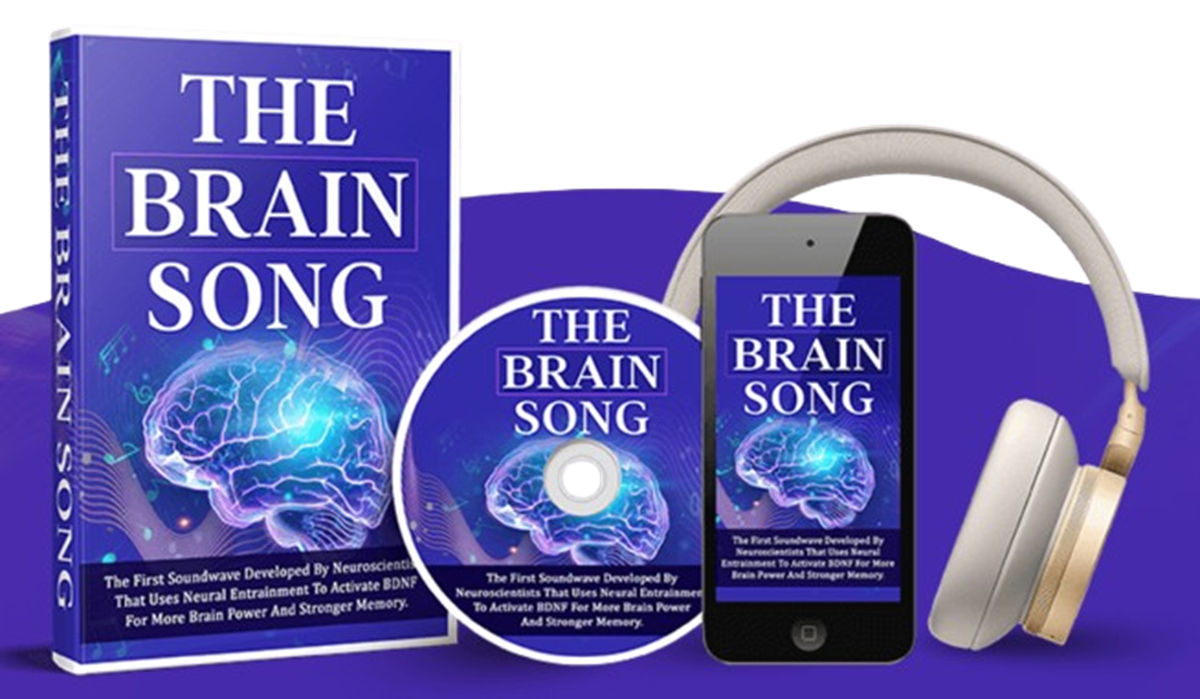
In a world where our minds are constantly overloaded with information, many people struggle to stay focused, recall details, or maintain a sharp memory. Whether it’s forgetting where you left your keys or failing to remember someone’s name, lapses in memory can be frustrating. But what if there was a simple, 10-second “brain trick” that could help boost your memory power — and even support long-term brain health? In this The Brain Song Review Know about a revolutionary approach that combines the science of sound, frequency, and cognitive activation.
What Is The Brain Song?
The Brain Song is an innovative sound-based technique designed to reawaken the natural rhythm and harmony of your brain. Much like a soothing melody can calm your emotions, specific audio frequencies — often called brainwave tunes — can influence how your brain processes, stores, and recalls information.
This 10-second “brain trick” is inspired by the concept that the brain operates in rhythmic waves, and when these waves are synchronized through sound, the mind enters a state of deep focus and enhanced neuroplasticity — the ability to form and strengthen neural connections.
In essence, The Brain Song uses a short burst of sound stimulation to help your brain “tune in” to its optimal frequency range for memory formation and retention.
The Science Behind the 10-Second Brain Trick
Research in neuroscience has shown that sound frequencies can directly affect brainwave activity. The human brain functions on five major frequency bands — Delta, Theta, Alpha, Beta, and Gamma — each associated with a specific mental state.
- Theta Waves (4–8 Hz): Linked with creativity, intuition, and memory recall.
- Alpha Waves (8–12 Hz): Promote relaxation and focus, ideal for learning.
- Gamma Waves (30–100 Hz): Connected to higher-level cognition and memory retention.
The Brain Song technique targets these frequencies, particularly the Theta and Gamma bands, using short, rhythmic sound patterns that stimulate the hippocampus — the brain’s memory center. In as little as 10 seconds, this “brain activation” helps switch the mind from a scattered, distracted state into one of clarity and receptivity.
How Does It Supports Strong Memory?
- Activates the Hippocampus
The hippocampus plays a central role in forming new memories. When activated by rhythmic sound frequencies, it becomes more responsive, allowing information to be encoded and stored efficiently. - Boosts Blood Flow and Neural Communication
Listening to brainwave-tuned audio increases oxygen flow and promotes the release of neurotransmitters such as dopamine and acetylcholine — both essential for sharp thinking and recall. - Reduces Mental Fatigue
The Brain Song induces a meditative state that calms the mind and reduces cortisol (the stress hormone), which is known to interfere with memory formation. - Enhances Neuroplasticity
Regular use of sound-based stimulation helps your brain build new neural pathways — making it easier to learn, adapt, and retain new information over time. - Improves Focus and Attention Span
Within seconds, the audio frequencies help align your brain’s electrical activity, enhancing concentration and reducing distractions — a key factor in better memory performance.
NASA-Trained Neuroscientist:
“Do This 10-Second Brain Trick For Stronger Memory..”

>>> Click Here To Watch “How does The Brain Song Work?”
Why Only 10 Seconds?
The magic lies in precision. Unlike long meditations or audio programs, The Brain Song focuses on a quick, concentrated burst of sound stimulation that’s carefully tuned to trigger an immediate neural response. Think of it as hitting the “refresh” button on your brain — it resets your mental state almost instantly.
The 10-second approach works because it doesn’t overload your senses; it simply awakens dormant neural activity, helping you switch from a foggy or tired state into one of clarity and readiness to absorb information.
The Connection Between Sound, Emotion, and Memory:
Music and sound have a direct line to emotion — and emotion, in turn, is deeply connected to memory. That’s why we remember songs and experiences associated with them. The Brain Song uses this natural connection to strengthen recall by pairing rhythmic tones with emotional resonance, making information “stick” more effectively.
When your emotional and analytical centers work in sync, your brain stores memories more deeply — not just as data, but as experiences you can vividly recall.
Real-Life Benefits of The Brain Song Technique
- Enhanced short-term and long-term memory
- Faster recall of names, details, and facts
- Improved learning capacity for students and professionals
- Greater mental clarity and creativity
- Reduced brain fog and fatigue
- A calmer, more focused mind throughout the day
Many users report noticeable results after just a few sessions, describing it as if a “mental cloud” has lifted, leaving them more alert and clear-headed.
The Bigger Picture: A Smarter Way to Train the Mind:
In the same way the body needs exercise to stay fit, the brain also requires stimulation. The Brain Song is a simple yet powerful mental workout — one that takes just 10 seconds but has lasting effects on focus, retention, and overall cognitive health.
Unlike chemical-based supplements or caffeine-driven boosters, this method uses your body’s natural bioelectric rhythm to unlock performance. It’s non-invasive, relaxing, and scientifically aligned with how your brain naturally operates.
Conclusion:
The Brain Song is more than just a “sound trick” — it’s a scientifically inspired method that taps into the brain’s hidden potential. By spending just 10 seconds a day engaging this sound-based stimulation, you can help your brain rewire itself for stronger memory, sharper focus, and a more vibrant mental state.
In a world where attention spans are shrinking and mental fatigue is common, this small yet powerful practice reminds us that sometimes, the most profound changes come from the simplest actions — or in this case, a 10-second song for the brain.
>>> Also Read To Know More : The Brain Song Review: Does It Really Work or Not?

Nilesh Vijay is the founder and lead health writer at Health Tips USA. He is passionate about helping people understand health, nutrition, weight management, fitness, and healthy living through easy-to-read, research-based articles.
With over four years of experience in health content writing, Nilesh has written extensively about healthy eating, weight management, nutrition, vitamins, fitness, and overall wellness. His goal is to turn complex health information into simple, practical advice that readers can easily understand and apply in their daily lives.
Nilesh has also authored several health and nutrition eBooks published on Amazon and other leading digital platforms. His work covers a wide range of topics, including healthy recipes, balanced diets, meal planning, and lifestyle habits that support long-term well-being.
Areas of Expertise
Weight management and healthy living
Nutrition and balanced diet planning
Vitamins, minerals, and healthy eating
Fitness and active lifestyle tips
Wellness, healthy aging, and preventive health
Research-based health education
What Nilesh Believes
Nilesh believes that health information should be accurate, easy to understand, and based on reliable research. His mission is to provide practical, trustworthy content that helps readers make informed decisions about their health and lifestyle.
📧 You can reach Nilesh through the Contact Us page on Health Tips USA.