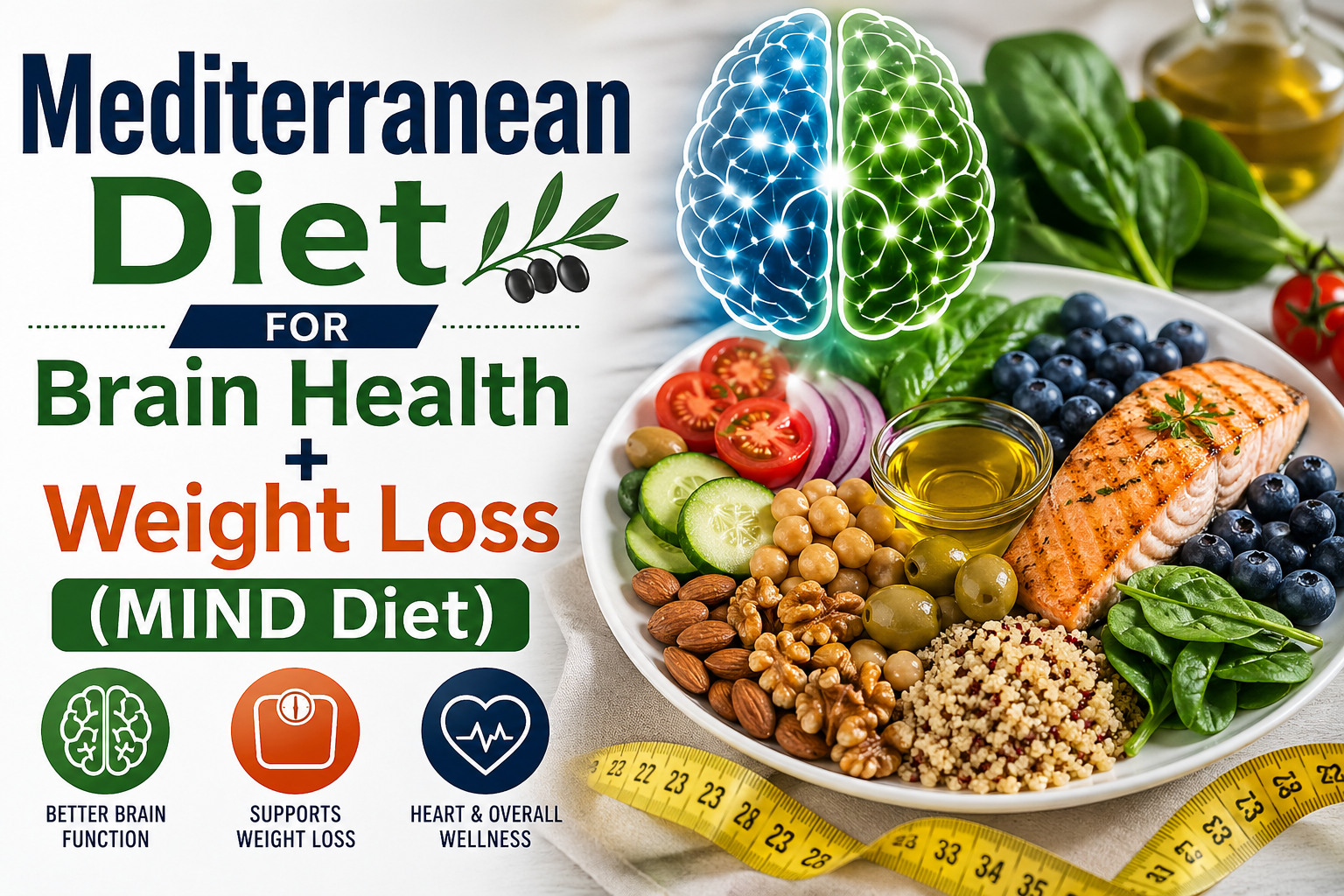
The Mediterranean Diet for Brain Health + Weight Loss, commonly known as the MIND Diet, has become one of the most talked-about healthy eating patterns in recent years. It combines the best parts of the traditional Mediterranean diet and the DASH (Dietary Approaches to Stop Hypertension) diet to create a powerful nutrition plan that supports both brain function and healthy weight management.In 2026, more people are searching for sustainable ways to lose weight while protecting long-term health—especially cognitive health. Unlike crash diets that focus only on rapid weight loss, the MIND Diet helps improve memory, concentration, heart health, and metabolism while reducing the risk of chronic diseases. This guide explains everything you need to know about the MIND Diet for brain health and weight loss, including foods to eat, foods to avoid, benefits, a sample meal plan, and practical tips for long-term success.
What Is the MIND Diet?
The MIND Diet stands for: Mediterranean-DASH Intervention for Neurodegenerative Delay It was developed by researchers to specifically reduce the risk of cognitive decline and support brain health while also promoting overall wellness and weight control. It combines:
- The Mediterranean Diet, known for heart health and longevity
- The DASH Diet, designed to lower blood pressure
The MIND Diet places extra emphasis on foods linked to better brain function, especially those rich in antioxidants, healthy fats, vitamins, and anti-inflammatory compounds. This makes it one of the best diets for:
- Weight loss
- Brain health
- Memory improvement
- Reduced risk of Alzheimer’s disease
- Heart health
- Diabetes prevention
- Healthy aging
Why the MIND Diet Is Trending in 2026
Modern lifestyles often include:
- Processed foods
- Excess sugar
- High stress
- Poor sleep
- Low physical activity
These habits increase the risk of:
- Obesity
- Brain fog
- Memory loss
- Dementia
- Heart disease
- Fatty liver
- Diabetes
People now want a lifestyle approach rather than temporary dieting. The MIND Diet offers exactly that.It is trending because it helps with:
1. Sustainable Weight Loss
Instead of calorie starvation, it promotes nutrient-dense foods that naturally reduce overeating.
2. Better Mental Clarity
Many people report improved focus and less brain fog.
3. Healthy Aging
It supports memory and reduces age-related cognitive decline.
4. Reduced Inflammation
Inflammation is linked to both weight gain and poor brain health.
5. Easy Long-Term Lifestyle
It is realistic and flexible compared to restrictive diets.
How the MIND Diet Helps Brain Health?
The brain needs proper nutrition to function well. The MIND Diet includes foods that protect brain cells from damage caused by inflammation and oxidative stress.
Key Brain-Boosting Nutrients
Healthy Fats
Found in olive oil, nuts, seeds, and fish.These support:
- Brain cell structure
- Memory function
- Hormonal balance
Antioxidants
Found in berries, leafy greens, and colorful vegetables. They help protect against:
- Cognitive decline
- Cell damage
- Aging-related memory loss
Omega-3 Fatty Acids
Found in fatty fish like salmon and sardines.They improve:
- Learning
- Focus
- Mood
- Brain performance
Vitamin E
Found in nuts and seeds.Supports:
- Brain aging prevention
- Nervous system protection
Folate and B Vitamins
Found in beans and greens.Help reduce homocysteine levels linked to memory decline.
>>> Read This Article Also : Mediterranean Diet for Chronic Disease Prevention 2026
How the MIND Diet Supports Weight Loss?
The MIND Diet is not a “quick-fix” weight loss plan. Instead, it creates healthy fat loss through balanced eating.
It Helps Weight Loss By:
Increasing Fullness
Fiber-rich foods reduce hunger naturally.
Reducing Sugar Cravings
Stable blood sugar helps prevent binge eating.
Supporting Metabolism
Whole foods improve digestion and insulin sensitivity.
Lowering Inflammation
Inflammation often contributes to stubborn belly fat.
Preventing Emotional Eating
Balanced meals help improve mood and energy levels.
10 Best Foods to Eat on the MIND Diet
These are the foundation of the MIND Diet.
1. Green Leafy Vegetables
Examples:
- Spinach
- Kale
- Lettuce
- Methi
- Sarson leaves
Best for:
- Brain protection
- Fiber
- Low-calorie weight loss
Aim for:At least 6 servings per week
2. Other Vegetables
Examples:
- Broccoli
- Carrots
- Bell peppers
- Cauliflower
- Cucumber
Best for:
- Digestion
- Fat loss
- Antioxidants
Aim for:Daily intake
3. Berries
Examples:
- Blueberries
- Strawberries
- Blackberries
Best for:
- Memory support
- Anti-aging
- Low-sugar sweet cravings
Aim for:2 or more servings per week
4. Nuts
Examples:
Best for:
- Healthy fats
- Brain function
- Satiety
Aim for: 5 servings per week
5. Olive Oil
Use extra virgin olive oil as your main cooking oil. Best for:
- Heart health
- Anti-inflammatory effects
- Weight balance
6. Whole Grains
Examples:
- Oats
- Brown rice
- Quinoa
- Millet
- Whole wheat
Best for:
- Energy
- Digestion
- Appetite control
Aim for:3 servings daily
7. Beans and Lentils
Examples:
- Rajma
- Chana
- Moong dal
- Masoor dal
Best for:
- Protein
- Fiber
- Stable blood sugar
Aim for:At least 3 times weekly
8. Fish
Examples:
Best for:
- Omega-3
- Brain support
- Lean protein
Aim for: At least once weekly
9. Poultry
Examples:
Best for:
- Lean protein
- Muscle maintenance
Aim for:2 times weekly
10. Moderate Red Wine (Optional)
Some traditional MIND Diet versions include moderate red wine, but it is optional and not necessary.Many people skip this for personal or health reasons.
Foods to Limit or Avoid
These foods are linked to inflammation, poor memory, and weight gain.
1. Butter and Margarine
Limit to less than 1 tablespoon daily
2. Cheese
Too much saturated fat may affect heart and brain health
3. Red Meat
Limit:Beef, lamb, and processed meats
4. Fried Food
Examples:
- French fries
- Deep-fried snacks
- Fast food
5. Sweets and Pastries
Examples:
- Cakes
- Cookies
- Sugary drinks
- Ice cream
These cause:
- Weight gain
- Brain fog
- Blood sugar spikes
Sample 1-Day MIND Diet Meal Plan
Here is a simple and practical meal plan.
Breakfast
Oatmeal with:
Almonds
Chia seeds
Blueberries
Mid-Morning Snack
Apple + handful of walnuts
Lunch Brown rice + dal + mixed vegetable sabzi + salad Cooked with olive oil
Evening Snack
Greek yogurt or roasted chana
Dinner
Grilled fish or chicken + sautéed spinach + quinoa
Before Bed
Herbal tea or warm turmeric milk (low sugar)
7 Smart Tips for Success:
Following the MIND Diet becomes easier with consistency.
1. Meal Prep Weekly
Prepare vegetables, grains, and snacks in advance.
2. Replace Refined Oil
Use olive oil instead of unhealthy cooking fats.
3. Choose Smart Snacks
Keep nuts, fruits, and yogurt ready.
4. Avoid Sugary Drinks
Replace soda with:
Lemon water
Herbal tea
Coconut water
5. Sleep Properly
Poor sleep affects both hunger hormones and memory.
6. Walk Daily
Exercise improves both fat loss and brain circulation.
7. Stay Consistent
Long-term habits matter more than short-term perfection.
MIND Diet vs Mediterranean Diet
Many people confuse both diets.
Mediterranean Diet
Focus: Overall heart health and longevity
MIND Diet
Focus: Brain health + memory protection + weight control The MIND Diet is more specific about:
Berries
Leafy greens
Limiting fried food and sweets
Both are excellent, but MIND is more targeted for cognitive wellness.
Who Should Follow the MIND Diet?
The MIND Diet is ideal for:
Adults over 30
Women managing hormonal weight gain
People with brain fog
Students needing better focus
Seniors wanting memory protection
People with family history of Alzheimer’s
Individuals with obesity or diabetes risk
Those wanting healthy long-term fat loss
Common Mistakes to Avoid Expecting Fast Weight Loss
This is a long-term health plan, not a crash diet.
Ignoring Portion Sizes
Healthy food still requires balance.
Eating Too Many “Healthy” Snacks
Nuts are healthy but calorie-dense.
Skipping Protein
Protein is essential for fat loss and energy.
Inconsistent Routine
Consistency creates results.
Can the MIND Diet Prevent Alzheimer’s?
Research strongly suggests that the MIND Diet may reduce the risk of Alzheimer’s disease and cognitive decline. Even moderate adherence has shown benefits. It works by reducing:
- Inflammation
- Oxidative stress
- Vascular damage
- Insulin resistance
No diet guarantees prevention, but MIND is considered one of the best preventive strategies available.
Is the MIND Diet Safe?
Yes, for most people, it is considered one of the safest and healthiest diets. It supports:
- Heart health
- Brain health
- Digestive health
- Hormonal balance
- Sustainable fat loss
People with specific medical conditions should consult a healthcare professional before major dietary changes.
Final Thoughts
The Mediterranean Diet for Brain Health + Weight Loss (MIND Diet) is far more than a trend—it is a science-backed lifestyle that helps improve both physical and mental wellness. Instead of focusing only on weight loss, it protects what matters most: your long-term health, memory, and quality of life. By eating more:
- Leafy greens
- Berries
- Nuts
- Whole grains
- Fish
- Olive oil
and reducing:
- Fried foods
- Sugar
- Processed foods
- Excess red meat
you create a powerful foundation for lasting health. In 2026, smart wellness means not just looking better—but thinking better, aging better, and living better. That is exactly what the MIND Diet offers.