
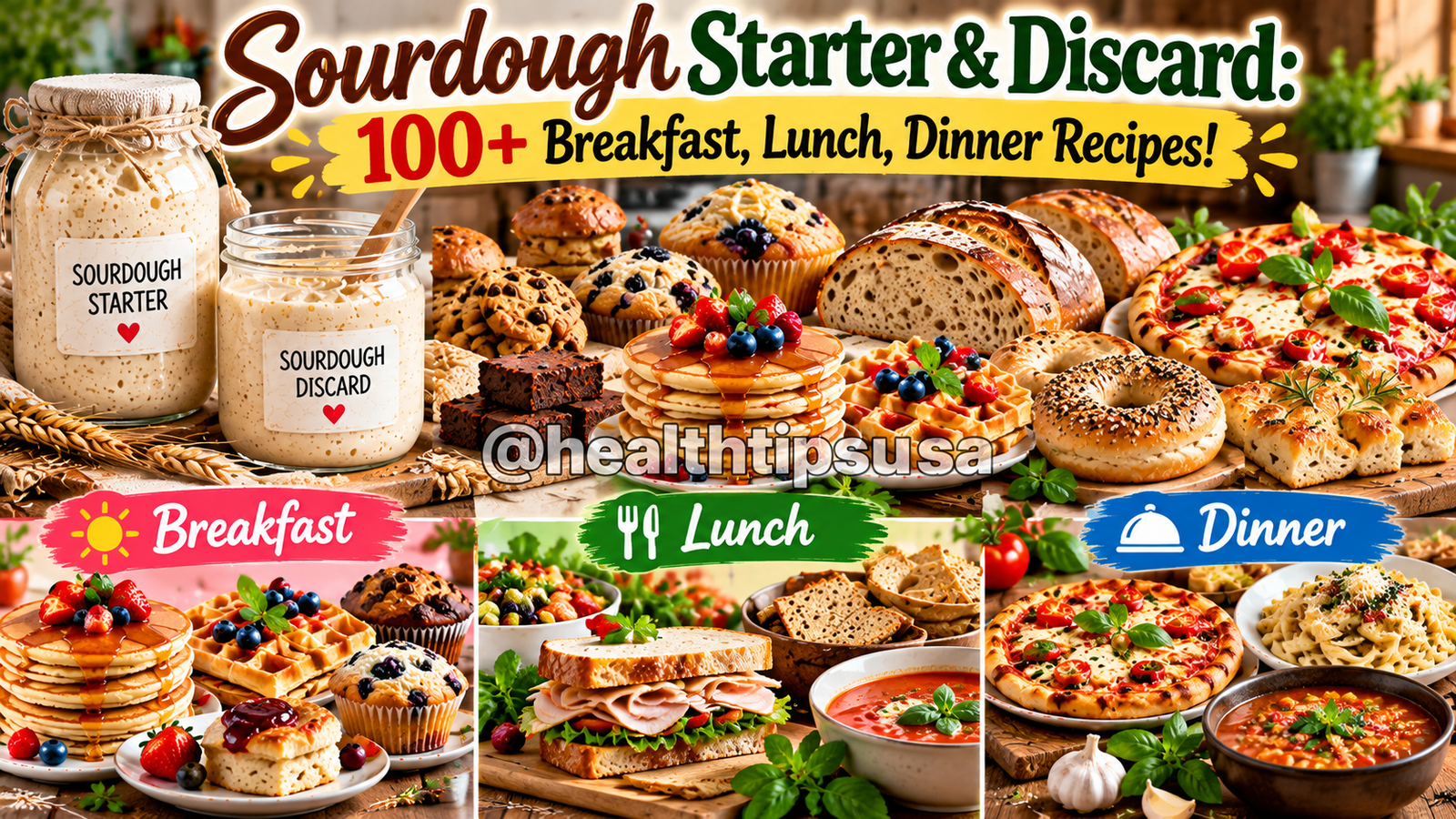

Sourdough baking has become a favorite hobby for many home bakers, bread enthusiasts, and food lovers in the United States. From artisan bread and fluffy pancakes to crispy crackers, cookies, pizza crusts, and muffins, sourdough offers many creative ways to prepare homemade food.
Two important terms in sourdough baking are sourdough starter and sourdough discard. Although they are closely related, they have different purposes in the kitchen. Understanding how they work can help beginners bake more confidently, reduce food waste, and discover dozens of delicious recipes.
1. What Is a Sourdough Starter?

A sourdough starter is a living mixture of flour and water that develops a community of naturally occurring yeasts and lactic acid bacteria. These microorganisms ferment the mixture and produce carbon dioxide, acids, and flavorful compounds.
Unlike conventional bread recipes that rely on commercial baker’s yeast, sourdough bread uses the starter to help the dough rise and develop its distinctive flavor.
How to make a basic sourdough starter
- Day 1: Mix equal weights of flour and water in a clean container, such as 50 grams of flour and 50 grams of water.
- Days 2–7 and beyond: Remove some of the mixture and feed the remainder with fresh flour and water according to a consistent schedule.
- Observe the activity: Look for bubbles, a rise after feeding, and a pleasantly tangy or fermented aroma.
- Wait for maturity: Depending on temperature, flour, and other conditions, a starter may take around 5–14 days or longer to become reliably active.
- Use when ready: A mature starter should show predictable fermentation activity after feeding. A single rise is not always enough to confirm maturity.
Important: A starter may rise and fall during fermentation. This is normal. However, visible fuzzy mold or pink or orange discoloration is a reason to discard the starter rather than attempt to rescue it.
2. What Is Sourdough Discard?

Sourdough discard is the portion of starter that is removed before feeding the remaining starter with fresh flour and water. Removing some starter helps manage its size and keeps the feeding process practical.
Discard is not necessarily waste. Depending on the starter’s condition, age, storage, and recipe, it can be used in many baked and cooked foods.
Starter vs. discard: What’s the difference?
| Feature | Sourdough starter | Sourdough discard |
|---|---|---|
| Main purpose | Ferments and raises bread dough | Adds flavor and uses excess starter |
| Typical use | Sourdough loaves and leavened doughs | Pancakes, crackers, cookies, and more |
| Activity | Usually maintained for predictable fermentation | May be less active or past its peak |
| Feeding | Regularly fed to maintain activity | Usually collected before feeding |
| Storage | Room temperature with regular feeding or refrigerated | Often refrigerated for short-term storage |
Discard can sometimes still be active, but older discard may not raise dough reliably. Many discard recipes use baking powder, baking soda, eggs, or other ingredients to provide additional lift.
3. Foods You Can Make With Sourdough Starter
Sourdough starter can be used in a wide range of recipes, from traditional bread to creative breakfast dishes and homemade snacks.

A. Bread and bakery foods
- Artisan sourdough bread: A crusty loaf with a chewy interior and a distinctive tangy flavor.
- Sandwich bread: A softer loaf suitable for sandwiches and toast.
- Sourdough bagels: Chewy, ring-shaped breads topped with sesame seeds, poppy seeds, or everything seasoning.
- Focaccia: An Italian-style flatbread commonly topped with olive oil, rosemary, and vegetables.
- Sourdough rolls: Small rolls for dinner, sandwiches, and burgers.
- Sourdough pizza crust: A flavorful base for homemade pizza.
- English muffins: Griddle-cooked breads that can be split and toasted.
- Sourdough tortillas and flatbreads: Flexible options for wraps and quick meals.
B. Breakfast foods

- Pancakes: Soft, fluffy pancakes served with fruit, butter, or syrup.
- Waffles: Crisp-edged waffles with a tender center.
- Muffins: Blueberry, banana, chocolate chip, or cinnamon muffins.
- Crepes: Thin pancakes suitable for sweet or savory fillings.
- Scones: Tender baked treats for breakfast or afternoon snacks.
- Cinnamon rolls: Sweet rolls with cinnamon filling and optional icing.
- Breakfast biscuits: Biscuits served with eggs, cheese, or other breakfast favorites.
C. Snacks and sweet treats

- Crackers: Thin, crispy crackers flavored with herbs, seeds, or spices.
- Cookies: Chocolate chip, oatmeal, peanut butter, and other varieties.
- Brownies: Chocolate desserts with a rich texture.
- Pretzels: Soft pretzels with salt or other seasonings.
- Donuts: Baked or fried donuts made with a suitable sourdough recipe.
- Quick breads: Banana bread, zucchini bread, and pumpkin bread.
- Granola: Some recipes incorporate discard into crunchy granola clusters.
D. Lunch and dinner foods
- Pizza: Use an active starter for a fermented crust or discard in a specifically formulated discard crust recipe.
- Pasta: Some homemade pasta recipes use sourdough discard in the dough.
- Savory pancakes: Add cheese, herbs, corn, or vegetables.
- Biscuits: Serve with soups, stews, or breakfast dishes.
- Flatbreads: Pair with curries, roasted vegetables, dips, or grilled foods.
- Savory muffins: Combine discard with cheese, herbs, or vegetables.
- Soup accompaniments: Make crackers, croutons, or bread to serve alongside soup.
The exact ingredients, proportions, and cooking methods depend on the recipe. Sourdough discard is not a one-to-one replacement for flour or liquid in every dish.
4. Foods You Can Make Specifically With Sourdough Discard
Discard is especially useful when a recipe benefits from its tangy flavor but does not depend on it to raise the entire dough.

Popular discard recipe ideas include:
- Breakfast: Pancakes, waffles, muffins, crepes, and breakfast biscuits.
- Savory snacks: Crackers, pretzels, flatbread chips, and savory scones.
- Sweet treats: Cookies, brownies, cinnamon rolls, and quick breads.
- Main meals: Pizza crusts, tortillas, pasta, and savory pancakes.
- Creative extras: Croutons, breading mixtures, and some types of granola.
These recipes are popular with home bakers because they provide practical ways to use the excess starter produced during regular feeding.
5. Why Do Americans Like Sourdough Starter and Discard?

Sourdough appeals to different types of American consumers, including home cooks, bread enthusiasts, busy families, and people who enjoy learning traditional cooking techniques.
1. The homemade baking experience
Many people enjoy making food from scratch. Maintaining a starter, watching it bubble, shaping dough, and baking a loaf can make cooking feel rewarding and creative.
2. Distinctive flavor and texture
Sourdough fermentation creates flavorful compounds that contribute to its characteristic tang. Different starters, flours, fermentation times, and baking techniques can produce different flavors and textures.
3. Reducing food waste
Maintaining a starter often involves removing a portion before feeding it. Discard recipes help turn that excess mixture into food instead of automatically throwing it away.
4. Creative recipe possibilities
Sourdough is not limited to traditional bread. People can experiment with pancakes, crackers, cookies, pizza, muffins, and other foods, making it an appealing subject for cooking blogs and recipe collections.
5. A satisfying kitchen hobby
Starter maintenance encourages people to learn about fermentation, baking schedules, dough consistency, and ingredient behavior. Some bakers enjoy the process as much as the finished food.
6. Customization and experimentation
Home bakers can experiment with whole-wheat flour, seeds, herbs, cheese, fruit, nuts, and different toppings. The possibilities make sourdough suitable for a variety of tastes.
7. Interest in traditional cooking
Sourdough connects modern home baking with older bread-making traditions. Some people appreciate the hands-on process and the opportunity to develop a baking skill over time.
8. Recipe sharing and online communities
Sourdough recipes are frequently shared through cooking websites, social media, video tutorials, and baking communities. Beginners often seek troubleshooting guides, feeding schedules, printable trackers, and simple recipes.
A useful distinction: These are reasons sourdough can appeal to American home bakers; they do not mean every American bakes sourdough or that every sourdough product is currently trending.
6. Is Sourdough Healthier Than Regular Bread?
Sourdough is not automatically healthier than conventional bread. Its nutritional profile depends on the flour, recipe, portion size, fermentation method, and added ingredients.
- Whole-grain flour can contribute more fiber than refined flour.
- Fermentation changes the composition of the dough, including some carbohydrates and proteins.
- Added ingredients such as butter, sugar, cheese, and oil affect the final nutritional profile.
- Gluten: Ordinary sourdough bread made with wheat or rye is not gluten-free and is not suitable for people with celiac disease.
- Blood sugar: Responses vary with ingredients, portions, and the individual. Sourdough should not be assumed to prevent blood sugar spikes.
People with specific dietary needs should choose recipes and ingredients appropriate to them.
7. Important Tips for Using Sourdough Discard Safely
Follow these practical guidelines:
- Use a healthy starter. Do not use starter with visible fuzzy mold or unusual pink or orange discoloration.
- Store discard appropriately. Refrigerate it in a clean, covered container if you are not using it promptly.
- Label the container. Write the collection date so you can manage storage time.
- Follow a tested recipe. Discard varies in hydration and acidity, so substitutions may change the result.
- Cook it thoroughly. Never eat raw discard or uncooked dough made with flour.
- Watch for spoilage. If the mixture develops mold, unusual discoloration, or a clearly rotten smell, discard it.
- Do not rely on smell alone. Some sour or alcoholic aromas can occur during fermentation, but smell cannot establish that a starter is safe.
8. Sourdough as a Digital Recipe Product Opportunity
Sourdough is also a practical topic for recipe eBooks, printable cookbooks, and food blogs. People learning to bake may appreciate well-organized resources that save them time and reduce guesswork.
Potential digital products include:
- Beginner sourdough starter guides.
- Sourdough discard recipe collections.
- Weekly sourdough feeding and maintenance trackers.
- Printable baking logs and troubleshooting charts.
- Recipe collections organized by breakfast, lunch, dinner, snacks, and desserts.
- Ingredient substitution guides and baking schedules.
For an Etsy listing, a cookbook should offer tested recipes, accurate ingredient quantities, clear instructions, attractive formatting, and an honest description of what buyers receive. A large recipe count alone does not guarantee quality.
Conclusion
Sourdough starter is a living flour-and-water culture used to ferment and raise dough, while sourdough discard is the portion removed during starter maintenance. Both can be useful in the kitchen, but they serve different roles.
From crusty artisan bread to pancakes, waffles, crackers, cookies, pizza, and quick breads, sourdough provides many opportunities for creative home cooking. Its appeal comes from its distinctive flavor, hands-on preparation, flexibility, and potential to reduce food waste.
For beginners, the best approach is to learn how to maintain a healthy starter, follow reliable recipes, and experiment gradually. With good techniques and safe handling, sourdough starter and discard can become useful ingredients in a wide range of homemade foods.
>>> Click Here To Access 100+ Sourdough Discard Recipes

Nilesh Vijay is the founder and lead health writer at Health Tips USA. He is passionate about helping people understand health, nutrition, weight management, fitness, and healthy living through easy-to-read, research-based articles.