
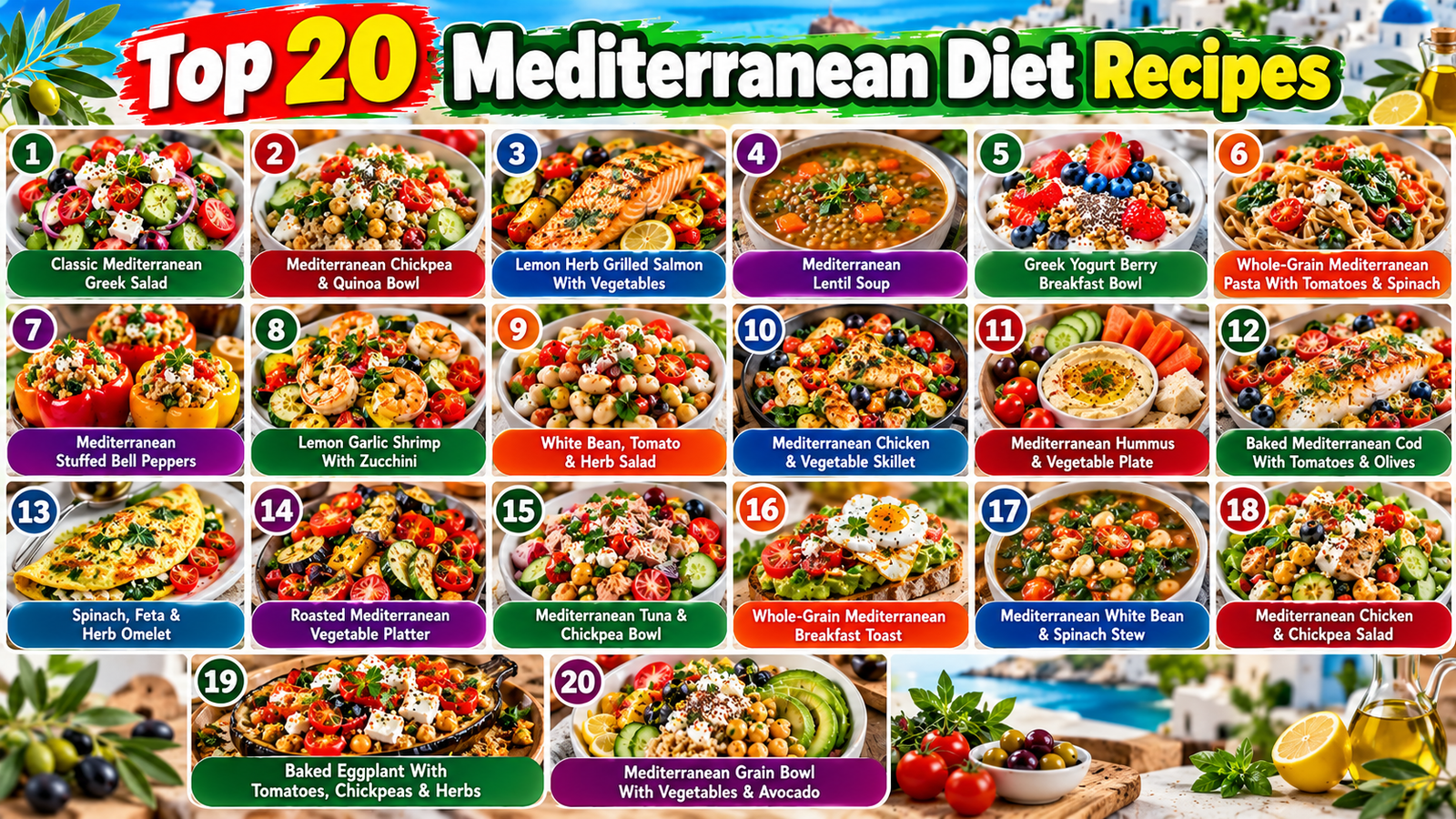
The Mediterranean diet is more than a collection of recipes—it is a flexible way of eating centered around vegetables, fruits, whole grains, beans, lentils, nuts, seeds, fish, herbs, and healthy fats such as extra-virgin olive oil. These foods can come together in simple, colorful, and satisfying meals without requiring complicated cooking techniques. In this collection, you’ll find 20 Mediterranean diet recipes covering breakfast, lunch, dinner, salads, soups, grain bowls, seafood, and plant-based meals. Each recipe uses wholesome ingredients and can be adapted to suit your preferences and everyday routine.
1. Classic Mediterranean Greek Salad

A classic Greek salad is one of the easiest ways to bring Mediterranean-style eating into your everyday meals. It combines fresh vegetables, olives, feta cheese, herbs, and extra-virgin olive oil into a colorful dish that works as a side, light lunch, or accompaniment to grilled fish or chicken.
Ingredients
- 2 cups chopped tomatoes
- 1 cucumber, sliced
- ½ red onion, thinly sliced
- ½ cup Kalamata olives
- ⅓ cup feta cheese
- 2 tablespoons extra-virgin olive oil
- 1 tablespoon red wine vinegar
- 1 teaspoon dried oregano
- Fresh parsley
- Black pepper
Directions
Add tomatoes, cucumber, onion, and olives to a large bowl. Crumble the feta over the vegetables. In a separate bowl, whisk together olive oil, vinegar, oregano, and black pepper. Pour the dressing over the salad and toss gently.
The Mediterranean diet is not a single standardized diet. Traditional versions vary between countries and regions, but common characteristics include plenty of vegetables, fruits, whole grains, beans, nuts and seeds, with olive oil as a primary fat source and fish, poultry, eggs, and dairy in low-to-moderate amounts. (www.heart.org)
This salad follows that pattern naturally. The vegetables provide color, texture, and fiber, while olives and olive oil add unsaturated fats. Feta contributes protein and flavor, so you don’t need a heavy dressing.
For a more substantial meal, add chickpeas or grilled chicken. Chickpeas work particularly well because legumes are an important component of Mediterranean-style eating. You can also serve the salad with whole-grain pita.
For a lower-sodium version, reduce the olives and feta or choose lower-sodium alternatives. The American Heart Association recommends limiting sodium while emphasizing vegetables, fruits, whole grains, beans, nuts, fish, and healthy oils. (professional.heart.org)
Prepare the vegetables shortly before serving for maximum freshness. If preparing ahead, keep the dressing separate until you’re ready to eat.
Prep time: 10 minutes
Servings: 2–4
2. Mediterranean Chickpea & Quinoa Bowl

A Mediterranean chickpea and quinoa bowl is a practical plant-forward meal for lunch or dinner. It combines whole grains, legumes, vegetables, herbs, and a simple olive-oil dressing.
Ingredients
- 1 cup cooked quinoa
- ¾ cup cooked chickpeas
- 1 cucumber, diced
- 1 cup cherry tomatoes
- ½ cup roasted red peppers
- ¼ cup parsley
- 2 tablespoons feta
- 1 tablespoon extra-virgin olive oil
- 1 tablespoon lemon juice
- ½ teaspoon cumin
- Black pepper
Directions
Place cooked quinoa in a large bowl. Add chickpeas, cucumber, tomatoes, roasted peppers, parsley, and feta. Whisk olive oil, lemon juice, cumin, and pepper separately, then pour over the bowl and mix.
The American Heart Association’s Mediterranean-style guidance emphasizes vegetables, fruits, whole grains, beans and legumes, nuts and seeds, olive oil, fish, and minimally processed foods. (www.heart.org)
This bowl is particularly flexible. Quinoa can be replaced with farro, barley, bulgur, or another whole grain. Chickpeas can be replaced with white beans or lentils. If you prefer more protein, add grilled chicken or salmon.
The American Heart Association has a Mediterranean bowl recipe that similarly combines whole grains, beans, vegetables, edamame, cucumber, feta, avocado, and an oil-based dressing. (recipes.heart.org)
For meal preparation, cook a batch of quinoa at the beginning of the week and store it properly. Chop vegetables in advance and assemble individual bowls when needed.
The combination of quinoa and chickpeas makes the meal substantial without requiring meat. It also gives you different textures, from creamy chickpeas to crunchy cucumber and fluffy grains.
If you’re watching sodium, use no-salt-added canned chickpeas and rinse them thoroughly. The American Heart Association recommends choosing lower-sodium canned products and rinsing canned beans when appropriate. (www.heart.org)
Prep time: 15 minutes if quinoa is already cooked
Servings: 2
3. Lemon Herb Grilled Salmon With Vegetables

Salmon with lemon, herbs, and roasted vegetables is a simple Mediterranean-inspired dinner that can be prepared with minimal ingredients. The combination is especially useful when you want a protein-centered meal without a creamy or heavily processed sauce.
Ingredients
- 2 salmon fillets
- 1 zucchini
- 1 bell pepper
- 1 cup broccoli
- 1 tablespoon extra-virgin olive oil
- 1 lemon
- 1 garlic clove
- 1 teaspoon dried oregano
- Fresh parsley
- Black pepper
Directions
Preheat the oven to 400°F. Arrange salmon and chopped vegetables on a baking sheet. Brush lightly with olive oil and season with garlic, oregano, black pepper, and lemon juice. Roast until the salmon is cooked through and the vegetables are tender. Garnish with parsley and fresh lemon.
Fish and seafood are common protein choices within Mediterranean-style eating, while red and processed meats are generally consumed less often. (www.heart.org)
The vegetables can be changed according to the season. Try tomatoes, eggplant, asparagus, green beans, cauliflower, or Brussels sprouts. Keeping several vegetables in rotation makes the meal more interesting without requiring a completely different recipe.
You can serve the salmon with a small portion of brown rice, quinoa, barley, or whole-grain bread if you want additional carbohydrates. NIDDK’s healthy eating guidance includes whole grains, seafood, vegetables, fruits, beans, nuts, seeds, and healthy oils among nutritious choices. (NIDDK)
The lemon and herbs provide plenty of flavor without requiring a sugary glaze. If you prefer more Mediterranean flavor, add chopped parsley, dill, oregano, or basil after cooking.
Leftover salmon can be flaked into a salad the next day. Combine it with greens, cucumber, tomatoes, chickpeas, and lemon-olive-oil dressing for another complete meal.
Prep time: 10 minutes
Cook time: 15–20 minutes
Servings: 2
4. Mediterranean Lentil Soup

Lentil soup is a comforting Mediterranean-style recipe that relies on vegetables, legumes, herbs, and tomatoes rather than heavy cream or large amounts of meat. It’s inexpensive, filling, and convenient for batch cooking.
Ingredients
- 1½ cups cooked lentils
- 1 carrot, diced
- 1 celery stalk, diced
- 1 small onion
- 2 garlic cloves
- 1 cup diced tomatoes
- 4 cups low-sodium vegetable broth
- 1 cup spinach
- 1 teaspoon oregano
- ½ teaspoon cumin
- 1 tablespoon olive oil
- Lemon juice
- Black pepper
Directions
Heat olive oil in a large pot. Add onion, carrot, celery, and garlic and cook until softened. Add tomatoes, lentils, broth, oregano, and cumin. Simmer for 20–25 minutes. Stir in spinach during the final few minutes and finish with lemon juice.
Legumes such as lentils and beans are an important part of Mediterranean-style eating. The American Heart Association specifically includes beans and legumes among foods emphasized in this dietary pattern. (www.heart.org)
The soup is adaptable. Add zucchini, kale, bell peppers, or potatoes depending on what you have available. If you prefer a thicker texture, blend a small portion of the soup and stir it back into the pot.
Lemon juice added at the end can brighten the flavor and reduce the need for additional salt. Fresh herbs such as parsley or dill can also be used.
Serve the soup with a small piece of whole-grain bread and a simple salad. Whole grains and vegetables are consistent with Mediterranean-style eating and broader healthy eating recommendations. (NIDDK)
For meal prep, divide the cooled soup into individual containers. Reheat only the portion you plan to eat, and add fresh herbs after reheating.
Prep time: 15 minutes
Cook time: 25 minutes
Servings: 4
5. Greek Yogurt Berry Breakfast Bowl

A Greek yogurt bowl is a quick breakfast that can be assembled in minutes. Combining plain yogurt with fresh berries, walnuts, chia seeds, and cinnamon creates a naturally colorful meal without relying on heavily sweetened breakfast foods.
Ingredients
- ¾ cup plain Greek yogurt
- ½ cup blueberries
- ½ cup strawberries
- 1 tablespoon walnuts
- 1 teaspoon chia seeds
- Cinnamon
- Optional fresh mint
Directions
Spoon Greek yogurt into a bowl. Add berries, walnuts, chia seeds, and cinnamon. Garnish with mint if desired.
Fruit, nuts, seeds, and dairy can all fit within a Mediterranean-style eating pattern. The American Heart Association notes that Mediterranean-style eating commonly includes fruits, vegetables, nuts, seeds, and moderate amounts of dairy. (www.heart.org)
Use plain yogurt rather than a heavily sweetened variety if you want to minimize added sugar. Fresh berries provide sweetness and also make the bowl visually appealing.
You can vary the fruit throughout the year. Try peaches, apples, pears, figs, raspberries, or oranges. Walnuts can be replaced with almonds or pistachios.
For additional texture, sprinkle a small amount of toasted oats over the top. If you need a more substantial breakfast, serve the bowl with whole-grain toast.
Portion size still matters even when foods are nutritious. NIDDK emphasizes paying attention to both the types of foods consumed and portion sizes when making healthy food choices. (NIDDK)
Prep time: 5 minutes
Servings: 1
6. Whole-Grain Mediterranean Pasta With Tomatoes & Spinach

Mediterranean-style pasta doesn’t need a heavy cream sauce. Whole-grain pasta, tomatoes, spinach, garlic, olives, herbs, and olive oil can create a flavorful dinner with a relatively short ingredient list.
Ingredients
- 2 cups cooked whole-grain pasta
- 1 cup cherry tomatoes
- 2 cups fresh spinach
- ¼ cup olives
- 1 garlic clove
- 1 tablespoon olive oil
- 2 tablespoons feta
- Basil or parsley
- Black pepper
Directions
Cook pasta according to package directions. Heat olive oil and sauté garlic briefly. Add tomatoes and cook until they begin to soften. Add spinach and allow it to wilt. Toss in cooked pasta and olives. Finish with feta and herbs.
The American Heart Association identifies whole grains, vegetables, beans, fruits, olive oil, nuts, fish, and minimally processed foods as central components of Mediterranean-style eating. (www.heart.org)
Using whole-grain pasta instead of refined pasta increases the whole-grain component of the meal. NIDDK also recommends choosing whole grains such as whole-wheat bread and pasta, oatmeal, and brown rice. (NIDDK)
You can add white beans or chickpeas for additional plant protein. Grilled chicken or shrimp can also turn the pasta into a more substantial entrée.
Keep the olive oil portion measured because oils are calorie-dense even when they are a healthy fat source. The goal is not to eliminate fats but to use unsaturated fats in place of many saturated-fat sources. (professional.heart.org)
Prep time: 10 minutes
Cook time: 15 minutes
Servings: 2
7. Mediterranean Stuffed Bell Peppers

Stuffed bell peppers are an excellent way to combine vegetables, whole grains, legumes, herbs, and a small amount of cheese in one dish. Their natural sweetness develops as they roast.
Ingredients
- 3 large bell peppers
- 1 cup cooked quinoa
- ½ cup chickpeas
- ½ cup diced tomatoes
- ¼ cup chopped spinach
- 2 tablespoons feta
- 1 tablespoon olive oil
- 1 teaspoon oregano
- Fresh parsley
- Black pepper
Directions
Cut the peppers in half and remove the seeds. Combine quinoa, chickpeas, tomatoes, spinach, oregano, and pepper. Fill each pepper half with the mixture and place in a baking dish. Drizzle lightly with olive oil and bake at 375°F for approximately 25–30 minutes. Add feta and parsley before serving.
The American Heart Association emphasizes vegetables, whole grains, beans, legumes, nuts, seeds, and olive oil in Mediterranean-style eating. (www.heart.org)
You can make these peppers ahead of time and refrigerate them for convenient lunches. Reheat until thoroughly hot before serving.
For a protein variation, replace part of the chickpeas with cooked lentils. Alternatively, add a modest portion of ground turkey or chicken.
Use different colored peppers for visual variety. Red, yellow, orange, and green peppers all work well, although their flavors vary slightly.
Prep time: 15 minutes
Cook time: 30 minutes
Servings: 3–4
8. Lemon Garlic Shrimp With Zucchini

This quick skillet meal combines shrimp with zucchini, tomatoes, garlic, lemon, and herbs. It is useful for busy evenings when you want a Mediterranean-inspired dinner without spending an hour in the kitchen.
Ingredients
- 8 ounces peeled shrimp
- 2 zucchini
- 1 cup cherry tomatoes
- 2 garlic cloves
- 1 tablespoon olive oil
- Juice of ½ lemon
- 1 teaspoon oregano
- Fresh parsley
- Black pepper
Directions
Heat olive oil in a skillet. Add garlic and zucchini and cook until slightly tender. Add tomatoes and shrimp. Cook until the shrimp are opaque and cooked through. Remove from heat and add lemon juice, oregano, parsley, and pepper.
Shrimp and other seafood fit naturally into Mediterranean-style eating, which generally includes fish and seafood more frequently than red meat. (www.heart.org)
Serve over a small portion of whole-grain couscous, quinoa, or brown rice if desired. For a lower-carbohydrate meal, increase the zucchini and tomatoes instead.
Avoid overcooking shrimp because they can become rubbery. Keep the cooking time relatively short and remove them from heat as soon as they are done.
Prep time: 10 minutes
Cook time: 10 minutes
Servings: 2
9. White Bean, Tomato & Herb Salad

White bean salad is a refreshing option for lunch, especially during warmer weather. The beans provide substance while tomatoes, cucumber, parsley, and lemon create a bright flavor profile.
Ingredients
- 1½ cups cooked white beans
- 1 cup chopped tomatoes
- ½ cucumber
- ¼ red onion
- ¼ cup parsley
- 1 tablespoon olive oil
- 1 tablespoon lemon juice
- ½ teaspoon oregano
- Black pepper
Directions
Combine beans, tomatoes, cucumber, onion, and parsley. Whisk olive oil, lemon juice, oregano, and pepper together and pour over the salad.
The American Heart Association’s Mediterranean-style guidance includes beans and legumes as important foods within the pattern. (www.heart.org)
This recipe is also easy to customize. Add arugula, spinach, olives, roasted peppers, or a small amount of feta. You can serve it over whole-grain bread or alongside grilled fish.
If using canned beans, select no-salt-added varieties when available and rinse them thoroughly. This can help reduce sodium.
The salad can be prepared a few hours before serving, allowing the herbs and dressing to flavor the beans. Keep refrigerated until serving.
Prep time: 10 minutes
Servings: 3
>>> Access 1000+ Mediterranean Diet Recipes Cookbook PDF
10. Mediterranean Chicken & Vegetable Skillet

A one-pan chicken skillet makes Mediterranean-style cooking practical for weeknight dinners. Chicken is combined with zucchini, tomatoes, spinach, garlic, herbs, and olives.
Ingredients
- 2 chicken breasts, sliced
- 1 zucchini
- 1 cup cherry tomatoes
- 2 cups spinach
- ¼ cup olives
- 2 garlic cloves
- 1 tablespoon olive oil
- 1 teaspoon oregano
- Lemon juice
- Black pepper
Directions
Heat olive oil in a large skillet. Cook chicken until thoroughly done. Add zucchini and garlic and cook until tender. Stir in tomatoes and spinach. Add olives, oregano, lemon juice, and pepper.
Poultry is included in Mediterranean-style eating, generally in smaller amounts than plant foods and often alongside vegetables and whole grains. (www.heart.org)
Serve the skillet alone or with a small serving of quinoa, barley, or whole-grain couscous. A simple cucumber salad makes an easy side.
For meal preparation, slice the chicken and vegetables ahead of time. Store them separately until cooking.
Prep time: 15 minutes
Cook time: 20 minutes
Servings: 2–3
11. Mediterranean Hummus & Vegetable Plate

A hummus plate can serve as a quick lunch, snack, or light dinner. It requires no complicated cooking and can be assembled with fresh vegetables, chickpea hummus, olives, and whole-grain pita.
Ingredients
- ½ cup hummus
- Cucumber slices
- Carrot sticks
- Cherry tomatoes
- Bell pepper strips
- ¼ cup olives
- Small whole-grain pita
- Fresh parsley
Arrange everything on a plate and serve immediately.
Chickpeas are the foundation of hummus, making this an easy way to incorporate legumes into your meals. The American Heart Association recommends beans and legumes as part of a Mediterranean-style eating pattern. (www.heart.org)
Choose hummus with a simple ingredient list and compare sodium levels between brands. You can also make homemade hummus with chickpeas, tahini, lemon, garlic, and olive oil.
For more protein, add a boiled egg or grilled chicken. For additional whole grains, use a small serving of whole-grain pita.
This meal works particularly well when you want something light but varied. The vegetables provide crunch while hummus provides a creamy component.
Prep time: 10 minutes
Servings: 1–2
12. Baked Mediterranean Cod With Tomatoes & Olives

Cod is a mild white fish that pairs naturally with tomatoes, olives, garlic, lemon, and herbs. Baking everything together creates a simple dinner with minimal cleanup.
Ingredients
- 2 cod fillets
- 1½ cups cherry tomatoes
- ¼ cup olives
- 2 garlic cloves
- 1 tablespoon olive oil
- ½ lemon
- 1 teaspoon oregano
- Fresh parsley
- Black pepper
Directions
Place cod in a baking dish and surround it with tomatoes, olives, and garlic. Drizzle with olive oil and lemon juice. Sprinkle with oregano and black pepper. Bake at 400°F until the fish flakes easily.
Fish is a common component of Mediterranean-style diets, while vegetables and olive oil provide the foundation for many traditional preparations. (www.heart.org)
Serve with steamed greens and a small portion of whole-grain bread, barley, or potatoes. Mediterranean-style eating can include potatoes as well as grains and legumes. (www.heart.org)
Use fresh herbs at the end for additional flavor without relying heavily on salt.
Prep time: 10 minutes
Cook time: 15–20 minutes
Servings: 2
13. Spinach, Feta & Herb Omelet

This spinach and feta omelet is a convenient Mediterranean-inspired breakfast that can be prepared in one skillet. It combines eggs with leafy greens and a modest amount of cheese.
Ingredients
- 2 eggs
- 1 cup fresh spinach
- 1 tablespoon feta
- 1 tablespoon chopped tomato
- Fresh dill or parsley
- 1 teaspoon olive oil
- Black pepper
Directions
Whisk eggs with black pepper. Heat olive oil in a nonstick skillet and wilt the spinach. Add eggs and cook gently. Sprinkle feta and tomato over one side, fold the omelet, and finish with fresh herbs.
Eggs can be included in Mediterranean-style eating in low-to-moderate amounts. (www.heart.org)
Serve with fresh fruit or whole-grain toast. For a larger meal, add a small side salad.
You can substitute mushrooms, peppers, zucchini, or onions for the tomato. The recipe is especially useful when you have leftover vegetables that need to be used.
Prep time: 5 minutes
Cook time: 7 minutes
Servings: 1
14. Roasted Mediterranean Vegetable Platter

Roasting vegetables concentrates their natural flavors and makes them an easy centerpiece for a plant-forward Mediterranean meal.
Ingredients
- 1 zucchini
- 1 eggplant
- 1 bell pepper
- 1 cup cherry tomatoes
- ½ red onion
- 1½ tablespoons olive oil
- 1 teaspoon oregano
- Fresh parsley
- Lemon juice
- Black pepper
Directions
Chop vegetables into similar-sized pieces. Toss with olive oil, oregano, and pepper. Roast at 425°F until browned and tender. Finish with lemon juice and parsley.
Vegetables are central to Mediterranean-style eating, and the American Heart Association recommends making vegetables and fruits a major part of a healthy dietary pattern. (www.heart.org)
Serve the vegetables with hummus, chickpeas, grilled fish, or chicken. They can also be spooned over whole-grain toast or mixed into cooked quinoa.
Roasted vegetables keep well in the refrigerator, making them useful for meal preparation. Reheat them gently or serve them cold as part of a grain bowl.
Prep time: 15 minutes
Cook time: 30 minutes
Servings: 4
15. Mediterranean Tuna & Chickpea Bowl

Tuna and chickpeas make a convenient pantry-based meal. Add fresh vegetables, herbs, and lemon for a Mediterranean-inspired bowl that requires very little cooking.
Ingredients
- 1 can tuna in water
- ½ cup chickpeas
- ½ cucumber
- 1 cup cherry tomatoes
- ¼ red onion
- 1 tablespoon parsley
- 1 teaspoon olive oil
- Lemon juice
- Black pepper
Directions
Drain tuna and chickpeas. Combine with cucumber, tomatoes, onion, and parsley. Add olive oil, lemon juice, and pepper. Toss gently.
The combination includes seafood, legumes, vegetables, and olive oil, all of which are consistent with Mediterranean-style eating. (www.heart.org)
Serve over leafy greens or with a small portion of whole-grain bread. You can add olives or a small amount of feta for additional Mediterranean flavor.
When using canned ingredients, compare sodium labels and choose lower-sodium options where available.
Prep time: 10 minutes
Servings: 1–2
16. Whole-Grain Mediterranean Breakfast Toast

Breakfast does not have to be complicated. Whole-grain toast topped with tomato, avocado, feta, and an egg provides a colorful combination of whole grains, vegetables, protein, and unsaturated fats.
Ingredients
- 1–2 slices whole-grain bread
- ½ avocado
- 1 tomato
- 1 egg
- 1 tablespoon feta
- Lemon juice
- Fresh herbs
- Black pepper
Directions
Toast the bread. Mash avocado with lemon juice and spread over the toast. Add sliced tomato and feta. Top with a cooked egg and fresh herbs.
Whole grains, vegetables, eggs, olive oil, and other minimally processed foods can all fit into Mediterranean-style eating. (www.heart.org)
For additional flavor, drizzle a very small amount of extra-virgin olive oil over the tomatoes. You can replace avocado with hummus if you prefer a chickpea-based topping.
Prep time: 10 minutes
Servings: 1
17. Mediterranean White Bean & Spinach Stew

White beans, tomatoes, spinach, garlic, and herbs create a comforting stew that works well as a vegetarian main course.
Ingredients
- 2 cups cooked white beans
- 2 cups spinach
- 1½ cups diced tomatoes
- 1 onion
- 2 garlic cloves
- 1 tablespoon olive oil
- 1 teaspoon oregano
- ½ teaspoon paprika
- 2 cups low-sodium vegetable broth
- Lemon juice
Directions
Sauté onion and garlic in olive oil. Add tomatoes, beans, broth, oregano, and paprika. Simmer for 15–20 minutes. Stir in spinach and cook until wilted. Finish with lemon juice.
Beans and legumes are central foods in Mediterranean-style dietary patterns. (www.heart.org)
Serve the stew with whole-grain bread. You can also add chopped carrots, celery, zucchini, or kale.
The stew becomes even more flavorful after resting for a few hours, making it useful for meal preparation.
Prep time: 10 minutes
Cook time: 25 minutes
Servings: 4
18. Mediterranean Chicken & Chickpea Salad

Combining chicken and chickpeas creates a substantial salad that works for lunch or dinner. Fresh vegetables keep the dish crisp while lemon and herbs add brightness.
Ingredients
- 3 ounces grilled chicken
- ½ cup chickpeas
- 2 cups mixed greens
- ½ cucumber
- 1 cup tomatoes
- 2 tablespoons feta
- 1 tablespoon parsley
- 1 teaspoon olive oil
- Lemon juice
Directions
Place greens in a bowl and add chickpeas, cucumber, tomatoes, chicken, and feta. Mix olive oil and lemon juice and drizzle over the salad.
Mediterranean-style eating emphasizes plant foods while also including poultry and fish in moderate amounts. (www.heart.org)
For variety, replace chicken with salmon, tuna, lentils, or a boiled egg. Add roasted peppers or olives for additional flavor.
Prep time: 10 minutes
Servings: 1–2
19. Baked Eggplant With Tomatoes, Chickpeas & Herbs

Eggplant becomes tender and flavorful when baked with tomatoes, chickpeas, garlic, and herbs. This plant-forward recipe works as a main dish or side.
Ingredients
- 1 large eggplant
- 1 cup chickpeas
- 1½ cups diced tomatoes
- 2 garlic cloves
- 1 tablespoon olive oil
- 1 teaspoon oregano
- Fresh parsley
- 2 tablespoons feta, optional
- Black pepper
Directions
Cut eggplant into cubes and place in a baking dish with chickpeas, tomatoes, garlic, olive oil, oregano, and pepper. Bake at 400°F for approximately 30–35 minutes, stirring once. Finish with parsley and feta if desired.
Eggplant and tomatoes provide vegetables, while chickpeas provide a plant-based protein source. The recipe uses olive oil rather than butter or a heavy cream sauce.
The American Heart Association describes Mediterranean-style eating as an approach centered on minimally processed plant foods, with olive oil as a primary fat and beans and legumes as regular foods. (www.heart.org)
Serve with whole-grain bread, quinoa, or a green salad.
Prep time: 10 minutes
Cook time: 35 minutes
Servings: 3–4
20. Mediterranean Grain Bowl With Vegetables & Avocado

A Mediterranean grain bowl is an easy formula rather than a rigid recipe: start with a whole grain, add vegetables and legumes, then finish with herbs and a small amount of healthy fat. This makes it one of the most adaptable meals on the list.
Ingredients
- 1 cup cooked quinoa or farro
- ½ cup chickpeas
- ½ cucumber
- 1 cup cherry tomatoes
- ½ cup roasted peppers
- ¼ avocado
- 2 tablespoons feta
- Fresh parsley
- 1 tablespoon lemon juice
- 1 teaspoon olive oil
- Black pepper
Directions
Divide the cooked grain between bowls. Add chickpeas, cucumber, tomatoes, roasted peppers, avocado, and feta. Whisk lemon juice with olive oil and drizzle over the bowls. Finish with parsley and black pepper.
The American Heart Association’s own Mediterranean bowl recipe uses a similar build-your-own approach with whole-grain sorghum, beans, vegetables, edamame, cucumber, feta, avocado, and an oil-based dressing. (recipes.heart.org)
This style of meal is useful because ingredients can be changed according to what’s available. Use barley instead of quinoa, lentils instead of chickpeas, or spinach instead of lettuce. Grilled chicken or fish can be added when you want an animal-protein option.
The broader Mediterranean pattern emphasizes vegetables, fruits, whole grains, beans and legumes, nuts and seeds, olive oil, and minimally processed foods. (www.heart.org)
For a lower-sodium bowl, use unsalted beans, reduce feta, and season with lemon, garlic, parsley, oregano, and black pepper. The American Heart Association recommends limiting sodium and choosing minimally processed foods as part of a heart-healthy eating pattern. (professional.heart.org)
Prepare the grains, beans, and roasted vegetables ahead of time and assemble bowls throughout the week. Keep dressings separate until serving so the vegetables remain crisp.
Prep time: 15 minutes when ingredients are prepared
Servings: 2
Final Words
These 20 Mediterranean diet recipes make it easier to add variety and nourishing ingredients to your weekly meals. From fresh Greek salad and chickpea bowls to baked fish, lentil soup, colorful vegetables, and whole-grain dishes, there are plenty of ways to enjoy Mediterranean-inspired flavors. You don’t need to follow every recipe exactly—mix and match vegetables, legumes, whole grains, seafood, herbs, and healthy fats to create meals that work for you. Focus on overall eating patterns, appropriate portions, and a wide variety of minimally processed foods for a practical and enjoyable approach to Mediterranean-style eating.

Nilesh Vijay is the founder and lead health writer at Health Tips USA. He is passionate about helping people understand health, nutrition, weight management, fitness, and healthy living through easy-to-read, research-based articles.