
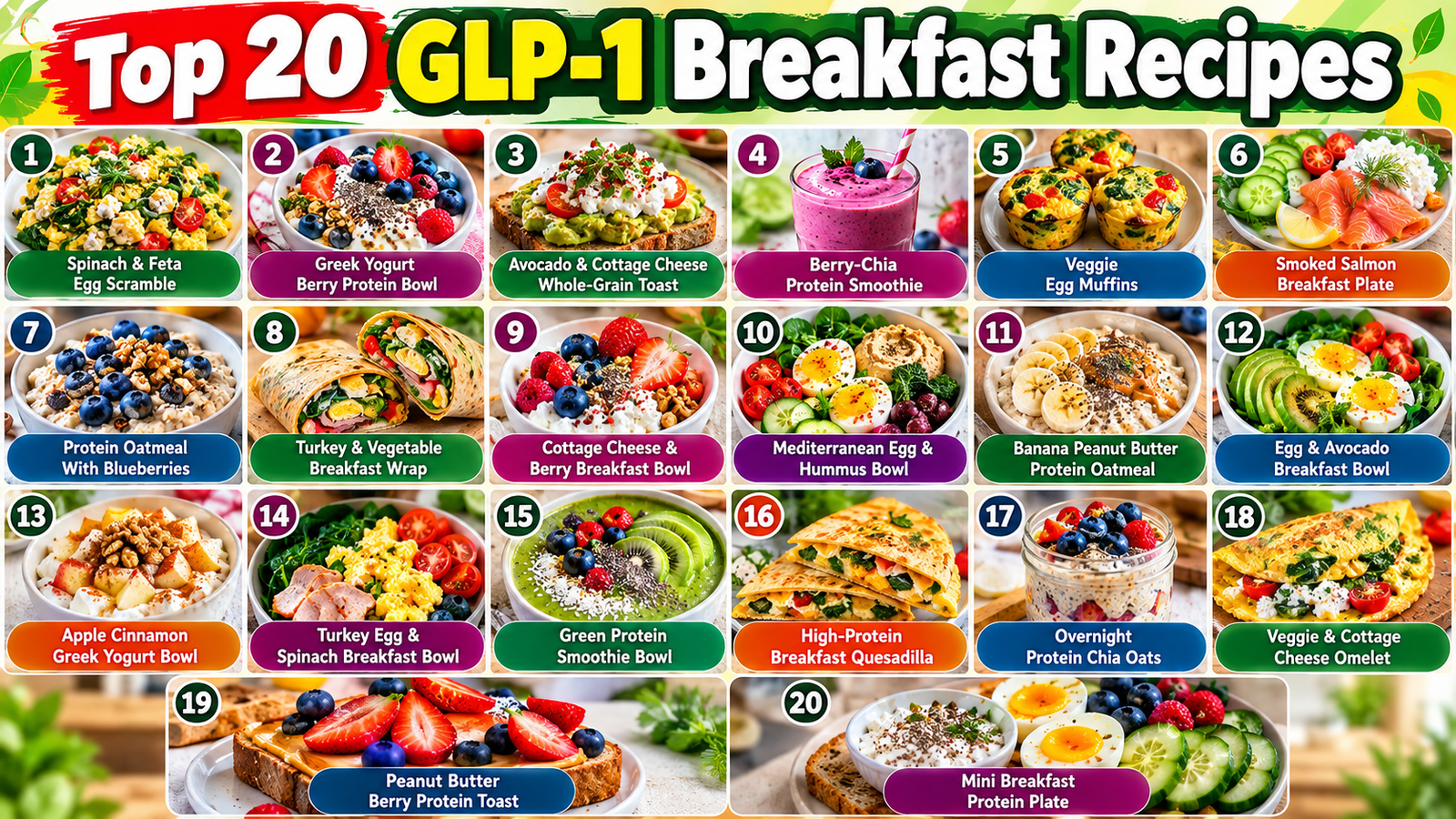
If you’re taking a GLP-1 medication and finding that your appetite has changed, breakfast may look a little different than it used to. Choosing smaller, nutrient-dense meals can help you get important protein, fiber, vitamins, and minerals without feeling overly full. From protein-packed egg dishes and Greek yogurt bowls to smoothies, oatmeal, and Mediterranean-inspired plates, these 20 GLP-1 breakfast recipes offer simple, delicious options for different tastes and appetite levels.
1. High-Protein Spinach & Feta Egg Scramble

A spinach and feta egg scramble is an easy GLP-1-friendly breakfast when you want something savory, protein-rich, and relatively light. Eggs provide high-quality protein, while spinach contributes fiber and micronutrients. Johns Hopkins Medicine recommends making protein a major part of breakfast and combining it with foods such as vegetables, whole grains, fruit, and healthy fats.
Ingredients
- 2 large eggs
- ½ cup fresh spinach
- 1 tablespoon crumbled feta
- 2 tablespoons diced tomatoes
- 1 tablespoon diced onion
- 1 teaspoon olive oil
- Black pepper
- Optional fresh herbs
Directions
Heat the olive oil in a nonstick skillet over medium-low heat. Add the onion and cook until slightly softened. Stir in the spinach and tomatoes and cook for another minute or two. Whisk the eggs in a small bowl and pour them into the skillet.
Slowly stir the eggs with a spatula until they are cooked but still soft. Turn off the heat and sprinkle feta over the top. Add black pepper and fresh herbs if desired.
The key to making this breakfast comfortable while taking a GLP-1 medication is portion awareness. These medications can reduce appetite and slow stomach emptying, so some people may feel full sooner than they expect. Smaller portions eaten slowly can be more comfortable than trying to finish a large breakfast.
You can also modify the recipe according to your appetite. If two eggs feel like too much, prepare a smaller serving and save the remainder appropriately for another meal. If you need more carbohydrates, add a small slice of whole-grain toast or a modest serving of berries.
For additional fiber, mix mushrooms, bell peppers, zucchini, or broccoli into the scramble. Keep added oil modest if high-fat foods tend to cause digestive discomfort. Johns Hopkins notes that limiting fatty or greasy foods may improve comfort for some people using GLP-1 medications.
Approximate preparation time: 10 minutes
Best for: Savory breakfast lovers and meal-prep mornings
2. Greek Yogurt Berry Protein Bowl

A Greek yogurt berry bowl is one of the simplest breakfasts to prepare when appetite is lower but you still want a nutrient-dense meal. Greek yogurt supplies protein, while berries contribute fiber and naturally occurring carbohydrates. UCLA Health specifically lists Greek yogurt among convenient breakfast protein sources and emphasizes adequate protein, fiber, and hydration for people using weight-loss medications.
Ingredients
- ¾ cup plain Greek yogurt
- ½ cup blueberries
- ¼ cup sliced strawberries
- 1 tablespoon chia seeds
- 1 tablespoon chopped walnuts
- ½ teaspoon cinnamon
- Optional: small amount of unsweetened coconut
Add the Greek yogurt to a bowl and gently arrange the berries over the top. Sprinkle with chia seeds, walnuts, and cinnamon. If you prefer a smoother texture, stir everything together.
Plain Greek yogurt gives you a creamy base without requiring a sugary breakfast cereal or flavored sauce. You can use nonfat, low-fat, or another variety depending on your dietary needs and tolerance. The protein content varies between brands, so checking the nutrition label is useful.
The berries add natural sweetness while also contributing fiber. Fiber comes from plant foods such as fruits, vegetables, legumes, nuts, seeds, and whole grains.
If you find a full bowl too filling, start with half the serving. GLP-1 medications can decrease appetite and slow the movement of food through the stomach, which means large meals may become uncomfortable for some people. Eating slowly and paying attention to fullness can help.
For a different flavor, replace the blueberries with raspberries and add cinnamon. For more texture, use a small amount of unsweetened granola. If you need additional protein, choose a Greek yogurt with a higher protein content.
This recipe also works well as a grab-and-go breakfast. Portion the yogurt into a container, keep the berries separate if preferred, and add the seeds immediately before eating. Avoid turning it into a dessert by adding large quantities of honey, syrup, chocolate chips, or sweetened granola.
Preparation time: 5 minutes
Best for: Quick breakfasts and meal preparation
3. Avocado & Cottage Cheese Whole-Grain Toast

Avocado toast becomes more substantial when paired with cottage cheese. Instead of relying mainly on bread and avocado, this version adds a convenient protein source while maintaining the creamy texture that makes avocado toast popular.
Ingredients
- 1 slice whole-grain bread
- ¼ avocado
- ⅓ cup cottage cheese
- 1 tablespoon sliced tomato
- Black pepper
- Lemon juice
- Optional pumpkin seeds
Toast the bread until lightly crisp. Mash the avocado with a few drops of lemon juice and spread a thin layer over the toast. Add cottage cheese and finish with tomato and black pepper.
This breakfast demonstrates an important principle for GLP-1-friendly eating: build meals around nutrient-dense foods rather than simply making portions smaller. UCLA Health emphasizes the importance of adequate protein, fiber, and balanced nutrition for people taking weight-loss medications.
Cottage cheese can provide a meaningful amount of protein in a relatively small portion. UCLA Health also identifies low-fat dairy, eggs, beans, tofu, fish, poultry, nuts, and seeds as useful protein sources.
Because avocado is calorie-dense and contains substantial fat, the portion can be adjusted to your appetite and individual nutrition goals. Some people taking GLP-1 medications experience gastrointestinal symptoms after eating particularly fatty meals. If that happens to you, using less avocado may make the meal easier to tolerate. (UCLA Health)
For additional vegetables, add cucumber, spinach, radishes, or tomatoes. For more fiber, choose a whole-grain bread with several grams of fiber per serving.
You can also make this recipe into a breakfast plate instead of toast. Serve cottage cheese alongside avocado, tomatoes, and a small piece of whole-grain toast. This gives you more control over the portion of each ingredient.
Eat slowly and stop when comfortably satisfied. A smaller breakfast is not necessarily inadequate if it contains useful sources of protein, vegetables or fruit, whole grains, and healthy fats.
Preparation time: 7 minutes
Best for: A savory breakfast with minimal cooking
4. Berry-Chia Protein Smoothie

Smoothies can be useful when solid food feels less appealing in the morning. A berry-chia smoothie combines Greek yogurt, berries, chia seeds, and milk into a drinkable breakfast.
Ingredients
- ½ cup plain Greek yogurt
- ½ cup frozen mixed berries
- ½ small banana
- 1 tablespoon chia seeds
- ½ cup unsweetened milk
- Cinnamon
- Ice, if desired
Place all ingredients into a blender and blend until smooth. Add a small amount of additional milk if the mixture is too thick.
The goal is to create a smoothie that contains more than fruit alone. A fruit-only smoothie can provide carbohydrates but may not offer as much protein. Pairing fruit with Greek yogurt and chia seeds creates a more balanced combination.
UCLA Health recommends that people taking weight-loss medications pay attention to protein and fiber because reduced appetite can make it harder to consume enough nutrients. (UCLA Health)
If your medication causes nausea, experiment with temperature and consistency. Some people may find a cool, smooth breakfast easier to tolerate than a heavy cooked meal. However, individual responses differ, so use the foods and textures you personally tolerate well.
Avoid turning the smoothie into a very large serving. A huge drink can still be uncomfortable even though it feels lighter than solid food. Start with a moderate portion and drink it slowly rather than consuming it rapidly.
You can vary the recipe with strawberries, raspberries, blueberries, peaches, or a small amount of mango. Spinach can also be blended into the smoothie without dramatically changing its flavor. For extra protein, choose a higher-protein Greek yogurt or add an appropriate protein powder if your healthcare professional has recommended one.
Chia seeds add texture and plant-based fiber. Because increasing fiber suddenly can contribute to bloating for some people, increase fiber gradually and maintain adequate hydration. (UCLA Health)
Preparation time: 5 minutes
Best for: Busy mornings or people who prefer drinkable breakfasts
5. Veggie Egg Muffins

Egg muffins are convenient because you can prepare several portions at once. They are essentially individual baked egg cups filled with vegetables and optional lean protein.
Ingredients
- 4 eggs
- ½ cup chopped spinach
- ¼ cup diced bell pepper
- ¼ cup chopped mushrooms
- 2 tablespoons shredded cheese
- ¼ cup diced cooked turkey, optional
- Black pepper
- Cooking spray or a small amount of olive oil
Preheat the oven to 375°F (190°C). Lightly grease a six-cup muffin pan. Whisk the eggs in a bowl and stir in the vegetables, cheese, and turkey if using.
Divide the mixture between the muffin cups. Bake for approximately 15–20 minutes, or until the centers are set.
Eggs are a convenient breakfast protein source. Johns Hopkins Medicine notes that one large egg contains about 6.2 grams of protein and recommends making protein a major focus of breakfast. (Hopkins Medicine)
The vegetables make these muffins more colorful and add fiber and micronutrients. You can use whatever vegetables you already have available, making this a useful recipe for reducing food waste.
For someone taking a GLP-1 medication, portion flexibility can be particularly useful. Instead of preparing one large breakfast, you can eat one or two egg muffins depending on your appetite and save the rest for later.
If fatty foods worsen your digestive symptoms, use a modest amount of cheese and avoid large quantities of processed meats. Johns Hopkins specifically notes that limiting fatty or greasy foods may improve comfort for some people taking GLP-1 medications. (Hopkins Medicine)
Serve with a small amount of fruit or whole-grain toast if you want additional carbohydrates. Alternatively, pair the muffins with sliced cucumber or tomatoes for a lighter breakfast.
Store leftovers according to standard food-safety practices and reheat thoroughly before eating. For meal preparation, allow the muffins to cool before refrigerating them in an appropriate sealed container.
Preparation time: About 30 minutes including baking
Best for: Meal prep and busy weekdays
6. Smoked Salmon Cucumber Breakfast Plate

This breakfast plate combines smoked salmon with cottage cheese, cucumber, tomatoes, and whole-grain crackers or toast. It provides a savory alternative to eggs and yogurt while keeping preparation extremely simple.
Ingredients
- 2–3 ounces smoked salmon
- ⅓ cup cottage cheese
- ½ cup sliced cucumber
- ½ cup cherry tomatoes
- 1 small slice whole-grain toast
- Lemon
- Fresh dill
- Black pepper
Arrange the cottage cheese, smoked salmon, cucumber, and tomatoes on a plate. Add the toast on the side. Finish with lemon juice, dill, and black pepper.
Fish is among the protein choices included in balanced nutrition guidance, and protein is especially useful at breakfast because it contributes to fullness and supports tissue maintenance. (UCLA Health)
This recipe is particularly useful when you do not want to cook. Everything can be assembled in several minutes, and the portions can be adjusted easily.
Smoked salmon can contain considerable sodium, depending on the brand. If you are following a sodium-restricted diet, compare labels and choose an option that fits your medical nutrition plan.
You can also replace smoked salmon with cooked salmon leftovers. That allows you to turn dinner leftovers into breakfast without relying on processed foods.
If the entire plate feels too large, eat the salmon and cottage cheese first and save the vegetables or toast for later. Appetite can vary significantly when taking GLP-1 medications, so forcing yourself to finish a predetermined portion is not always necessary.
Add avocado in a small quantity if you tolerate it well, or substitute hummus for cottage cheese if you prefer a plant-forward meal.
Preparation time: 5–8 minutes
Best for: No-cook savory breakfasts
7. Protein Oatmeal With Blueberries

Oatmeal becomes a more balanced breakfast when combined with protein and fruit. This version uses oats, Greek yogurt, blueberries, chia seeds, and cinnamon.
Ingredients
- ½ cup rolled oats
- ¾ cup water or unsweetened milk
- ¼–½ cup Greek yogurt
- ½ cup blueberries
- 1 teaspoon chia seeds
- Cinnamon
- Optional chopped walnuts
Cook the oats according to package directions. Allow them to cool slightly before stirring in Greek yogurt. Add blueberries, chia seeds, cinnamon, and a small amount of walnuts.
Oats provide carbohydrates and fiber, while Greek yogurt adds protein. Johns Hopkins recommends a breakfast containing protein, complex carbohydrates, and healthy fats rather than relying on a single food group. (Hopkins Medicine)
The texture can be adjusted depending on your preference. If you experience nausea or digestive sensitivity, a softer oatmeal may be more comfortable than a bowl filled with many crunchy toppings.
Avoid adding large amounts of brown sugar, syrup, or sweetened toppings. Instead, allow blueberries and cinnamon to provide much of the flavor. A small amount of nut butter can be used if desired.
If you need a higher-protein breakfast, increase the Greek yogurt rather than dramatically increasing the oats. Your overall protein requirements depend on your body, health status, activity level, and goals. UCLA Health notes that protein needs vary among individuals and recommends personalized guidance when necessary. (UCLA Health)
You can prepare overnight oats using the same ingredients. Mix oats, yogurt, milk, chia seeds, and berries in a container and refrigerate overnight. In the morning, adjust the consistency with a little milk.
Preparation time: 8–10 minutes
Best for: Warm or overnight breakfast options
8. Turkey & Vegetable Breakfast Wrap

A turkey and vegetable breakfast wrap is a portable option for mornings when you need something you can eat away from the kitchen. Using a small whole-grain tortilla helps keep the meal manageable while eggs and turkey provide protein.
Ingredients
- 1 small whole-grain tortilla
- 1 egg
- 1 ounce lean turkey
- ¼ cup spinach
- ¼ cup diced bell pepper
- 1 tablespoon shredded cheese
- Salsa, optional
Scramble the egg in a nonstick pan. Add the spinach and bell pepper toward the end of cooking. Warm the tortilla, add the egg mixture and turkey, and sprinkle with cheese.
Roll tightly and serve immediately.
The recipe can be made lighter by using more vegetables and a smaller tortilla. If your appetite is reduced, you can prepare a half-sized wrap rather than trying to consume a large breakfast.
Lean poultry and eggs are both recognized protein sources. Balanced meals can also include vegetables and whole grains, which contribute additional nutrients and fiber. (UCLA Health)
Choose turkey carefully because processed turkey products can differ considerably in sodium and fat. Check the nutrition label if those nutrients are important to your dietary plan.
For additional flavor, use tomato salsa, cilantro, or a small amount of avocado. If spicy foods bother your stomach, leave out hot peppers and choose mild salsa.
A breakfast wrap is also useful for meal preparation. Cook several eggs and vegetables in advance and assemble individual wraps when needed. Keep refrigerated ingredients stored safely and reheat according to food-safety recommendations.
Preparation time: 12 minutes
Best for: Portable breakfasts
9. Cottage Cheese & Berry Breakfast Bowl

Cottage cheese makes a simple high-protein breakfast base. Pairing it with berries, chia seeds, cinnamon, and a few nuts creates a combination of protein, fruit, fiber, and healthy fats.
Ingredients
- ½ cup cottage cheese
- ½ cup berries
- 1 tablespoon chia seeds
- 1 tablespoon chopped walnuts
- Cinnamon
- Optional vanilla extract
Place cottage cheese into a bowl and add berries. Sprinkle with chia seeds, walnuts, and cinnamon.
This breakfast requires no cooking and can be prepared in less than five minutes. It is especially useful for people who prefer smaller meals.
Protein is an important consideration when appetite is reduced during weight loss. UCLA Health notes that sufficient protein can help support muscle preservation, particularly when combined with appropriate physical activity. (UCLA Health)
The exact amount of protein you need is individual. UCLA Health notes that adult protein requirements can vary considerably according to factors such as body size, activity, and individual circumstances. (UCLA Health)
Choose plain cottage cheese if you want to control added sugars. If you prefer a sweeter flavor, berries and cinnamon can provide natural sweetness without requiring much added sugar.
You can also turn this into a savory bowl by replacing berries with cucumber, tomatoes, herbs, and black pepper. This makes the recipe more versatile and allows you to adapt it according to your appetite.
If dairy products cause digestive symptoms, use a suitable lactose-free alternative. Your tolerance should guide ingredient selection.
Preparation time: 5 minutes
Best for: Very quick breakfasts
10. Mediterranean Egg & Hummus Bowl

This Mediterranean-inspired breakfast bowl combines eggs with hummus, cucumber, tomatoes, spinach, and a small amount of whole-grain pita. It offers a variety of textures and flavors without requiring complicated cooking.
Ingredients
- 2 eggs
- 2 tablespoons hummus
- ½ cup cucumber
- ½ cup tomatoes
- ½ cup spinach
- Small piece whole-grain pita
- Lemon juice
- Parsley
- Black pepper
Prepare the eggs according to your preference. Arrange the vegetables, hummus, spinach, and eggs in a bowl. Add the pita on the side and finish with lemon juice and parsley.
The combination of protein, vegetables, and whole grains reflects the general principle of building balanced meals. UCLA Health recommends balanced eating patterns containing protein, fruits or vegetables, and whole grains for people working on weight management. (UCLA Health)
Hummus provides plant protein and is made primarily from chickpeas, but it can also contain oil, so the serving size can be adjusted depending on your dietary goals and tolerance.
If you are experiencing digestive discomfort, start with a smaller amount of hummus and raw vegetables. Some people find large amounts of high-fiber foods difficult to tolerate when their appetite and digestion have changed.
You can substitute grilled chicken, tofu, or salmon for eggs. That makes this breakfast suitable for people who want more variety throughout the week.
Preparation time: 10 minutes
Best for: Mediterranean-style breakfasts
>>> Access 101 GLP-1 Breakfast Recipes Now!
11. Banana Peanut Butter Protein Oatmeal

Banana and peanut butter are a classic oatmeal combination. Adding Greek yogurt provides additional protein without requiring a large portion.
Ingredients
- ½ cup rolled oats
- ½ small banana
- ½ cup unsweetened milk
- ¼ cup Greek yogurt
- 1 teaspoon natural peanut butter
- Cinnamon
- 1 teaspoon chia seeds
Cook the oats with milk until soft. Slice the banana and add it on top. Stir in Greek yogurt after the oatmeal has cooled slightly, then add peanut butter, cinnamon, and chia seeds.
This recipe is satisfying because it combines several food groups in one bowl. Oats provide carbohydrates and fiber, banana contributes fruit, peanut butter adds fat and some protein, and Greek yogurt boosts protein.
Keep the peanut butter serving moderate because nut butters are energy-dense. If you find rich foods uncomfortable while taking your medication, use a smaller amount.
For a lower-sugar variation, use half a banana and add blueberries. You can also replace peanut butter with almond or sunflower seed butter if preferred.
Eating slowly can be particularly useful when appetite and fullness cues have changed. GLP-1 medications can make people feel full sooner, so a smaller serving may be enough. (UCLA Health)
Preparation time: 8 minutes
Best for: Comforting oatmeal breakfasts
12. Egg & Avocado Breakfast Bowl

An egg and avocado breakfast bowl can be prepared with just a few ingredients. It combines eggs with avocado, spinach, tomatoes, and optional whole-grain toast.
Ingredients
- 2 eggs
- ¼ avocado
- ½ cup spinach
- ½ cup tomatoes
- 1 slice whole-grain toast
- Lemon juice
- Black pepper
Cook the eggs while quickly sautéing or steaming the spinach. Add the spinach, tomatoes, avocado, and eggs to a bowl. Serve with toast.
The meal contains protein from eggs, fiber and micronutrients from vegetables and avocado, and carbohydrates from whole-grain toast. A balanced breakfast can include protein alongside complex carbohydrates and healthy fats. (Hopkins Medicine)
Because avocado contains a substantial amount of fat, portion size matters if fatty foods trigger gastrointestinal symptoms. Some people using GLP-1 medications report nausea, abdominal discomfort, or diarrhea, and medical nutrition guidance commonly recommends limiting particularly fatty or greasy meals when they worsen symptoms. (UCLA Health)
If you want to reduce the fat content, use a smaller amount of avocado and add extra tomato or spinach.
Preparation time: 10 minutes
Best for: Simple whole-food breakfasts
13. Apple Cinnamon Greek Yogurt Bowl

This breakfast has the flavor of apple pie without needing pastry or a sugary dessert-style topping. Greek yogurt creates the protein base, while chopped apple, cinnamon, chia seeds, and walnuts provide texture.
Ingredients
- ¾ cup plain Greek yogurt
- ½ small apple, diced
- 1 tablespoon chopped walnuts
- 1 teaspoon chia seeds
- Cinnamon
- Optional vanilla
Add the yogurt to a bowl and top with diced apple, walnuts, chia seeds, and plenty of cinnamon.
Apples provide fiber and naturally occurring carbohydrates, while Greek yogurt contributes protein. Nuts and seeds add healthy fats and texture.
If raw apple feels difficult to tolerate, lightly cook the diced apple with cinnamon and a tablespoon of water until soft. Let it cool before adding it to the yogurt.
This recipe is easy to adjust according to appetite. Use a smaller serving of yogurt and apple if you are not hungry, or add a little extra Greek yogurt if you need more protein.
Preparation time: 5 minutes
Best for: Sweet-tasting breakfasts without elaborate cooking
14. Turkey Egg & Spinach Breakfast Bowl

This bowl is designed around lean protein and vegetables. Eggs and turkey provide protein, while spinach and tomatoes add vegetables. A small portion of roasted potatoes or whole-grain toast can provide carbohydrates.
Ingredients
- 1 egg
- 1–2 ounces lean turkey
- ½ cup spinach
- ¼ cup tomatoes
- ¼ cup cooked potatoes, optional
- Black pepper
- Fresh herbs
Cook the turkey thoroughly if using raw turkey. Add spinach and tomatoes, then stir in the egg. Serve with a small amount of cooked potato if desired.
The portion is intentionally moderate. GLP-1 medications can reduce appetite, so a very large breakfast may be unnecessary or uncomfortable for some people. Eating slowly and recognizing fullness can help with portion control. (UCLA Health)
Choose minimally processed turkey when possible and check sodium levels on packaged products.
Preparation time: 12–15 minutes
Best for: Protein-focused savory breakfasts
15. Green Protein Smoothie Bowl

A smoothie bowl offers the convenience of a smoothie while allowing you to eat it with a spoon. This version combines spinach, Greek yogurt, berries, and a small amount of banana.
Ingredients
- ½ cup Greek yogurt
- ½ cup spinach
- ½ cup berries
- ¼–½ banana
- Small amount of unsweetened milk
- 1 teaspoon chia seeds
Blend everything except the chia seeds until thick. Add only enough liquid to achieve a spoonable consistency. Pour into a bowl and sprinkle with chia seeds.
Spinach contributes vegetables, berries contribute fruit and fiber, and Greek yogurt provides protein. Fiber-rich foods include fruits, vegetables, legumes, nuts, seeds, and whole grains. (UCLA Health)
Keep the bowl moderate in size. A smoothie bowl can become calorie-dense if loaded with large quantities of granola, nut butter, coconut, chocolate, and dried fruit.
Preparation time: 7 minutes
Best for: Smoothie lovers who want a spoonable breakfast
16. High-Protein Breakfast Quesadilla

A breakfast quesadilla can fit into a GLP-1-friendly eating pattern when the filling emphasizes protein and vegetables rather than large quantities of cheese and processed meat.
Ingredients
- 1 small whole-grain tortilla
- 1 egg
- 1 ounce black beans
- ¼ cup spinach
- 1 tablespoon shredded cheese
- Tomato salsa
- Optional avocado
Scramble the egg with spinach. Place the tortilla in a skillet, add the egg mixture, black beans, and cheese, then fold and cook until lightly crisp.
Beans provide both protein and fiber, while eggs add additional protein. Combining protein with fiber-rich foods can make a breakfast more nutritionally balanced. UCLA Health recommends balanced meals that include lean protein, vegetables, fruit, and whole grains. (UCLA Health)
Use a small tortilla and modest cheese portion to keep the meal comfortable and manageable.
Preparation time: 10 minutes
Best for: Mexican-inspired breakfast flavors
17. Overnight Protein Chia Oats

Overnight oats can save valuable time on busy mornings. This version combines oats with Greek yogurt, chia seeds, milk, and berries.
Ingredients
- ⅓ cup rolled oats
- ½ cup Greek yogurt
- ⅓ cup unsweetened milk
- 1 teaspoon chia seeds
- ½ cup berries
- Cinnamon
Mix the oats, yogurt, milk, chia seeds, and cinnamon in a sealed container. Refrigerate overnight. Add berries in the morning.
Because the recipe is prepared in advance, it can help make breakfast more consistent. Meal planning can be useful when appetite is unpredictable because you already have a nutritionally balanced option available.
Fiber is an important part of a balanced diet, although increasing fiber quickly may cause bloating for some people. Gradually increasing fiber and drinking enough fluids can support digestive comfort. (UCLA Health)
If the mixture becomes too thick, add a little milk before eating.
Preparation time: 5 minutes plus overnight refrigeration
Best for: Make-ahead breakfasts
18. Veggie & Cottage Cheese Omelet

Adding cottage cheese to an omelet can increase protein while creating a creamy filling. Combine eggs with mushrooms, spinach, tomatoes, and a modest amount of cottage cheese.
Ingredients
- 2 eggs
- ¼ cup cottage cheese
- ½ cup spinach
- ¼ cup mushrooms
- ¼ cup tomatoes
- Black pepper
- Fresh herbs
Whisk the eggs. Cook the mushrooms and spinach first, then add the eggs. Once the eggs begin setting, spoon cottage cheese into the center and fold the omelet.
Eggs are a convenient source of protein, while vegetables add fiber and nutrients. Breakfast guidance from Johns Hopkins emphasizes protein alongside vegetables, fruits, whole grains, and healthy fats. (Hopkins Medicine)
If you are sensitive to large meals, make the omelet smaller and serve it with a few berries rather than a large side dish.
Preparation time: 10 minutes
Best for: Traditional cooked breakfasts
19. Peanut Butter Berry Protein Toast

For a fast breakfast, spread a small amount of natural peanut butter over whole-grain toast and add fresh berries or sliced strawberries. Pair it with Greek yogurt for additional protein.
Ingredients
- 1 slice whole-grain toast
- 1 teaspoon peanut butter
- ¼ cup sliced strawberries
- ½ cup Greek yogurt
- Cinnamon
Toast the bread and spread it with peanut butter. Add strawberries and cinnamon. Serve with Greek yogurt on the side.
This combination balances carbohydrates, protein, fruit, and fat. Whole grains can contribute fiber, while berries provide fruit and Greek yogurt provides protein.
Peanut butter is nutritious but concentrated, so a teaspoon or small tablespoon can be enough. If rich foods cause digestive discomfort, reduce the portion.
This is also a useful breakfast when you have very little time. Prepare the yogurt and berries in advance and assemble the toast immediately before eating.
Preparation time: 5 minutes
Best for: Fast weekday mornings
20. Mini Breakfast Protein Plate

A mini breakfast plate is ideal when you want variety but do not want a large meal. Instead of one substantial entrée, combine several small portions: an egg, cottage cheese, berries, cucumber, and a small piece of whole-grain toast.
Ingredients
- 1 boiled or scrambled egg
- ¼ cup cottage cheese
- ¼ cup berries
- ¼ cup cucumber
- ½ slice whole-grain toast
- Optional avocado
- Black pepper
Arrange everything on a small plate. There is no complicated preparation, and each component can be swapped according to preference.
This approach can be especially practical for people using GLP-1 medications because appetite may vary from day to day. UCLA Health explains that reduced appetite can make it challenging to consume adequate nutrients, emphasizing protein, fiber, hydration, and balanced food choices. (UCLA Health)
Rather than forcing yourself to eat a large breakfast, a smaller plate can provide several nutrient sources in manageable portions. Johns Hopkins also notes that protein can contribute to fullness and recommends making it a major focus of breakfast. (Hopkins Medicine)
If you are hungry later, the remaining components can be incorporated into a snack or another small meal. If you have very little appetite, prioritize the protein-containing foods first.
For people experiencing persistent nausea, vomiting, abdominal pain, inability to keep fluids down, or other concerning symptoms while taking a GLP-1 medication, dietary adjustments should not replace medical advice. Contact the prescribing healthcare professional, and seek urgent medical attention for severe or concerning symptoms. (UCLA Health)
Preparation time: 5–10 minutes
Best for: Small-appetite mornings and flexible portions
>>> Access 101 GLP-1 Breakfast Recipes Now!

Nilesh Vijay is the founder and lead health writer at Health Tips USA. He is passionate about helping people understand health, nutrition, weight management, fitness, and healthy living through easy-to-read, research-based articles.