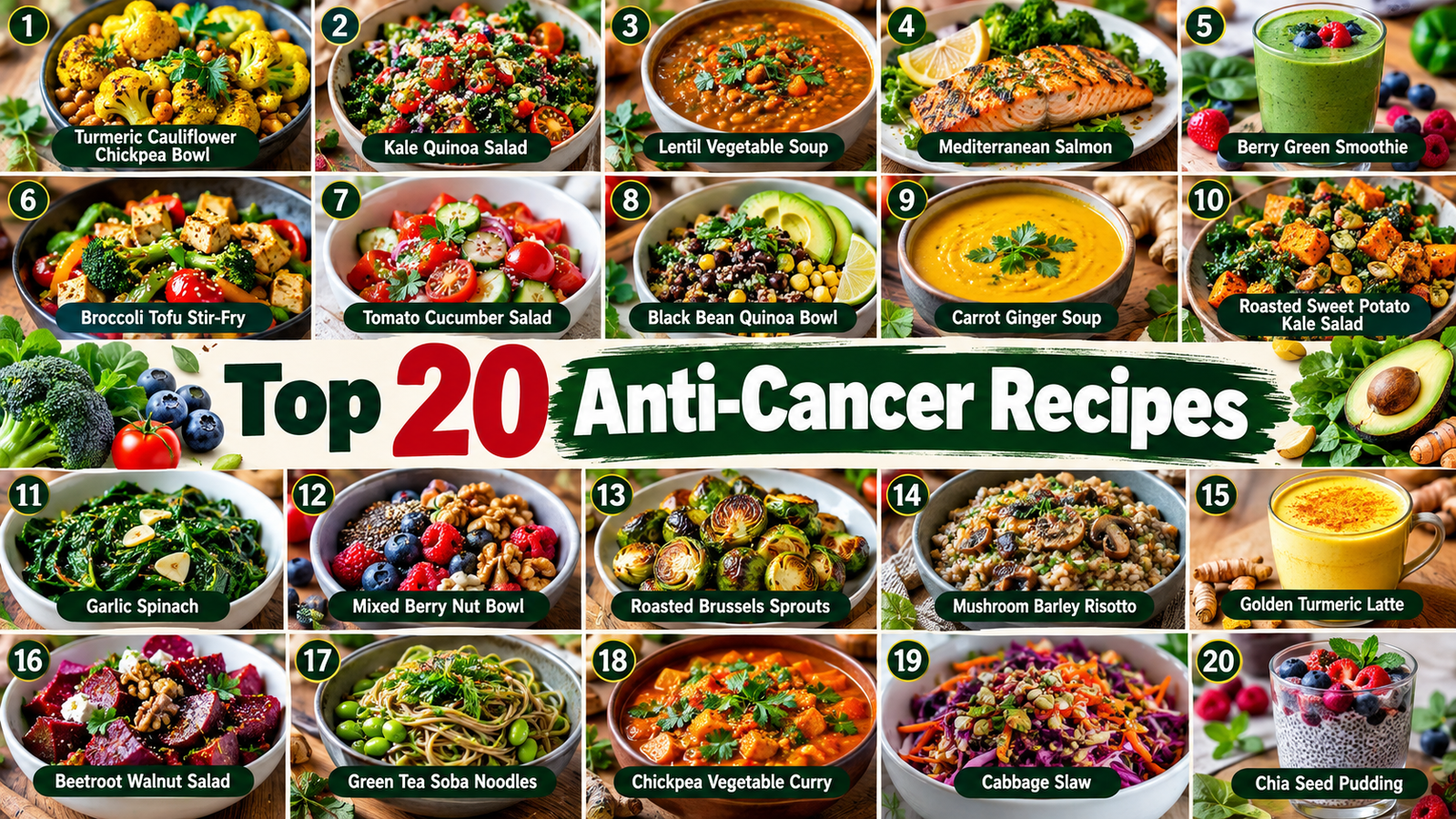
Healthy eating plays an important role in supporting overall health, and a plant-forward diet can also be part of a lifestyle aimed at reducing cancer risk. These Top 20 Anti-Cancer Recipes focus on colorful vegetables, fruits, whole grains, beans, lentils, nuts, seeds, fish, herbs, and healthy fats. From turmeric-ginger cauliflower bowls and hearty lentil soup to Mediterranean salmon and berry smoothies, the recipes make nutritious eating flavorful and practical.
No individual food or recipe can prevent, treat, or cure cancer. Instead, major cancer organizations recommend an overall dietary pattern rich in plant foods, whole grains, and legumes while limiting processed meat and highly processed foods. Think of these recipes as delicious ways to build more nutrient-dense foods into your everyday meals.
1. Turmeric-Ginger Roasted Cauliflower & Chickpea Bowl

Why This Recipe Fits a Cancer-Prevention-Friendly Eating Pattern
This colorful bowl combines cauliflower, chickpeas, spinach, carrots, turmeric, ginger, lemon, and extra-virgin olive oil. It is built around vegetables, legumes, and minimally processed plant foods—foods encouraged in cancer-prevention dietary guidance. The World Cancer Research Fund recommends making whole grains, vegetables, fruit, and beans or other pulses a major part of the usual diet, while the American Cancer Society emphasizes vegetables, fruits, whole grains, beans, nuts, seeds, and other nutrient-rich foods. (World Cancer Research Fund)
This recipe is not intended to prevent, treat, or cure cancer. Rather, it is an example of how a nutrient-dense eating pattern can make vegetables and fiber-rich foods the center of a satisfying meal.
Serves: 4
Prep Time: 15 minutes
Cook Time: 30 minutes
Total Time: 45 minutes
Ingredients
- 1 large head cauliflower, cut into florets
- 1½ cups cooked chickpeas, drained and rinsed
- 2 carrots, sliced
- 2 cups baby spinach
- 1 cup cooked quinoa
- 2 tablespoons extra-virgin olive oil
- 1 teaspoon ground turmeric
- 1 teaspoon grated fresh ginger
- ½ teaspoon ground cumin
- ½ teaspoon smoked paprika
- ½ teaspoon black pepper
- ½ teaspoon garlic powder
- ½ teaspoon salt
- Juice of 1 lemon
- 2 tablespoons chopped parsley
- 2 tablespoons pumpkin seeds
For the Lemon Dressing
- 3 tablespoons olive oil
- 2 tablespoons fresh lemon juice
- 1 teaspoon Dijon mustard
- 1 teaspoon honey or maple syrup
- 1 small garlic clove, minced
- Black pepper to taste
Directions
Preheat the oven to 425°F (220°C). Place the cauliflower florets, chickpeas, and carrots on a large baking sheet. Drizzle with olive oil and sprinkle with turmeric, ginger, cumin, paprika, garlic powder, black pepper, and salt.
Toss everything thoroughly so the vegetables and chickpeas are evenly coated. Spread them into a single layer. Roast for approximately 25–30 minutes, turning once halfway through cooking. The cauliflower should become tender with browned edges, while the chickpeas should develop a lightly crisp exterior.
While the vegetables roast, prepare the quinoa if it has not already been cooked. For the dressing, whisk together olive oil, lemon juice, Dijon mustard, honey or maple syrup, garlic, and black pepper.
Divide the cooked quinoa among four bowls. Add a handful of fresh spinach to each bowl. Spoon the hot roasted vegetables and chickpeas over the spinach. The warmth of the roasted ingredients will slightly soften the greens without making them overly wilted.
Drizzle each bowl with the lemon dressing and finish with chopped parsley and pumpkin seeds.
Serving Suggestions
For extra flavor, add sliced avocado, a spoonful of plain Greek yogurt, or a small amount of crumbled feta. If you need additional protein, grilled chicken or baked tofu can be added.
The combination of chickpeas and quinoa also makes the bowl particularly filling. Beans and whole grains contribute dietary fiber, and fiber-rich foods are an important part of dietary recommendations for reducing cancer risk, particularly colorectal cancer risk. (World Cancer Research Fund)
Storage
Store leftovers in an airtight container in the refrigerator for up to 3 days. Keep the dressing separately when possible. Reheat the roasted vegetables and quinoa, then add fresh spinach and dressing just before serving.
2. Garlic, Tomato & Spinach Whole-Wheat Pasta

This simple pasta dinner turns everyday ingredients into a vegetable-forward meal. Tomatoes provide color and flavor, spinach adds leafy greens, garlic contributes a distinctive savory note, and whole-wheat pasta supplies more fiber than refined pasta.
The American Cancer Society recommends emphasizing vegetables, fruits, whole grains, beans, nuts, and seeds while limiting highly processed foods and refined grain products. (American Cancer Society)
Serves: 4
Prep Time: 10 minutes
Cook Time: 20 minutes
Total Time: 30 minutes
Ingredients
- 12 oz whole-wheat spaghetti or linguine
- 2 tablespoons extra-virgin olive oil
- 5 garlic cloves, thinly sliced
- 3 cups cherry tomatoes, halved
- 4 cups fresh spinach
- ½ teaspoon red pepper flakes
- ½ teaspoon dried oregano
- ¼ teaspoon black pepper
- ½ teaspoon salt
- ½ cup low-sodium vegetable broth
- 2 tablespoons fresh basil
- 2 tablespoons grated Parmesan, optional
- Juice of ½ lemon
Preparation
Cook the pasta according to the package instructions until al dente. Reserve about ½ cup of pasta water before draining.
Heat olive oil in a large skillet over medium heat. Add the sliced garlic and cook gently for about 30–60 seconds. Avoid burning the garlic because it can become bitter.
Add the cherry tomatoes, oregano, red pepper flakes, black pepper, and salt. Cook for 5–7 minutes until the tomatoes soften and begin releasing their juices.
Pour in the vegetable broth and simmer for another 2 minutes. Add the spinach and stir until it wilts.
Add the drained pasta to the skillet. Toss everything together. If the mixture looks dry, add a little reserved pasta water until the sauce reaches your preferred consistency.
Finish with lemon juice and fresh basil. Sprinkle with Parmesan if desired.
Why It Works as an Everyday Healthy Meal
One advantage of this recipe is that vegetables are incorporated directly into a familiar comfort food. Rather than treating vegetables as a separate side dish, tomatoes and spinach become part of the main meal.
Whole grains are particularly useful because they provide fiber and other nutrients retained from the original grain. Research summarized by the World Cancer Research Fund supports higher intake of fiber-rich foods and whole grains as part of a dietary pattern associated with lower colorectal cancer risk. (World Cancer Research Fund)
Optional Additions
Add white beans for additional fiber and plant protein, mushrooms for extra texture, or roasted red peppers for sweetness.
For a higher-protein version, serve with grilled salmon, chicken, or baked tofu.
Best served: Immediately while warm.
3. Broccoli, Mushroom & Quinoa Stir-Fry

Ingredients
- 1½ cups cooked quinoa
- 3 cups broccoli florets
- 2 cups sliced mushrooms
- 1 red bell pepper, sliced
- 1 carrot, thinly sliced
- 1 cup snap peas
- 2 garlic cloves, minced
- 1 teaspoon grated ginger
- 1 tablespoon low-sodium soy sauce
- 1 tablespoon rice vinegar
- 1 teaspoon sesame oil
- 1 tablespoon olive oil
- 2 tablespoons chopped green onions
- 1 tablespoon sesame seeds
- Black pepper to taste
Directions
Heat olive oil in a large skillet or wok over medium-high heat. Add broccoli and carrots first because they take slightly longer to cook. Stir-fry for approximately 3 minutes.
Add mushrooms, bell pepper, and snap peas. Continue cooking for another 4–5 minutes. The vegetables should become tender but retain some texture.
Add garlic and ginger and cook for approximately 30 seconds.
Stir together soy sauce, rice vinegar, and sesame oil. Pour the mixture over the vegetables and toss.
Add the cooked quinoa and stir until heated through. Finish with green onions, sesame seeds, and black pepper.
Serving
Serve immediately in bowls. You can add edamame, tofu, or shredded chicken for additional protein.
This meal contains several food groups frequently emphasized in healthy eating patterns: vegetables, whole grains, and plant-based protein. Broccoli and other cruciferous vegetables are among the vegetables studied for potentially beneficial relationships with cancer risk, but eating broccoli should not be presented as a cancer treatment. (American Cancer Society)
Make-Ahead Version
Prepare the quinoa and chop the vegetables in advance. Store them separately in the refrigerator. When ready to eat, the stir-fry can be assembled in approximately 10 minutes.
For a lower-sodium version, use reduced-sodium soy sauce or replace part of the soy sauce with additional rice vinegar and fresh lemon juice.
Serves: 4
Prep: 15 minutes
Cook: 15 minutes
4. Berry, Spinach & Chia Breakfast Smoothie

This vibrant smoothie is an easy way to combine fruit, leafy greens, seeds, and protein in one breakfast. It uses whole fruit rather than fruit juice, which keeps the fruit’s fiber in the drink.
Ingredients
- 1 cup blueberries
- ½ cup strawberries
- 1 small banana
- 1 cup baby spinach
- 1 tablespoon chia seeds
- ¾ cup plain Greek yogurt
- ¾–1 cup unsweetened milk
- ½ teaspoon grated ginger
- ½ teaspoon cinnamon
- 4–5 ice cubes
Method
Place the milk, spinach, berries, banana, yogurt, chia seeds, ginger, and cinnamon into a blender.
Blend for 45–60 seconds until smooth. Add additional milk if necessary.
Taste before adding any sweetener. The banana and berries usually provide sufficient sweetness. If you prefer a sweeter smoothie, use a small amount of unsweetened applesauce or a few additional berries.
Let the smoothie sit for 2–3 minutes before drinking so the chia seeds can begin absorbing liquid.
Nutrition-Focused Notes
Fruit and vegetables provide fiber, vitamins, minerals, and numerous plant compounds. The World Cancer Research Fund recommends eating a variety of fruit and vegetables and making plant foods a major part of the daily diet. (World Cancer Research Fund)
Using different-colored fruits and vegetables throughout the week is a practical way to diversify the plant foods in your diet.
Easy Variations
Replace blueberries with blackberries or raspberries. Add kale instead of spinach. For more protein, add unsweetened Greek yogurt or a food-based protein source such as silken tofu.
For a thicker smoothie bowl, reduce the milk to ½ cup and blend with extra frozen berries.
Serves: 1 large smoothie
Prep Time: 5 minutes
Blend Time: 1 minute
5. Mediterranean Salmon with Broccoli & Lemon

Ingredients
- 4 salmon fillets
- 4 cups broccoli florets
- 1 lemon
- 2 tablespoons extra-virgin olive oil
- 3 garlic cloves, minced
- 1 teaspoon dried oregano
- ½ teaspoon paprika
- ¼ teaspoon black pepper
- ½ teaspoon salt
- 2 tablespoons chopped parsley
- 1 cup cooked quinoa or brown rice
Preparation
Preheat the oven to 400°F (200°C). Place salmon fillets on a lined baking sheet and arrange broccoli around them.
Mix olive oil, garlic, oregano, paprika, black pepper, and salt. Brush the mixture over the salmon and toss the broccoli with any remaining mixture.
Slice half the lemon and place several slices over the salmon. Roast for approximately 12–18 minutes, depending on the thickness of the fillets.
The salmon should be cooked through and flake easily with a fork. For food safety, use a food thermometer and cook fish to an appropriate safe internal temperature.
Squeeze fresh lemon juice over everything before serving.
Serve With
Serve the salmon and broccoli over quinoa or brown rice. Add parsley and another drizzle of lemon juice.
The American Cancer Society describes healthy eating patterns as emphasizing vegetables, fruits, whole grains, beans, nuts, seeds, and healthy protein sources such as fish and poultry while limiting red and processed meat. (American Cancer Society)
This meal therefore provides a practical example of a balanced dinner rather than a restrictive “cancer-fighting” diet.
Meal-Prep Tip
Prepare four portions at once. Store the salmon, broccoli, and grain in separate or divided containers. Refrigerate and consume within an appropriate food-safety timeframe.
Serves: 4
Prep: 10 minutes
Bake: 15–18 minutes
6. Lentil, Carrot & Tomato Soup

Lentils make this soup hearty without requiring a large amount of meat. Pulses such as lentils, beans, and chickpeas provide fiber, protein, vitamins, minerals, and other plant compounds.
Ingredients
- 1½ cups brown or green lentils
- 2 carrots, diced
- 2 celery stalks, diced
- 1 onion, chopped
- 3 garlic cloves, minced
- 1 can diced tomatoes
- 6 cups low-sodium vegetable broth
- 1 teaspoon cumin
- 1 teaspoon smoked paprika
- ½ teaspoon turmeric
- 1 bay leaf
- 2 cups chopped spinach
- 1 tablespoon olive oil
- Juice of 1 lemon
- Black pepper to taste
Directions
Heat olive oil in a large pot. Add onion, carrots, and celery. Cook for 5–6 minutes until beginning to soften.
Add garlic, cumin, paprika, turmeric, and black pepper. Stir for approximately 30 seconds.
Add lentils, diced tomatoes, vegetable broth, and bay leaf. Bring to a boil.
Reduce the heat, cover partially, and simmer for 25–35 minutes, or until the lentils are tender.
Remove the bay leaf. Stir in spinach and cook for 2–3 minutes.
Finish with fresh lemon juice.
Why Lentils Are a Useful Ingredient
World Cancer Research Fund guidance recommends making pulses such as beans and lentils a major part of the usual diet. Pulses contribute fiber and can help replace some highly processed or meat-heavy meal components. (World Cancer Research Fund)
This soup can be particularly useful during colder weather because it is inexpensive, filling, and easy to prepare in a large batch.
Storage
Refrigerate leftovers promptly in shallow containers. The soup generally keeps well for several days when properly refrigerated. It can also be frozen in individual portions.
Serves: 6
Prep: 15 minutes
Cook: 35 minutes
7. Sweet Potato, Black Bean & Avocado Tacos

Ingredients
- 2 medium sweet potatoes, diced
- 1½ cups black beans
- 8 small whole-grain tortillas
- 1 avocado, sliced
- 1 cup shredded red cabbage
- ½ cup diced tomatoes
- ¼ cup chopped cilantro
- 1 lime
- 1 tablespoon olive oil
- 1 teaspoon cumin
- ½ teaspoon smoked paprika
- ½ teaspoon chili powder
- Black pepper
- Pinch of salt
Preparation
Preheat oven to 425°F (220°C). Toss diced sweet potatoes with olive oil, cumin, paprika, chili powder, and black pepper.
Roast for 25–30 minutes, turning once.
Meanwhile, warm the black beans in a saucepan with a tablespoon of water and a pinch of cumin.
Warm the tortillas in a dry skillet.
Build each taco with roasted sweet potato, black beans, cabbage, tomato, avocado, and cilantro. Finish with fresh lime juice.
Why This Meal Is Different
This recipe combines two major plant-food categories—vegetables and pulses—in one convenient meal. The beans contribute fiber and plant protein, while sweet potatoes, cabbage, tomatoes, avocado, and herbs add variety.
Cancer-prevention dietary guidance emphasizes variety rather than dependence on one “superfood.” The goal is a broader pattern containing vegetables, fruit, whole grains, and legumes regularly. (World Cancer Research Fund)
Serving Idea
For a larger meal, add brown rice or quinoa. For extra freshness, prepare a quick salsa using tomatoes, onion, cilantro, and lime.
Serves: 4
Prep: 15 minutes
Cook: 30 minutes
8. Kale, Apple & Walnut Power Salad

Ingredients
- 6 cups chopped kale
- 1 crisp apple, thinly sliced
- ½ cup walnuts
- ½ cup cooked chickpeas
- ¼ cup dried cranberries, unsweetened or low-sugar
- ¼ cup pumpkin seeds
- ¼ cup thinly sliced red onion
Dressing
- 3 tablespoons olive oil
- 2 tablespoons lemon juice
- 1 teaspoon Dijon mustard
- 1 teaspoon maple syrup
- Black pepper
Method
Place chopped kale in a large bowl. Add approximately half of the dressing and massage the kale gently with clean hands for 1–2 minutes.
Add apple slices, walnuts, chickpeas, cranberries, pumpkin seeds, and red onion.
Pour over the remaining dressing and toss.
Allow the salad to rest for 5–10 minutes before serving. This softens the kale while allowing the flavors to combine.
Why It Belongs on the Menu
Kale is a cruciferous vegetable, while apples, chickpeas, walnuts, and seeds provide additional plant foods. The American Cancer Society notes that cruciferous vegetables, onions, garlic, tomatoes, soy, legumes, and other plant foods are being studied for their potential cancer-related benefits. (American Cancer Society)
That does not mean this salad can prevent cancer on its own. Instead, it is a useful example of a meal built around whole plant foods.
Make It a Full Lunch
Add cooked quinoa, grilled salmon, baked tofu, or chicken. You can also add roasted sweet potato for a more substantial bowl.
Serves: 2 large or 4 side portions
Prep: 15 minutes
No cooking required
9. Ginger-Garlic Vegetable & Tofu Soup

Ingredients
- 8 oz firm tofu, cubed
- 4 cups low-sodium vegetable broth
- 1 cup sliced mushrooms
- 1 cup broccoli
- 1 carrot, sliced
- 1 cup shredded cabbage
- 2 garlic cloves
- 1 tablespoon fresh ginger
- 1 tablespoon low-sodium soy sauce
- 1 teaspoon sesame oil
- 1 tablespoon rice vinegar
- 2 green onions
- 1 cup cooked brown rice, optional
Directions
Bring vegetable broth to a gentle simmer in a large saucepan.
Add ginger and garlic and cook for 2 minutes.
Add carrots, mushrooms, broccoli, and cabbage. Simmer for 5–7 minutes until the vegetables are tender but not mushy.
Add tofu and soy sauce. Continue cooking for another 3 minutes.
Turn off the heat and stir in sesame oil and rice vinegar.
Serve over brown rice if desired and garnish with green onions.
Cooking Notes
The key to this soup is keeping the vegetables slightly crisp. Overcooking them can make the texture dull and reduce the appeal of the meal.
For more protein, increase the tofu or add edamame. For additional carbohydrates, brown rice or whole-grain noodles work well.
A vegetable-rich soup is also an easy way to increase variety. The World Cancer Research Fund recommends including different kinds of vegetables and plant foods rather than relying on only a few varieties. (World Cancer Research Fund)
Serves: 4
Prep: 15 minutes
Cook: 15 minutes
10. Mediterranean Chickpea & Tomato Stuffed Peppers

Ingredients
- 4 large bell peppers
- 1½ cups cooked chickpeas
- 1 cup cooked quinoa
- 1 cup diced tomatoes
- ½ cup chopped spinach
- ¼ cup diced red onion
- 2 garlic cloves
- 1 tablespoon olive oil
- 1 teaspoon oregano
- ½ teaspoon cumin
- ¼ teaspoon black pepper
- ¼ cup parsley
- 2 tablespoons feta, optional
Directions
Preheat oven to 375°F (190°C).
Cut the tops from the peppers and remove the seeds. Place them upright in a baking dish.
Heat olive oil in a skillet. Add onion and garlic and cook for 2–3 minutes.
Add tomatoes, spinach, chickpeas, quinoa, oregano, cumin, and black pepper. Cook for approximately 5 minutes.
Spoon the mixture into the peppers. Cover loosely with foil and bake for 25 minutes. Remove the foil and bake for another 10 minutes.
Top with parsley and optional feta.
Why This Combination Works
The filling contains legumes, whole-grain-like quinoa, vegetables, herbs, and olive oil. This aligns with the broader dietary pattern recommended by cancer-prevention organizations.
Beans and chickpeas are especially useful because pulses provide fiber and can serve as a versatile plant-based protein source. (World Cancer Research Fund)
Serving
Serve one pepper with a green salad. For a larger dinner, serve two smaller peppers per person.
Serves: 4
Prep: 20 minutes
Bake: 35 minutes
11. Oatmeal with Berries, Flaxseed & Walnuts

Ingredients
- 1 cup rolled oats
- 2 cups unsweetened milk or water
- 1 cup mixed berries
- 1 tablespoon ground flaxseed
- 2 tablespoons chopped walnuts
- ½ teaspoon cinnamon
- ½ banana, sliced
- 1 teaspoon natural peanut or almond butter, optional
Preparation
Add oats and milk or water to a saucepan.
Bring to a gentle simmer and cook for 5–7 minutes, stirring occasionally.
When creamy, remove from heat and stir in cinnamon and ground flaxseed.
Transfer to bowls and top with berries, banana, walnuts, and optional nut butter.
Why This Breakfast Is Useful
Whole oats provide dietary fiber, while berries, nuts, seeds, and fruit increase plant-food variety. Whole grains and fiber are important components of cancer-prevention dietary recommendations, with strong evidence connecting higher fiber intake with lower colorectal cancer risk. (World Cancer Research Fund)
This breakfast is also easy to customize. Frozen berries work well and can be less expensive than fresh berries.
Overnight Version
Combine oats, milk, flaxseed, cinnamon, and yogurt in a jar. Refrigerate overnight. Add berries and walnuts in the morning.
Avoid turning the bowl into a dessert by adding large amounts of sugar. Let the fruit provide most of the sweetness.
Serves: 2
Prep: 5 minutes
Cook: 7 minutes
12. Roasted Brussels Sprouts with Salmon & Brown Rice

Ingredients
- 4 salmon fillets
- 4 cups Brussels sprouts, halved
- 2 cups cooked brown rice
- 2 tablespoons olive oil
- 1 lemon
- 2 garlic cloves
- 1 teaspoon dried thyme
- ½ teaspoon paprika
- Black pepper
- Small pinch of salt
Directions
Heat oven to 400°F (200°C).
Place Brussels sprouts on a baking tray. Toss with half the olive oil, garlic, thyme, paprika, and black pepper.
Roast for 15 minutes.
Add the salmon to the tray. Brush with remaining olive oil and season with pepper and a small amount of salt.
Return to the oven for approximately 12–15 minutes, depending on salmon thickness.
Serve over warm brown rice with lemon juice.
Nutrition Perspective
Brussels sprouts belong to the cruciferous vegetable family, which includes broccoli, cauliflower, cabbage, and kale. The American Cancer Society identifies cruciferous vegetables among plant foods being studied for potential cancer-related benefits. (American Cancer Society)
Brown rice provides a whole-grain option, while salmon supplies protein and unsaturated fats.
The strength of this recipe is not one ingredient acting as a medicine. Instead, the meal brings together several components of a generally healthy dietary pattern.
Serves: 4
Prep: 10 minutes
Cook: 30 minutes
13. Black Bean & Vegetable Chili

Ingredients
- 2 cups black beans
- 1 cup kidney beans
- 1 can diced tomatoes
- 1 red bell pepper
- 1 green bell pepper
- 1 onion
- 1 zucchini
- 3 garlic cloves
- 2 cups vegetable broth
- 1 tablespoon tomato paste
- 2 teaspoons chili powder
- 1 teaspoon cumin
- ½ teaspoon smoked paprika
- Black pepper
- 1 tablespoon olive oil
Method
Heat olive oil in a large pot. Add onion and peppers and cook for 5 minutes.
Add garlic, cumin, chili powder, paprika, and black pepper.
Stir in zucchini and tomato paste.
Add beans, diced tomatoes, and vegetable broth. Bring to a boil.
Reduce heat and simmer uncovered for 25–30 minutes.
Taste and adjust seasoning.
Topping Ideas
Top with avocado, fresh cilantro, plain Greek yogurt, diced tomatoes, or chopped green onions.
Why Beans Matter
Pulses are among the foods repeatedly emphasized in cancer-prevention dietary guidance. They provide fiber and other nutrients while making it easier to construct satisfying meals around plant foods. (World Cancer Research Fund)
This chili also works well as a meatless meal. If you normally prepare chili with a large amount of processed meat, replacing some or all of the meat with beans and vegetables can help move the meal toward a more plant-centered pattern.
Serves: 6
Prep: 15 minutes
Cook: 35 minutes
14. Colorful Quinoa, Avocado & Vegetable Salad
Ingredients
- 2 cups cooked quinoa
- 1 cup chickpeas
- 1 cucumber, diced
- 1 cup cherry tomatoes
- 1 red bell pepper
- 1 avocado
- ½ cup shredded carrots
- ¼ cup parsley
- ¼ cup pumpkin seeds
Dressing
- 3 tablespoons olive oil
- 2 tablespoons lemon juice
- 1 teaspoon Dijon mustard
- ½ teaspoon dried oregano
- Black pepper
Directions
Place cooked quinoa in a large bowl and allow it to cool.
Add chickpeas, cucumber, tomatoes, bell pepper, carrots, parsley, and pumpkin seeds.
Whisk together the dressing ingredients.
Pour dressing over the salad and toss gently.
Add avocado last to reduce bruising.
Meal-Prep Advice
If you are preparing this salad several days ahead, keep the avocado and dressing separate. Add them immediately before serving.
This recipe is particularly useful for increasing plant-food variety. WCRF recommends eating a variety of vegetables and fruit and making whole grains and pulses a major part of the diet. (World Cancer Research Fund)
The salad can be eaten as a light lunch or served alongside grilled fish, chicken, or tofu.
Serves: 4
Prep: 15 minutes
Cook: 0 minutes if quinoa is already prepared
15. Carrot, Ginger & Red Lentil Soup
Ingredients
- 5 large carrots
- 1 cup red lentils
- 1 onion
- 3 garlic cloves
- 1 tablespoon fresh ginger
- 5 cups low-sodium vegetable broth
- 1 teaspoon turmeric
- ½ teaspoon cumin
- 1 tablespoon olive oil
- Black pepper
- Juice of ½ lemon
- 2 tablespoons plain Greek yogurt, optional
Directions
Heat olive oil in a large pot.
Add onion and carrots and cook for approximately 5 minutes.
Add garlic, ginger, turmeric, and cumin.
Stir in red lentils and vegetable broth.
Bring to a boil, then reduce heat and simmer for 20–25 minutes until the lentils and carrots are soft.
Blend using an immersion blender until smooth. Add additional broth if the soup is too thick.
Finish with lemon juice and black pepper.
Texture Options
For a completely smooth soup, blend thoroughly. For more texture, blend only half and leave the remainder chunky.
The lentils make the soup naturally creamy while contributing fiber and plant protein. Pulses such as lentils are specifically encouraged as part of a plant-rich eating pattern. (World Cancer Research Fund)
Serves: 4–6
Prep: 10 minutes
Cook: 30 minutes
16. Garlic Lemon Broccoli & White Bean Skillet

Ingredients
- 4 cups broccoli florets
- 2 cups cannellini beans
- 4 garlic cloves
- 2 tablespoons olive oil
- ½ cup low-sodium vegetable broth
- Juice of 1 lemon
- 1 teaspoon Italian seasoning
- ½ teaspoon black pepper
- ¼ cup chopped parsley
- 2 tablespoons grated Parmesan, optional
Directions
Heat olive oil in a large skillet.
Add broccoli and cook for approximately 4 minutes.
Add garlic and cook for 30 seconds.
Add white beans and vegetable broth.
Cover and cook for 4–5 minutes until the broccoli becomes tender.
Remove the lid and stir in lemon juice, Italian seasoning, and black pepper.
Finish with parsley and optional Parmesan.
Serving Suggestions
Serve over whole-wheat toast, brown rice, quinoa, or whole-grain pasta.
This recipe demonstrates how beans can become the main protein component of a quick dinner. WCRF recommends including pulses in meals regularly because they provide fiber, vitamins, minerals, and plant compounds. (World Cancer Research Fund)
For extra vegetables, add mushrooms, spinach, zucchini, or bell peppers.
Serves: 3–4
Prep: 10 minutes
Cook: 12 minutes
17. Baked Eggplant, Tomato & Lentil Casserole

Ingredients
- 2 medium eggplants
- 1½ cups cooked lentils
- 2 cups crushed tomatoes
- 1 onion
- 3 garlic cloves
- 2 tablespoons olive oil
- 1 teaspoon oregano
- ½ teaspoon cumin
- ½ teaspoon paprika
- Black pepper
- ¼ cup chopped parsley
- ¼ cup crumbled feta, optional
Preparation
Preheat oven to 400°F (200°C).
Slice eggplant into rounds approximately ½ inch thick. Brush lightly with olive oil and roast for 15 minutes.
Meanwhile, sauté onion in a skillet for 5 minutes. Add garlic, oregano, cumin, paprika, and black pepper.
Add crushed tomatoes and lentils. Simmer for 8–10 minutes.
Arrange half the eggplant in a baking dish. Add half the lentil-tomato mixture. Repeat the layers.
Bake for approximately 20 minutes.
Garnish with parsley and optional feta.
Why This Is a Smart Plant-Centered Dinner
Eggplant, tomatoes, onions, garlic, and lentils provide a mixture of vegetables and legumes. Rather than relying on a single nutrient, the recipe uses a variety of plant foods.
The World Cancer Research Fund recommends emphasizing wholegrains, vegetables, fruit, and legumes as part of the usual diet. (World Cancer Research Fund)
Serving
Pair with a green salad and a small portion of brown rice or whole-grain bread.
Serves: 4
Prep: 20 minutes
Cook: 40 minutes
18. Citrus, Pomegranate & Spinach Salad with Chickpeas

Ingredients
- 5 cups fresh spinach
- 1 orange, peeled and segmented
- 1 grapefruit, segmented
- 1 cup chickpeas
- ½ cup pomegranate seeds
- ¼ cup walnuts
- ¼ small red onion, thinly sliced
- 2 tablespoons pumpkin seeds
Dressing
- 2 tablespoons olive oil
- 2 tablespoons fresh orange juice
- 1 tablespoon lemon juice
- 1 teaspoon Dijon mustard
- Black pepper
Directions
Place spinach in a large serving bowl.
Add orange and grapefruit segments, chickpeas, pomegranate seeds, walnuts, onion, and pumpkin seeds.
Whisk the dressing ingredients together.
Pour over the salad immediately before serving and toss gently.
Ingredient Variety
This salad is an excellent example of using several different colors and textures in one meal. Fruit and vegetables provide fiber, vitamins, minerals, and other plant compounds, and eating a variety of plant foods is encouraged in cancer-prevention dietary guidance. (World Cancer Research Fund)
Chickpeas make the salad more filling by adding fiber and plant protein.
For a complete lunch, add quinoa or grilled salmon.
Serves: 4
Prep: 15 minutes
Cook: None
19. Roasted Tomato, Garlic & White Bean Soup

Ingredients
- 6 large tomatoes
- 2 cups cannellini beans
- 1 onion
- 5 garlic cloves
- 2 tablespoons olive oil
- 4 cups low-sodium vegetable broth
- 1 teaspoon oregano
- ½ teaspoon smoked paprika
- Black pepper
- 2 cups fresh spinach
- Fresh basil
Directions
Preheat oven to 425°F (220°C).
Place tomatoes, onion, and garlic on a baking sheet. Drizzle with olive oil and season with oregano, paprika, and black pepper.
Roast for 25–30 minutes.
Transfer the roasted vegetables to a large pot. Add vegetable broth and half the beans.
Blend until smooth using an immersion blender.
Add remaining beans and spinach.
Simmer for 5 minutes.
Garnish with fresh basil.
Why Beans Make the Difference
The beans transform a simple tomato soup into a more substantial meal. Pulses provide dietary fiber and other nutrients and can help create satisfying meals centered on minimally processed plant foods. (World Cancer Research Fund)
The recipe also avoids the need for heavy cream. If you prefer a creamier consistency, blend additional beans into the soup rather than relying on large amounts of cream.
Serving
Serve with a slice of whole-grain bread and a side salad.
Serves: 5
Prep: 10 minutes
Roast: 30 minutes
Simmer: 10 minutes
20. Mediterranean Quinoa Bowl with Roasted Vegetables

Ingredients
- 2 cups cooked quinoa
- 1 zucchini
- 1 red bell pepper
- 1 small eggplant
- 1 red onion
- 1 cup chickpeas
- 2 cups baby spinach
- 2 tablespoons olive oil
- 1 teaspoon oregano
- ½ teaspoon cumin
- ½ teaspoon paprika
- Black pepper
- ¼ cup hummus
- 1 lemon
- 2 tablespoons parsley
- 2 tablespoons pumpkin seeds
Directions
Preheat the oven to 425°F (220°C).
Cut zucchini, bell pepper, eggplant, and onion into similar-sized pieces.
Place the vegetables and chickpeas on a large baking sheet. Add olive oil, oregano, cumin, paprika, and black pepper. Toss well.
Roast for 25–30 minutes, stirring halfway through.
Prepare four bowls with cooked quinoa and fresh spinach.
Add the roasted vegetables and chickpeas.
Top each bowl with hummus, parsley, pumpkin seeds, and fresh lemon juice.
Why This Makes a Strong Final Recipe
The bowl combines many of the food categories emphasized in cancer-prevention dietary guidance: vegetables, legumes, whole grains or minimally processed grains, nuts or seeds, and healthy unsaturated fats. The World Cancer Research Fund recommends making whole grains, vegetables, fruit, and pulses a major part of everyday eating. (World Cancer Research Fund)
The American Cancer Society similarly recommends a healthy eating pattern emphasizing vegetables, fruits, whole grains, beans, nuts, seeds, and healthy protein sources while limiting processed meat, sugary drinks, and highly processed foods. (American Cancer Society)
Importantly, there is no single recipe that can prevent or cure cancer. These recipes are better understood as practical examples of meals that fit within a generally plant-rich, fiber-containing dietary pattern.
Make It Your Own
Use brown rice instead of quinoa, swap chickpeas for lentils or black beans, or add grilled fish or chicken. Seasonal vegetables can also be substituted freely.
For meal preparation, roast a large tray of vegetables at once and cook several cups of quinoa. Store them separately so you can assemble fresh bowls throughout the week.
Serves: 4
Prep: 20 minutes
Cook: 30 minutes
Total: 50 minutes
Final Words
Eating for long-term health doesn’t have to mean complicated recipes or restrictive diets. Small choices—adding more vegetables to dinner, choosing whole grains, enjoying beans and lentils regularly, or replacing heavily processed foods with minimally processed options—can gradually create a healthier overall eating pattern.
Use these 20 anti-cancer-inspired recipes as starting points rather than strict rules. Mix and match ingredients, experiment with seasonal produce, and choose meals you genuinely enjoy. Remember that no food is an alternative to cancer screening, medical care, or cancer treatment. If you have cancer, are undergoing treatment, or have specific nutritional needs, discuss major dietary changes with your doctor or a registered dietitian.
>>> 200+ Anti Cancer Recipes Cookbook Now!

Nilesh Vijay is the founder and lead health writer at Health Tips USA. He is passionate about helping people understand health, nutrition, weight management, fitness, and healthy living through easy-to-read, research-based articles.