
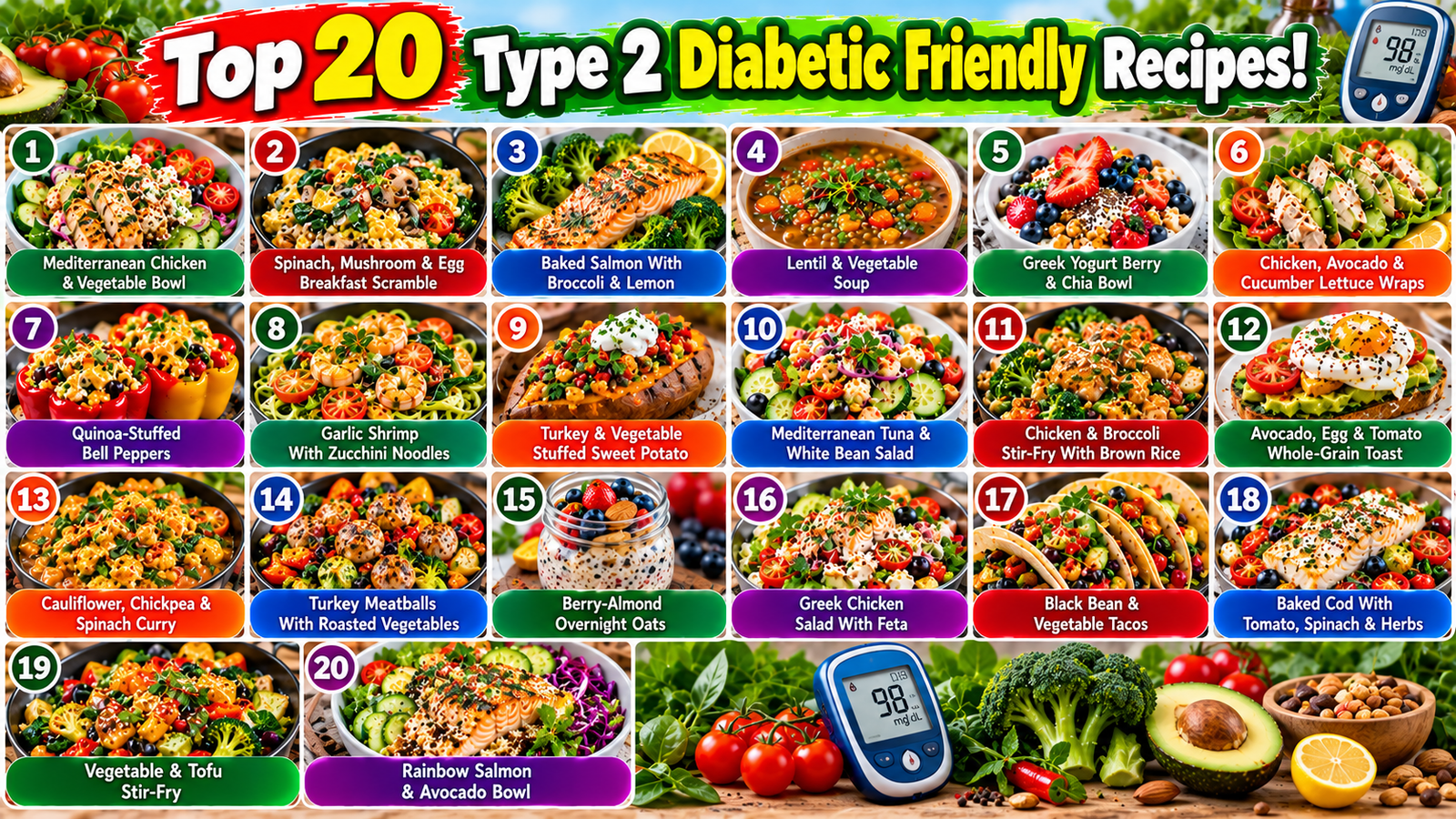
Living with type 2 diabetes does not mean giving up flavorful, satisfying food. A diabetes-friendly eating pattern can include vegetables, fruits, whole grains, beans, lean proteins, fish, eggs, nuts, seeds, and dairy or unsweetened alternatives. The key is to pay attention to carbohydrate portions, overall meal balance, added sugars, and the quality of the foods you choose.
The CDC recommends approaches such as the plate method: approximately half the plate can be non-starchy vegetables, one-quarter protein, and one-quarter carbohydrate-containing foods. The exact amount of carbohydrate that works best varies from person to person, particularly depending on medications, activity, and individual blood-glucose targets. (CDC)
The recipes below are designed around vegetables, protein, fiber-rich carbohydrates, and healthy fats. They are recipe ideas rather than individualized medical prescriptions. If you take insulin or medicines that can cause low blood sugar, your meal timing and carbohydrate requirements may need to be planned with your healthcare professional.
1. Mediterranean Chicken & Vegetable Bowl

Ingredients
- 4 oz grilled skinless chicken breast
- 1 cup chopped cucumber
- 1 cup cherry tomatoes
- 1 cup leafy greens
- ¼ cup cooked quinoa
- ¼ avocado, sliced
- 2 tbsp hummus
- 1 tbsp extra-virgin olive oil
- 1 tbsp lemon juice
- 1 tbsp chopped parsley
- Black pepper and a small amount of salt
Directions
Season the chicken with black pepper, lemon juice, garlic powder, and herbs. Grill or pan-cook until completely cooked, then slice.
Place leafy greens in a bowl and add cucumber, tomatoes, quinoa, and avocado. Add the sliced chicken and a spoonful of hummus. Whisk olive oil with lemon juice and parsley, then drizzle lightly over the bowl.
Why It Works Well for a Diabetes-Friendly Meal
This bowl combines lean protein, non-starchy vegetables, a modest portion of a fiber-containing carbohydrate, and healthy fat. The combination makes it easier to build a balanced meal rather than eating a large serving of carbohydrate by itself.
Quinoa still contains carbohydrates, so portion size matters. However, using a relatively small amount alongside chicken and vegetables creates a different meal structure from a large bowl of refined grains. CDC guidance notes that carbohydrates can be included in a diabetes-friendly diet, with attention to portion size and choosing higher-fiber options. (CDC)
Preparation Tips
You can prepare the chicken and quinoa in advance and assemble individual bowls during the week. If hummus contains significant added sodium, use a smaller amount or choose a lower-sodium variety.
For additional flavor, add oregano, parsley, mint, or a squeeze of fresh lemon instead of relying heavily on salt.
Prep Time: 15 minutes
Cook Time: 15 minutes
Servings: 1
2. Spinach, Mushroom & Egg Breakfast Scramble

Ingredients
- 2 large eggs
- 1 cup fresh spinach
- ½ cup sliced mushrooms
- ¼ cup diced bell pepper
- 1 tsp olive oil
- 1 tbsp chopped onion
- Black pepper
- 1 tbsp chopped fresh parsley
- Optional: 1 tbsp crumbled feta
Directions
Heat olive oil in a nonstick skillet over medium heat. Add onion, mushrooms, and bell pepper. Cook for several minutes until softened.
Add spinach and cook until wilted. Beat the eggs in a small bowl and pour them into the skillet. Stir gently until the eggs are fully cooked.
Finish with black pepper and parsley. If desired, sprinkle a small amount of feta over the top.
Why This Breakfast Is Useful
Breakfast can become carbohydrate-heavy when it consists primarily of sweet cereals, pastries, juice, or large portions of refined bread. This scramble takes a different approach by making vegetables and protein the main components.
Eggs provide protein, while spinach, mushrooms, peppers, and onions add vegetables and fiber without requiring a large carbohydrate portion. Non-starchy vegetables are encouraged in diabetes meal planning because they provide nutrients and fiber with relatively little carbohydrate. (American Diabetes Association)
You can serve this scramble with a small slice of whole-grain toast if bread fits your individual meal plan. Another option is a small serving of berries.
The recipe is also highly adaptable. Try zucchini, tomatoes, kale, broccoli, or asparagus instead of mushrooms and spinach. If you prefer a plant-based breakfast, scrambled tofu can replace the eggs.
Avoid turning this into a heavily processed breakfast by adding large quantities of bacon, sausage, or cheese. A simple vegetable-and-egg combination keeps the meal focused on minimally processed ingredients.
Prep Time: 5 minutes
Cook Time: 8 minutes
Servings: 1
3. Baked Salmon With Broccoli & Lemon

Ingredients
- 4 oz salmon fillet
- 1½ cups broccoli florets
- 1 tsp olive oil
- 1 tbsp fresh lemon juice
- 1 garlic clove, minced
- Black pepper
- ½ tsp dried dill or Italian herbs
- Optional: ¼ cup cooked quinoa
Directions
Preheat the oven to 400°F (200°C). Place salmon and broccoli on a baking sheet.
Brush the salmon with olive oil, lemon juice, garlic, and herbs. Toss broccoli with a small amount of olive oil and black pepper.
Bake for approximately 12–18 minutes, depending on the thickness of the salmon, until the fish is cooked through and flakes easily.
Serve immediately with the roasted broccoli. Add a small portion of quinoa if desired.
Why This Recipe Fits a Balanced Eating Pattern
Salmon provides protein and is naturally low in carbohydrate. Broccoli contributes fiber and a variety of vitamins and minerals. Together, they create a meal that can be paired with a controlled portion of a higher-fiber carbohydrate such as quinoa.
The important point is that a diabetes-friendly diet does not necessarily require eliminating carbohydrates. CDC guidance emphasizes choosing nutrient-dense carbohydrate sources, considering portions, and combining carbohydrates with protein, fat, or fiber. (CDC)
If you need a lower-carbohydrate meal, you can simply serve the salmon with additional non-starchy vegetables instead of quinoa. If your meal plan includes carbohydrates, quinoa or another whole grain can be incorporated in an appropriate portion.
For variety, replace broccoli with asparagus, green beans, Brussels sprouts, or cauliflower. You can also make the recipe with cod or another fish.
Avoid sugary glazes. Lemon, garlic, dill, parsley, paprika, and black pepper provide plenty of flavor without adding sugar.
Prep Time: 10 minutes
Cook Time: 15 minutes
Servings: 1
4. Lentil & Vegetable Soup

Ingredients
- ½ cup dry lentils, rinsed
- 1 cup chopped spinach
- ½ cup diced carrots
- ½ cup chopped celery
- ½ cup diced tomatoes
- ¼ cup chopped onion
- 2 cups low-sodium vegetable broth
- 1 garlic clove
- ½ tsp cumin
- ½ tsp paprika
- Black pepper
- 1 tsp olive oil
Directions
Heat olive oil in a saucepan. Add onion, celery, and carrots and cook for 3–4 minutes.
Add garlic, cumin, paprika, lentils, tomatoes, and vegetable broth. Bring to a boil, then reduce the heat and simmer until the lentils become tender.
Add spinach during the final few minutes of cooking. Taste and adjust the seasoning.
Why Lentils Can Be a Smart Choice
Lentils are a carbohydrate-containing food, but they also provide protein and fiber. This combination can make them particularly useful in balanced meals.
CDC guidance identifies beans and lentils among complex carbohydrate foods that contain fiber. Fiber is not absorbed in the same way as digestible carbohydrates and can support blood-glucose management. (CDC)
That does not mean lentils are “free foods.” They still contribute carbohydrates, so the serving should fit your personal meal plan. A common mistake is assuming that every food described as healthy can be eaten without considering quantity.
This soup is especially useful for meal preparation. Make a larger batch, divide it into containers, and refrigerate or freeze portions for future meals.
You can increase the vegetable content by adding zucchini, mushrooms, kale, green beans, or cauliflower. For additional protein, serve the soup with a small portion of grilled chicken or a boiled egg.
Use low-sodium broth and avoid adding large amounts of salt. Herbs such as thyme, parsley, oregano, rosemary, and bay leaf can create a richer flavor.
Prep Time: 10 minutes
Cook Time: 30–35 minutes
Servings: 3
>>> Access 1000 Diabetes Recipes Cookbook PDF
5. Greek Yogurt Berry & Chia Bowl

Ingredients
- ¾ cup plain unsweetened Greek yogurt
- ½ cup fresh blueberries or strawberries
- 1 tbsp chia seeds
- 1 tbsp chopped walnuts
- ¼ tsp cinnamon
- 1 tbsp unsweetened coconut flakes, optional
Directions
Place Greek yogurt in a bowl. Add berries, chia seeds, walnuts, and cinnamon.
Mix lightly or leave the ingredients layered for a more attractive presentation.
A Simple Alternative to Sugary Breakfasts
Flavored yogurts can contain substantial amounts of added sugar. Choosing plain Greek yogurt allows you to control what goes into the bowl.
Berries provide natural sweetness along with fiber and other nutrients. Chia seeds and walnuts add texture and healthy fats.
NIDDK recommends healthy eating patterns for people with diabetes that can include fruits, non-starchy vegetables, protein foods, whole grains, and dairy or plant-based dairy products. It also recommends limiting foods and drinks with added sugars. (NIDDK)
Although fruit contains carbohydrate, that does not make fruit automatically unsuitable for people with diabetes. Portion and overall meal composition matter.
If your blood glucose responds differently to berries or dairy, adjust the amount according to your personal meal plan and glucose monitoring results.
You can prepare this breakfast the night before. For a thicker consistency, combine yogurt and chia seeds and refrigerate overnight, then add the berries and walnuts in the morning.
Avoid adding honey, maple syrup, granola, or sweetened dried fruit unless those foods have been deliberately incorporated into your carbohydrate plan.
Prep Time: 5 minutes
Cook Time: None
Servings: 1
6. Chicken, Avocado & Cucumber Lettuce Wraps

Ingredients
- 4 oz cooked chicken breast
- 4 large romaine or butter lettuce leaves
- ½ cucumber, sliced
- ¼ avocado
- ¼ cup diced tomato
- 1 tbsp plain Greek yogurt
- 1 tsp lemon juice
- Black pepper
- Fresh cilantro or parsley
Directions
Slice the cooked chicken into thin strips.
Mix Greek yogurt with lemon juice and black pepper. Place lettuce leaves on a plate and add chicken, cucumber, tomato, and avocado.
Drizzle with the yogurt dressing and fold the lettuce around the filling.
Why Lettuce Wraps Can Be Helpful
Lettuce wraps offer a simple way to replace a large flour tortilla or refined bread serving with additional non-starchy vegetables.
The filling still provides protein and fat, making the meal satisfying without requiring a large amount of carbohydrate. If you prefer a traditional wrap, use a small whole-grain tortilla and adjust the filling accordingly.
The CDC recommends emphasizing non-starchy vegetables and choosing whole foods while limiting refined grains and added sugars. (CDC)
This recipe can also become a meal-prep lunch. Cook several chicken breasts at once, chop the vegetables, and store the ingredients separately. Assemble the wraps just before eating to prevent the lettuce from becoming soggy.
For extra flavor, use mustard, lemon, vinegar, garlic, paprika, or fresh herbs rather than sugary sauces.
If you need more carbohydrate with the meal, a small serving of beans, whole fruit, or a whole-grain side can be included according to your personal meal plan.
Prep Time: 10 minutes
Cook Time: 5 minutes if chicken is already cooked
Servings: 1
7. Quinoa-Stuffed Bell Peppers

Ingredients
- 2 medium bell peppers
- ½ cup cooked quinoa
- ¼ cup black beans, rinsed
- ¼ cup diced tomatoes
- ¼ cup chopped spinach
- 2 tbsp diced onion
- 1 tbsp shredded cheese, optional
- ½ tsp cumin
- ½ tsp paprika
- Black pepper
Directions
Preheat the oven to 375°F (190°C). Cut the tops from the peppers and remove the seeds.
Mix quinoa, black beans, tomatoes, spinach, onion, cumin, paprika, and black pepper.
Fill each pepper with the mixture and place them in a baking dish. Bake for approximately 25–30 minutes. Add a small amount of cheese near the end if desired.
Portion Matters
Quinoa and beans are nutritious foods, but both contain carbohydrates. For people managing type 2 diabetes, “healthy” does not mean carbohydrate-free.
This recipe uses a moderate amount of quinoa and beans and surrounds them with a large vegetable component. That approach reflects the general principle of balancing carbohydrate-containing foods with vegetables and protein. The CDC plate method places non-starchy vegetables over approximately half the plate, with protein and carbohydrate foods making up the remaining portions. (CDC)
You can increase protein by adding lean ground turkey or shredded chicken. Alternatively, keep it vegetarian and add tofu or additional beans, remembering that beans contribute carbohydrates as well as protein and fiber.
Choose peppers of different colors for visual variety. Red, yellow, orange, and green peppers all work well.
If you want to lower the carbohydrate content, reduce the quinoa and increase mushrooms, cauliflower rice, zucchini, spinach, or other non-starchy vegetables.
Prep Time: 15 minutes
Cook Time: 30 minutes
Servings: 2
8. Garlic Shrimp With Zucchini Noodles

Ingredients
- 5 oz peeled shrimp
- 2 medium zucchini
- 2 garlic cloves, minced
- 1 tsp olive oil
- 1 tbsp lemon juice
- ½ cup cherry tomatoes
- 1 tbsp chopped parsley
- Black pepper
- Optional: red pepper flakes
Directions
Use a spiralizer to turn zucchini into noodles.
Heat olive oil in a skillet. Add garlic and shrimp and cook until the shrimp becomes opaque and fully cooked.
Add zucchini noodles and tomatoes. Cook for 2–3 minutes, keeping the zucchini slightly crisp.
Finish with lemon juice, parsley, black pepper, and optional red pepper flakes.
A Lower-Carbohydrate Pasta Alternative
Traditional pasta can fit into a diabetes-friendly eating pattern, but portion size is important. Zucchini noodles provide a way to create a pasta-style meal with a much larger vegetable component.
This dish is primarily vegetables and protein, with very little added carbohydrate from the vegetables themselves. The CDC recommends increasing non-starchy vegetables and reducing reliance on refined grains such as regular white pasta. (CDC)
You do not have to completely eliminate pasta, however. If you enjoy pasta, you can combine a small serving of whole-grain pasta with zucchini noodles.
The lemon and garlic create strong flavor without needing a sugary sauce. Fresh herbs can make the dish even more flavorful.
Shrimp cooks quickly, so avoid overcooking it. Once it turns opaque and reaches a safe internal temperature, remove it from the heat.
For a heartier meal, add a small portion of beans or whole-grain pasta if that fits your individual carbohydrate target.
Prep Time: 10 minutes
Cook Time: 10 minutes
Servings: 1
9. Turkey & Vegetable Stuffed Sweet Potato

Ingredients
- 1 small sweet potato
- 3 oz lean ground turkey
- ½ cup chopped spinach
- ¼ cup diced bell pepper
- 2 tbsp diced onion
- 1 tsp olive oil
- ½ tsp paprika
- ¼ tsp cumin
- Black pepper
- 1 tbsp plain Greek yogurt
Directions
Bake or microwave the sweet potato until tender.
Meanwhile, heat olive oil in a skillet and cook the turkey thoroughly. Add onion, bell pepper, spinach, paprika, cumin, and black pepper.
Cut the sweet potato open and gently fluff the center. Top with the turkey mixture and a spoonful of plain Greek yogurt.
Understanding Sweet Potatoes and Diabetes
Sweet potatoes are nutritious but are still a carbohydrate-containing food. The goal is not necessarily to avoid them; rather, use an appropriate portion and pair them with protein and vegetables.
CDC guidance explains that starchy vegetables such as potatoes contribute carbohydrates and should be considered as part of the carbohydrate portion of a meal. (CDC)
Using a small sweet potato rather than a very large one helps keep the carbohydrate portion more manageable. The turkey and vegetables provide additional components that make the meal more balanced.
You can substitute cauliflower for part of the sweet potato if you want a larger vegetable component. Another option is to serve half a sweet potato alongside a larger salad.
Do not assume that sweet potatoes will produce the same glucose response in every person. Individual responses vary, and your medication, activity level, and total meal composition matter.
For seasoning, experiment with smoked paprika, cumin, garlic, chili powder, or fresh herbs rather than brown sugar or sweet sauces.
Prep Time: 10 minutes
Cook Time: 25–40 minutes
Servings: 1
10. Mediterranean Tuna & White Bean Salad

Ingredients
- 1 can tuna packed in water, drained
- ⅓ cup white beans, rinsed
- 1 cup chopped cucumber
- ½ cup cherry tomatoes
- 1 cup mixed greens
- 1 tbsp chopped red onion
- 1 tsp olive oil
- 1 tbsp lemon juice
- 1 tbsp parsley
- Black pepper
Directions
Combine tuna, white beans, cucumber, tomatoes, greens, and onion in a bowl.
Mix olive oil, lemon juice, parsley, and black pepper. Pour the dressing over the salad and toss gently.
A Fiber-Rich Lunch Idea
This salad combines protein from tuna with fiber-containing beans and a variety of vegetables. Beans do contribute carbohydrates, but they also provide fiber and plant-based protein.
Fiber is particularly relevant to diabetes-friendly eating. The CDC explains that fiber is not broken down and absorbed like other carbohydrates and can help with blood-sugar management and overall health. (CDC)
The recipe is also convenient because canned tuna and canned beans can be kept in the pantry. Choose tuna and beans with lower sodium when available. If using regular canned beans, draining and rinsing them can reduce some of the sodium.
For a larger meal, add a small serving of whole-grain crackers or a piece of whole-grain toast.
If you want to reduce carbohydrate intake, decrease the beans slightly and increase cucumber, greens, celery, or bell peppers.
Avoid mayonnaise-heavy dressings if you’re looking for a lighter option. Lemon, vinegar, olive oil, mustard, herbs, and spices can create flavorful dressings without added sugar.
Prep Time: 10 minutes
Cook Time: None
Servings: 1
>>> Access 1000 Diabetes Recipes Cookbook PDF
11. Chicken & Broccoli Stir-Fry With Brown Rice

Ingredients
- 4 oz chicken breast
- 1½ cups broccoli
- ½ cup sliced bell pepper
- ½ cup mushrooms
- ¼ cup cooked brown rice
- 1 tsp olive or avocado oil
- 1 garlic clove
- 1 tsp reduced-sodium soy sauce
- 1 tsp fresh ginger
- Black pepper
Directions
Cut chicken into small pieces.
Heat oil in a skillet or wok and cook chicken thoroughly. Add broccoli, peppers, mushrooms, garlic, and ginger.
Cook until the vegetables are tender-crisp. Add reduced-sodium soy sauce and black pepper.
Serve with the measured portion of brown rice.
Why Brown Rice Can Fit
Brown rice is a whole grain and contains carbohydrate. It should therefore be portioned rather than treated as an unlimited food.
CDC guidance recommends choosing complex carbohydrate sources such as whole grains and legumes while paying attention to serving sizes. (CDC)
The recipe uses a relatively small amount of rice while allowing vegetables to make up a much larger part of the meal. You can increase the vegetable portion even further if desired.
For a lower-carbohydrate variation, replace some or all of the rice with cauliflower rice. For more protein, increase the chicken slightly or add tofu.
Be careful with bottled stir-fry sauces because some contain significant amounts of added sugar and sodium. A homemade mixture of reduced-sodium soy sauce, ginger, garlic, vinegar, and lemon can provide plenty of flavor.
This is also an excellent meal-prep recipe. Cook the chicken and vegetables in advance and store the rice separately so you can control the portion when serving.
Prep Time: 15 minutes
Cook Time: 15 minutes
Servings: 2
12. Avocado, Egg & Tomato Whole-Grain Toast

Ingredients
- 1 slice whole-grain bread
- 1 large egg
- ¼ avocado
- ½ small tomato, sliced
- Black pepper
- 1 tsp lemon juice
- Optional: chili flakes
Directions
Toast the whole-grain bread.
Mash avocado with lemon juice and black pepper. Spread it over the toast.
Top with tomato slices and a cooked egg.
A Balanced Breakfast in a Small Portion
Toast can absolutely be part of a diabetes-friendly meal. The key is choosing an appropriate bread and considering the portion.
CDC guidance suggests choosing whole-grain bread rather than refined bread when possible. It also emphasizes that carbohydrate-containing foods can be combined with protein, fat, or fiber. (CDC)
Here, the bread provides carbohydrate, while egg and avocado add protein and fat. Tomato contributes vegetables.
Check the bread label rather than relying only on terms such as “multigrain.” Whole-grain flour should be prominent in the ingredient list.
If one slice does not provide enough food for you, add a side of non-starchy vegetables or a small serving of berries rather than automatically doubling the bread.
For variety, add spinach, cucumber, radishes, or mushrooms. You can also use cottage cheese instead of egg.
If you are taking insulin or another medication that affects blood glucose, discuss your carbohydrate needs and meal timing with your healthcare team.
Prep Time: 5 minutes
Cook Time: 5 minutes
Servings: 1
13. Cauliflower, Chickpea & Spinach Curry

Ingredients
- 1½ cups cauliflower florets
- ½ cup cooked chickpeas
- 1 cup spinach
- ¼ cup diced tomatoes
- ¼ cup chopped onion
- 1 garlic clove
- ½ tsp turmeric
- ½ tsp cumin
- ½ tsp coriander
- 1 tsp olive oil
- ¼ cup unsweetened plain yogurt, optional
Directions
Heat olive oil in a skillet. Add onion and garlic and cook until softened.
Add turmeric, cumin, coriander, cauliflower, and tomatoes. Stir well and add a small amount of water.
Cover and cook until cauliflower is tender. Stir in chickpeas and spinach during the final few minutes.
Serve alone or with a small portion of brown rice or quinoa if desired.
Why This Curry Can Be Part of a Diabetes-Friendly Pattern
The recipe emphasizes vegetables while using chickpeas as a source of fiber and plant protein. Chickpeas contain carbohydrate, so portion size remains important.
One advantage of homemade curry is that you can control added sugar, sodium, and cooking fats. Many restaurant curries can contain significant amounts of oil, cream, or sweetened sauces.
The CDC recommends eating more non-starchy vegetables and choosing whole foods while limiting added sugars and highly processed foods. (CDC)
If you need more protein, add tofu, chicken, or fish. If you want a lower-carbohydrate meal, serve the curry without rice and increase the cauliflower and spinach.
Use spices generously to create flavor without depending on sugar. Turmeric, cumin, coriander, ginger, garlic, chili, and fresh cilantro all work beautifully.
Prep Time: 10 minutes
Cook Time: 20 minutes
Servings: 2
14. Turkey Meatballs With Roasted Vegetables

Ingredients
- 5 oz lean ground turkey
- 1 tbsp finely chopped onion
- 1 tbsp chopped parsley
- 1 garlic clove
- ¼ tsp Italian seasoning
- Black pepper
- 1 cup zucchini
- 1 cup broccoli
- ½ cup bell pepper
- 1 tsp olive oil
Directions
Preheat oven to 400°F (200°C).
Mix turkey with onion, garlic, parsley, Italian seasoning, and pepper. Form into small meatballs.
Place meatballs and chopped vegetables on a baking sheet. Toss vegetables lightly with olive oil.
Bake until the turkey is thoroughly cooked and vegetables are tender.
A Simple Dinner Without a Large Starch Portion
This meal puts protein and vegetables at the center of the plate. You can add a small portion of whole grains or another carbohydrate food if needed.
The CDC plate method recommends approximately half the plate as non-starchy vegetables, with the remainder divided between protein and carbohydrate-containing foods. (CDC)
That makes this recipe easy to customize. If you want more carbohydrate, add a small serving of quinoa, brown rice, or a whole-grain roll. If your meal plan calls for fewer carbohydrates, increase the vegetables instead.
Lean turkey provides protein without requiring a heavy sauce. Herbs and garlic keep the meatballs flavorful.
When buying ground turkey, compare nutrition labels because products can differ in fat and sodium. Homemade meatballs also allow you to avoid breadcrumbs or use a small amount of whole-grain breadcrumbs if desired.
For meal preparation, make a double batch and refrigerate portions for several days or freeze appropriately.
Prep Time: 15 minutes
Cook Time: 20–25 minutes
Servings: 2
15. Berry-Almond Overnight Oats

Ingredients
- ⅓ cup old-fashioned rolled oats
- ½ cup unsweetened milk
- ¼ cup plain Greek yogurt
- ¼ cup blueberries
- 1 tbsp chia seeds
- 1 tbsp sliced almonds
- ½ tsp cinnamon
Directions
Combine oats, milk, yogurt, chia seeds, and cinnamon in a jar.
Cover and refrigerate overnight.
In the morning, add blueberries and almonds. Stir before serving.
Making Oatmeal More Balanced
Oats contain carbohydrates, so portion size matters for someone managing type 2 diabetes. However, oats can be included in a balanced meal plan.
CDC guidance recommends whole grains such as oats as alternatives to refined grains and suggests combining carbohydrate-containing foods with protein, fat, or fiber. (CDC)
This recipe adds Greek yogurt, chia seeds, and almonds to create a more balanced breakfast rather than relying on a large bowl of oats alone.
Choose plain oats rather than flavored instant oatmeal packets that contain added sugar. Cinnamon, berries, vanilla extract, and unsweetened cocoa powder can add flavor without requiring much added sugar.
If berries are not available, use a small portion of apple or pear. Remember that fruit contributes carbohydrate, so serving size should still be considered.
You can prepare several jars at once for convenient breakfasts. If the mixture becomes too thick, add a splash of unsweetened milk before eating.
Prep Time: 5 minutes
Chill Time: Overnight
Servings: 1
16. Greek Chicken Salad With Feta

Ingredients
- 4 oz grilled chicken breast
- 2 cups romaine lettuce
- ½ cucumber
- ½ cup cherry tomatoes
- 2 tbsp red onion
- 1 tbsp feta cheese
- 1 tsp olive oil
- 1 tbsp lemon juice
- ½ tsp dried oregano
- Black pepper
Directions
Place lettuce in a large bowl. Add cucumber, tomatoes, onion, and feta.
Top with sliced grilled chicken.
Combine olive oil, lemon juice, oregano, and black pepper and drizzle over the salad.
Why Salads Need More Than Just Lettuce
A diabetes-friendly salad should still be satisfying. Adding chicken gives the meal a protein source, while vegetables provide volume and fiber.
You can also add a small amount of beans or quinoa if your meal plan includes additional carbohydrate. The goal is not to make every meal extremely low in carbohydrates; instead, it is to create a pattern that works with your glucose goals.
NIDDK notes that healthy diabetes meal plans can include vegetables, fruits, whole grains, protein foods, and dairy or plant-based dairy products, while limiting added sugars and foods high in saturated fat and sodium. (NIDDK)
Be cautious with commercial salad dressings because some contain added sugar or substantial sodium. A simple lemon-and-olive-oil dressing gives you control over the ingredients.
For additional variety, add olives, parsley, roasted peppers, cabbage, or a small portion of chickpeas.
This salad can be prepared in advance, but keep the dressing separate until serving.
Prep Time: 15 minutes
Cook Time: 10 minutes
Servings: 1
17. Black Bean & Vegetable Tacos

Ingredients
- 2 small whole-grain or corn tortillas
- ½ cup black beans, rinsed
- ½ cup shredded lettuce
- ¼ cup diced tomato
- ¼ cup bell pepper
- ¼ avocado
- 1 tbsp plain Greek yogurt
- 1 tbsp chopped cilantro
- ½ tsp cumin
- Lime juice
Directions
Warm the tortillas.
Heat the black beans with cumin and a splash of water. Fill tortillas with lettuce, beans, tomato, bell pepper, and avocado.
Top with Greek yogurt, cilantro, and lime juice.
Tacos Can Fit Into a Diabetes-Friendly Diet
Tacos are sometimes considered unhealthy because of refined tortillas, large portions, cheese-heavy fillings, or sugary sauces. But the basic taco format is highly adaptable.
Using small tortillas, a moderate portion of beans, plenty of vegetables, and avocado creates a more balanced meal.
Beans contain carbohydrates as well as protein and fiber, so they should still be included in your overall carbohydrate planning. CDC guidance emphasizes considering total carbohydrate intake and choosing fiber-rich carbohydrate foods. (CDC)
You can substitute grilled chicken, fish, or lean turkey for some or all of the beans.
For lower-carbohydrate tacos, use lettuce cups instead of tortillas. For a higher-fiber option, choose tortillas that list whole grains as a primary ingredient.
Skip sugary taco sauces and use salsa, lime, cilantro, onion, cumin, and chili powder for flavor.
Prep Time: 10 minutes
Cook Time: 5 minutes
Servings: 1
18. Baked Cod With Tomato, Spinach & Herbs

Ingredients
- 5 oz cod fillet
- 1 cup fresh spinach
- ½ cup cherry tomatoes
- 1 garlic clove
- 1 tsp olive oil
- 1 tbsp lemon juice
- ½ tsp Italian herbs
- Black pepper
- Fresh parsley
Directions
Preheat oven to 400°F (200°C).
Place spinach and tomatoes in a baking dish. Add cod on top.
Drizzle with olive oil and lemon juice. Add garlic, herbs, and black pepper.
Bake until the cod flakes easily and is fully cooked.
A Light Dinner With Flexible Sides
Cod is a lean protein that contains little carbohydrate. That makes it easy to pair with vegetables and a measured carbohydrate source.
Serve it with roasted broccoli, green beans, asparagus, or a leafy salad. If you want a grain, use a small portion of quinoa, barley, or brown rice.
The meal follows the general concept of emphasizing non-starchy vegetables and balancing protein with a controlled portion of carbohydrate. (CDC)
One advantage of baked fish is that you do not need a breaded coating. Breaded and fried fish can add refined carbohydrates and substantial amounts of fat.
Lemon, garlic, herbs, paprika, parsley, and black pepper provide plenty of flavor.
For meal preparation, bake individual fillets and store them safely in the refrigerator for convenient lunches.
Prep Time: 10 minutes
Cook Time: 15 minutes
Servings: 1
19. Vegetable & Tofu Stir-Fry

Ingredients
- 4 oz firm tofu
- 1 cup broccoli
- ½ cup bell peppers
- ½ cup mushrooms
- ½ cup zucchini
- 1 tsp sesame or olive oil
- 1 garlic clove
- 1 tsp reduced-sodium soy sauce
- 1 tsp grated ginger
- Black pepper
Directions
Press tofu and cut it into cubes.
Heat oil in a skillet. Cook tofu until lightly browned.
Add broccoli, peppers, mushrooms, zucchini, garlic, and ginger. Stir-fry until the vegetables are tender-crisp.
Add reduced-sodium soy sauce and black pepper.
Plant-Based Protein for Variety
Tofu can be useful when you want to vary your protein sources. This recipe combines tofu with a generous amount of non-starchy vegetables.
NIDDK includes tofu and other soy products among protein foods that can be included in a healthy diabetes meal plan. (NIDDK)
You can serve this stir-fry on its own or add a small serving of brown rice, quinoa, or another whole grain.
If using packaged stir-fry sauces, read the Nutrition Facts label carefully. Some sauces can contain significant added sugar and sodium.
Fresh ginger, garlic, chili, lime, vinegar, and herbs can provide strong flavors without relying on a sweet sauce.
For a lower-carbohydrate variation, use cauliflower rice or simply increase the vegetables.
Prep Time: 15 minutes
Cook Time: 15 minutes
Servings: 2
20. Rainbow Salmon & Avocado Bowl

Ingredients
- 4 oz baked salmon
- 1 cup mixed greens
- ½ cup cucumber
- ½ cup shredded cabbage
- ½ cup cherry tomatoes
- ¼ avocado
- ¼ cup cooked quinoa
- 1 tbsp pumpkin seeds
- 1 tbsp lemon juice
- 1 tsp olive oil
- Black pepper
Directions
Place mixed greens in a bowl.
Arrange cucumber, cabbage, tomatoes, avocado, quinoa, and pumpkin seeds around the bowl.
Add the cooked salmon.
Mix lemon juice, olive oil, and black pepper and drizzle lightly over everything.
A Colorful Way to Finish the List
This bowl brings together several foods commonly used in balanced eating patterns: vegetables, fish, a small portion of whole-grain carbohydrate, avocado, and seeds.
The quinoa contributes carbohydrates, while salmon and seeds contribute protein and fat. The large amount of vegetables provides volume and fiber.
The CDC recommends emphasizing non-starchy vegetables and choosing whole foods while being mindful of carbohydrate portions. (CDC)
You can modify the bowl according to your own needs. Reduce quinoa and increase vegetables if you prefer a lower-carbohydrate meal. Alternatively, increase the quinoa if your personal meal plan requires more carbohydrate.
Other vegetables that work well include roasted cauliflower, broccoli, spinach, radishes, bell peppers, asparagus, or green beans.
For dressing, keep it simple. Lemon juice, vinegar, herbs, garlic, and a small amount of olive oil can add plenty of flavor.
This recipe is also suitable for meal preparation. Store the salmon, vegetables, quinoa, and dressing separately and assemble shortly before eating.
Prep Time: 15 minutes
Cook Time: 15 minutes
Servings: 1
Practical Tips for Making These Recipes More Diabetes-Friendly
A recipe does not have to be labeled “diabetic” to fit into a healthy eating pattern. What matters is the combination of foods, portion sizes, carbohydrate content, preparation method, and how the meal fits into your overall eating pattern.
The plate method is one simple approach. CDC guidance suggests filling approximately half of a 9-inch plate with non-starchy vegetables, one-quarter with lean protein, and one-quarter with carbohydrate-containing foods. (CDC)
Good carbohydrate choices can include whole grains, beans, lentils, fruit, and other minimally processed foods. Refined grains, sugary beverages, desserts, and heavily processed foods generally deserve more limited portions. (CDC)
Fiber is another useful part of the picture. Vegetables, fruits, legumes, whole grains, nuts, and seeds can all contribute fiber. If you are increasing fiber substantially, do so gradually and drink enough water because a sudden increase can cause digestive discomfort. (CDC)
It is also important not to assume that a particular recipe will produce the same blood-glucose response for everyone. Your response can depend on portion size, activity, medications, sleep, stress, and the other foods eaten with the meal.
>>> Access 1000 Diabetes Recipes Cookbook PDF
Final Words
These 20 type-2 diabetic-friendly recipes show that diabetes-conscious meals can still be colorful, flavorful, satisfying, and varied. From salmon bowls and chicken salads to lentil soup, vegetable curries, egg breakfasts, overnight oats, tacos, and tofu stir-fries, there are many ways to build meals around vegetables, protein, fiber-rich carbohydrates, and healthy fats.
Remember that “diabetes-friendly” does not mean carbohydrate-free. Carbohydrates can be part of a healthy eating plan, but the amount and type may need to be individualized. CDC and NIDDK guidance emphasizes balanced meals, appropriate portions, nutrient-rich foods, and individualized planning based on factors such as medications and personal health goals. (CDC)
If you use insulin or medications that can cause low blood glucose, do not make major changes to carbohydrate intake or meal timing without discussing them with your healthcare professional. A registered dietitian or diabetes educator can help you develop a meal plan that fits your medications, lifestyle, preferences, and glucose targets. (CDC)
Note: These recipes are for general nutrition information and are not intended to diagnose, treat, or cure diabetes. Individual nutritional needs vary.

Nilesh Vijay is the founder and lead health writer at Health Tips USA. He is passionate about helping people understand health, nutrition, weight management, fitness, and healthy living through easy-to-read, research-based articles.